トークン配布の分析:潜在的なインサイダーウォレットを特定する方法
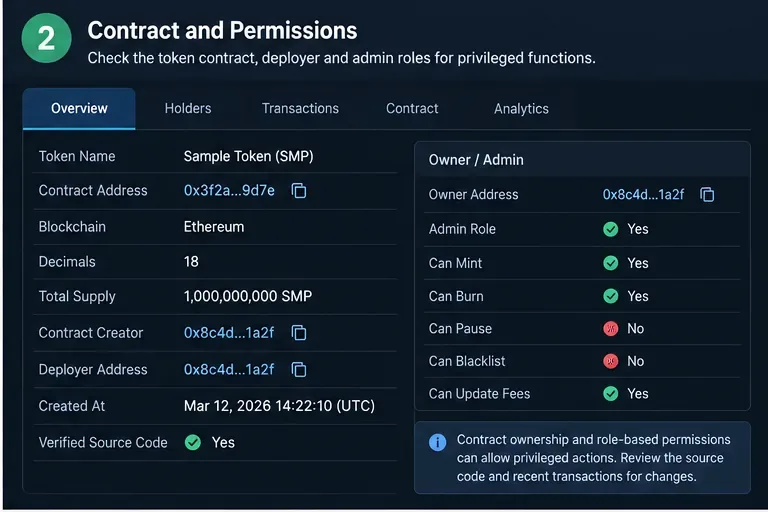
保有者の集中度、デプロイヤーとのつながり、資金調達パターン、ラベル、およびオンチェーンの挙動を利用して、インサイダー関連の可能性のある暗号資産ウォレットを特定するための実用的なフレームワーク。
P2P payment disputes usually become stressful for one simple reason: the crypto and the fiat payment do not move through the same rail. The exchange can hold the crypto in an order or escrow workflow, while the bank transfer, mobile payment, or other fiat transaction is processed by an outside payment provider. When one side says “paid” and the other says “not received,” the right next step depends on what can actually be verified.
The practical goal is not to “win” a chat argument. It is to preserve the safest reversible position while you determine what happened. In most cases, that means keeping the order on-platform, checking the actual payment account rather than trusting a screenshot, saving evidence, and using the exchange’s appeal process if direct communication does not resolve the mismatch.
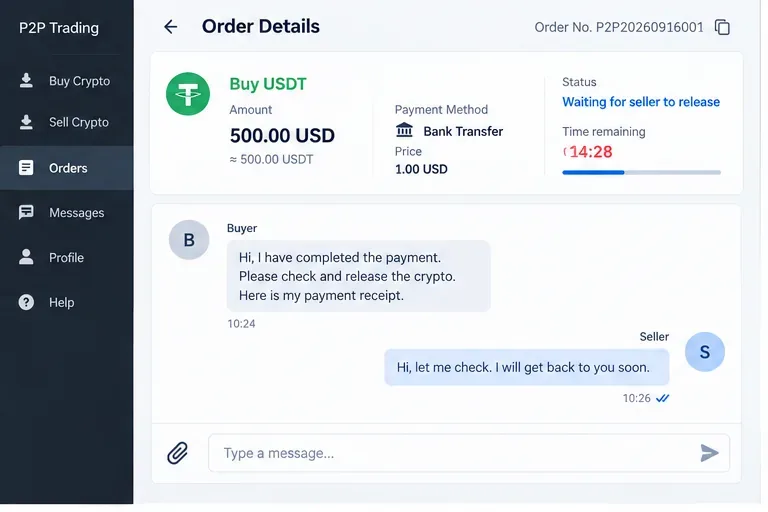
Before choosing between waiting, appealing, or contacting an external payment provider, identify the mismatch. The most common cases are:
These situations look similar inside a chat, but they create different risks. A delayed bank transfer may justify waiting. A third-party payment may justify refusing to release and immediately escalating. A canceled order after payment may require support intervention because the ordinary release button may no longer be available.
Waiting can be reasonable when the payment was just sent, the payment rail is known to be delayed, and both parties are still responding inside the exchange chat. The advantage is that a routine settlement delay may resolve without a formal dispute. The disadvantage is that waiting too long can consume an appeal window or leave one side exposed if the order status changes.
For sellers, the critical rule is simple: verify the money in the actual receiving account. Do not release crypto solely because the buyer uploaded a screenshot or sent a transaction reference. OKX’s official anti-scam guidance specifically warns that screenshots can be fake or edited and says sellers should verify that the funds actually arrived before releasing crypto. It also advises raising a dispute if payment comes from a third-party account rather than the buyer’s verified identity. See OKX’s scam-protection guidance.
For buyers, waiting is safer when the bank shows the payment as pending rather than completed. If the payment has fully left your account, preserve the transaction record and keep the order open if the platform allows it. Do not cancel merely because the seller asks you to do so after you have paid. OKX’s current cancellation guidance explicitly states that buyers should not cancel an order if they have already paid the seller. See OKX’s P2P order cancellation guidance.
An appeal is usually the better choice when direct chat is not resolving the issue, the counterparty stops responding, the seller will not release after confirmed payment, the buyer marked “paid” without paying, or the payment details do not match the order terms. The advantage is that the platform can review order records, chat history, and submitted proof. The trade-off is that resolution can take time, and an appeal does not guarantee that losses will be recovered.
Binance’s current P2P appeal instructions direct users to the order’s help flow, encourage contact with the counterparty first, and then allow the user to submit an appeal with a detailed description and supporting screenshots. See Binance’s official P2P appeal guide.
Bybit likewise recommends using the order chat before appealing. Its help center states that ongoing orders can be appealed and that canceled or completed orders can be appealed within five calendar days under its current rules. It also warns that its mediation service does not guarantee recovery. See Bybit’s official P2P appeal instructions.
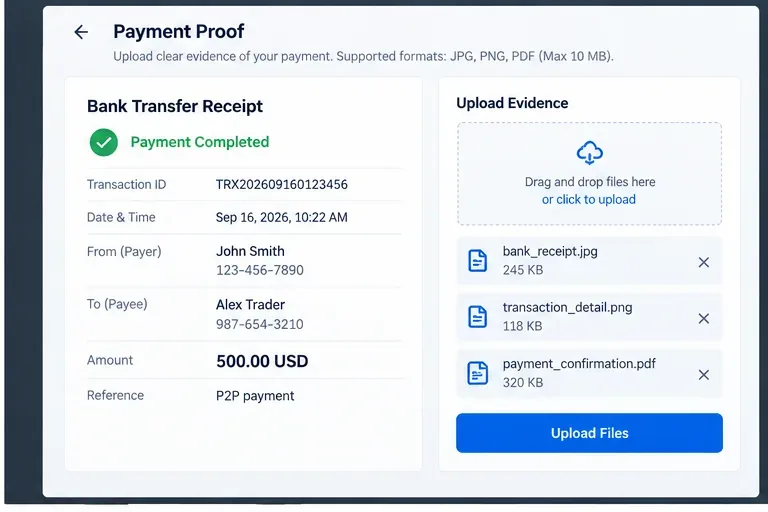
Good evidence proves the transaction path rather than merely repeating a claim. A screenshot saying “payment sent” is weaker than a transaction history that shows the account holder, transfer amount, recipient, date, time, and transaction status.
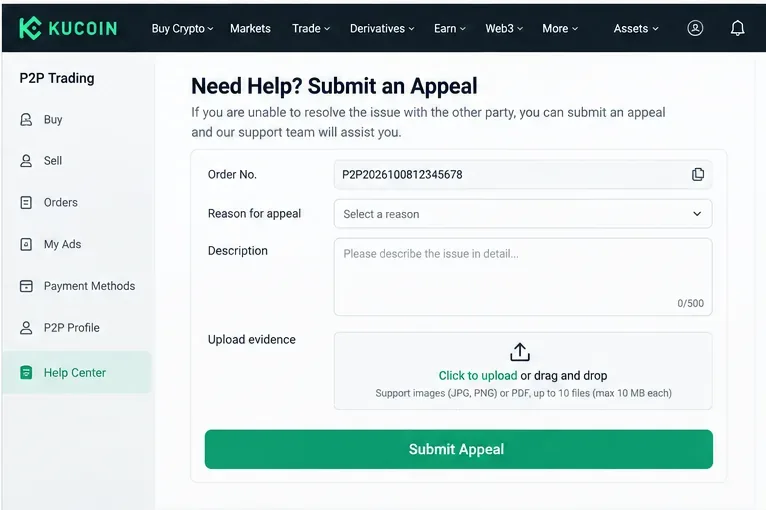
Bybitの現在の異議申し立て手順は異例なほど具体的です。購入者は、銀行アプリへのログイン画面、口座名義人名と口座番号、および関連する取引履歴を示す動画の提出を求められる場合があります。販売者も、口座と取引履歴の記録を求められる場合があります。KuCoinの現在のP2P異議申し立てプロセスも同様に、ユーザーに銀行取引明細書と関連するスクリーンショット、バウチャー、または動画による証拠の提出を求めています。KuCoinの公式P2P注文異議申し立てプロセスを参照してください。
強力な証拠パッケージには通常、以下が含まれます。
可能な限り、無関係な残高や取引は伏せ字にしてください。ただし、取引所が特に要求する情報は切り取らないでください。プラットフォームが動画証拠を求めた場合は、静止画ではなく、その指示に従ってください。
取引所はP2P取引の仲介はできますが、銀行システム自体を管理するわけではありません。銀行が送金が失敗、取り消し、凍結、重複、または不正な口座からの送金として表示した場合、法定通貨取引自体について説明できるのは銀行または決済プロバイダーのみである可能性があります。
このオプションは、注文状況を証明するだけでは紛争を解決できない場合に有効です。例えば、販売者は支払いを確認したものの、後に不正調査の対象となった場合や、購入者は受取銀行が入金していないにもかかわらず資金が引き落とされた場合などが考えられます。銀行に問い合わせることで、支払いが決済済みか、保留中か、または取り消されているかを確認できます。
トレードオフとして、銀行の対応によってP2P取引における暗号資産関連の問題が解決されるわけではありません。適切な場合は取引所への異議申し立てを継続し、銀行からの確認があればサポートに報告してください。銀行との紛争を開始すれば、既に送金された暗号資産が自動的に回収されるとは限りませんのでご注意ください。
支払い口座名義人が認証済みのP2P購入者と一致しない場合、リスクは通常の遅延とは大きく異なります。OKXは、P2P規約において第三者による支払いは受け付けていないと明記しており、購入者名義と一致しない口座から支払いがあった場合は、販売者に対し暗号資産を送金しないよう警告しています。これは、三角詐欺の可能性を懸念しているためです。三角詐欺では、送金元が別の人物である可能性があり、その人物は後日、不正な支払いとして報告する恐れがあります。
Bybitはまた、第三者による支払いは禁止されており、そのような支払いが絡む異議申し立ての場合には、注文を完了するのではなく返金を指示する可能性があると述べている。これは、「口座にお金が入っているのが確認できる」というだけでは必ずしも支払いの免除を正当化できない理由の良い例であり、本人確認も重要である。
| 状況 | 通常は最初の動きが安全です | 主な利点 | 主なトレードオフ |
|---|---|---|---|
| 支払いは送信済みですが、まだ保留中と表示されています。 | 少し待ってからプラットフォーム上でコミュニケーションを取る | 不必要なエスカレーションを回避する | プラットフォームの異議申し立て期限を過ぎて待たないでください |
| 購入者は支払い済みと言っているが、販売者は資金を確認できない | 販売者はアカウントを確認し、解決しない場合は異議申し立てを行う。 | スクリーンショットのみに基づくリリースを阻止する | 審査には時間がかかる場合があります。 |
| 支払いは確認済みですが、販売者はリリースしません | 買主は取引証拠を添えて異議申し立てを行う | 正式なレビュー履歴を作成します | 結果は保証されません |
| 支払者名が購入者名と一致しません | リリースしないでください。速やかにエスカレーションしてください。 | 第三者決済リスクを軽減します | 返金または追加審査が必要となる場合があります。 |
| 購入者が既に支払いを済ませた後、注文がキャンセルされました。 | キャンセルされた注文に関するサポートまたは異議申し立てのルートを利用してください。 | サポート担当者が支払い状況と注文状況を照合する機会を与える | 時間制限が適用される場合があります。 |
| 銀行が取引の取り消し、不正行為、または口座凍結を報告する | 取引所のサポートと決済プロバイダーの両方に連絡してください。 | 暗号通貨と法定通貨の両方に対応 | 2つの別々の捜査は、異なる速度で進行する可能性がある。 |
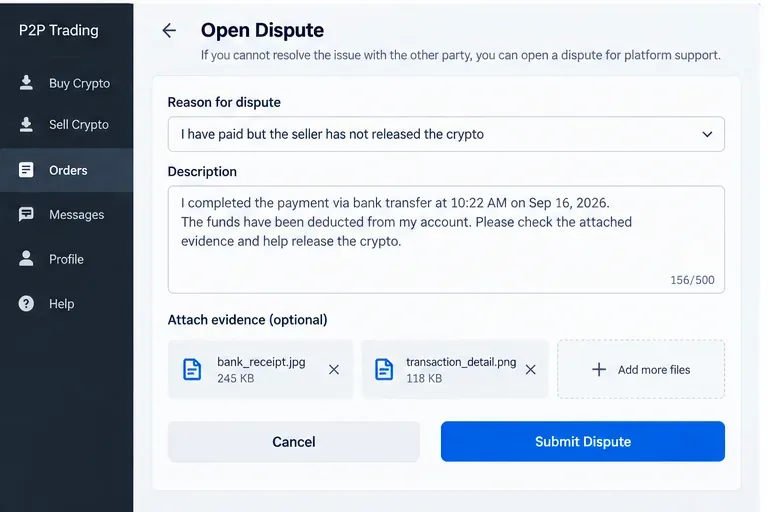
取引注文チャットでやり取りを続けることで、サポートチームが確認できる記録が残ります。Bybitの安全ガイドラインでは、プラットフォーム上でのやり取りを続け、不審な行動は異議申し立て手続きを通じて報告することを明示的に推奨しています。
スクリーンショット、SMS、またはメールで送られてきた領収書は、ご自身の口座に資金が入金されたこととは異なります。残高と取引履歴はご自身でご確認ください。
法定通貨が送金された後は、注文状況と支払い状況が一致しなくなる可能性があるため、キャンセルは紛争解決を困難にする可能性があります。サポートから特に指示がない限り、取引所のヘルプまたは異議申し立てのルートをご利用ください。
ユーザーが虚偽の情報を提供した場合、プラットフォームは異議申し立てを拒否したり、アカウントを制限したりする場合があります。原本を提出し、指定された形式に従ってください。
取引所間で統一された異議申し立て期間やワークフローは存在しません。Bybitは現在、キャンセルまたは完了した注文について5暦日間の期間を設けています。BinanceはP2P注文のヘルプおよびカスタマーサービスフローを通じて異議申し立てを受け付けています。OKXは、対象となるP2P問題発生時に紛争解決を認めており、処理時間は両当事者の対応と提出された情報の質によって左右されると述べています。KuCoinは、異議申し立てフォームを通じて詳細な裏付け証拠を要求しています。
これらのルールは変更される可能性があるため、実際に利用している取引所と地域のヘルプページをご確認ください。一部の機能やスケジュールは、すべての管轄区域またはアカウントタイプに適用されない場合があります。
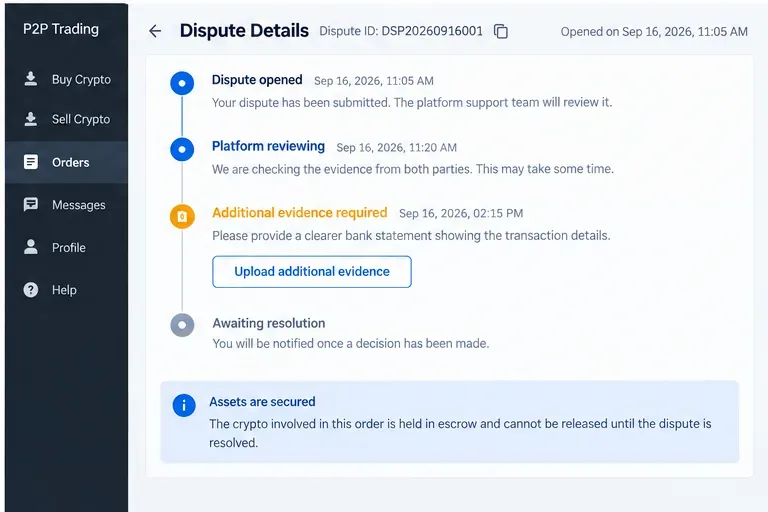
販売者の場合は、スピードよりも受領証明を優先してください。支払いが正しいアカウントに反映され、支払者の詳細がプラットフォームのルールに準拠していることを確認してから、支払いをリリースしてください。購入者が注文の支払いを済ませたとマークしているにもかかわらず、受領を確認できない場合は、暗号資産を注文にロックしたままにして、異議申し立て手続きを利用してください。
購入者の場合は、支払いが実際に口座から引き落とされ、注文書に記載された支払い情報に送金されたことを証明する証拠を優先的に保管してください。送金が確認された後も販売者が支払いを再開しない場合は、二度目の送金は行わないでください。元の取引証明を用いて異議申し立てを行ってください。
不正行為や第三者による支払いが疑われる場合は、迅速な対応よりも事態の収拾を優先してください。暗号資産を送金したり、プラットフォーム外での取引を受け入れたりせず、取引所を通じて問題をエスカレートさせてください。銀行側で不正な取引が確認された場合は、決済プロバイダーにも連絡してください。
問題が単なる処理の遅延であれば、少し待つのは妥当かもしれませんが、無期限に待つのではなく、取引所の異議申し立て規則に基づいた期限を設けてください。
異議申し立てを取り消したり、紛争が解決したと確認したりする前に、結果を独自に検証してください。購入者は、仮想通貨が実際に入金されたか、法定通貨の払い戻しが完了したことを確認する必要があります。販売者は、支払いが保留中ではなく、実際に受領されたこと、そして支払いが承認された支払者アカウントから行われたことを確認する必要があります。両者とも、最終的な注文状況とサポートに関する決定事項を記録として保存しておく必要があります。
P2P紛争は、注文、支払い、プラットフォーム上でのやり取り、そして取引内容を示す証拠など、すべてのステップが追跡可能な状態であれば、トラブルシューティングが最も容易になります。次に取るべき最適な行動は、問題が通常の決済遅延なのか、支払い情報の不一致なのか、注文のキャンセルなのか、あるいは不正行為の可能性なのかによって異なります。こうした区別に基づいて、待機、異議申し立て、外部へのエスカレーションといった選択肢を選ぶ方が、すべての紛争を同じように扱うよりも確実です。
保有者の集中度、デプロイヤーとのつながり、資金調達パターン、ラベル、およびオンチェーンの挙動を利用して、インサイダー関連の可能性のある暗号資産ウォレットを特定するための実用的なフレームワーク。
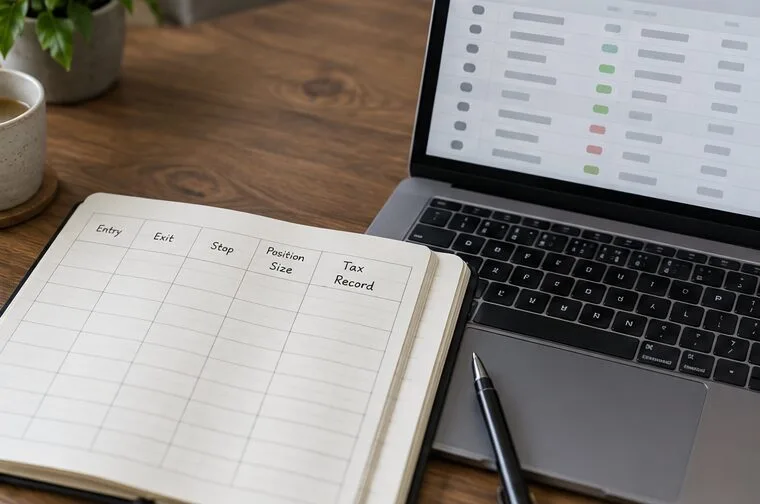
リスク予算、トークンのデューデリジェンス、ウォレットのセキュリティ、慎重な取引実行、出口戦略、税務記録などを考慮しながら、ミームコインを取引する方法を学びましょう。
Learn how to use KuCoin P2P to buy and sell crypto, verify payments, choose offers, avoid common scams, and handle disputes safely.
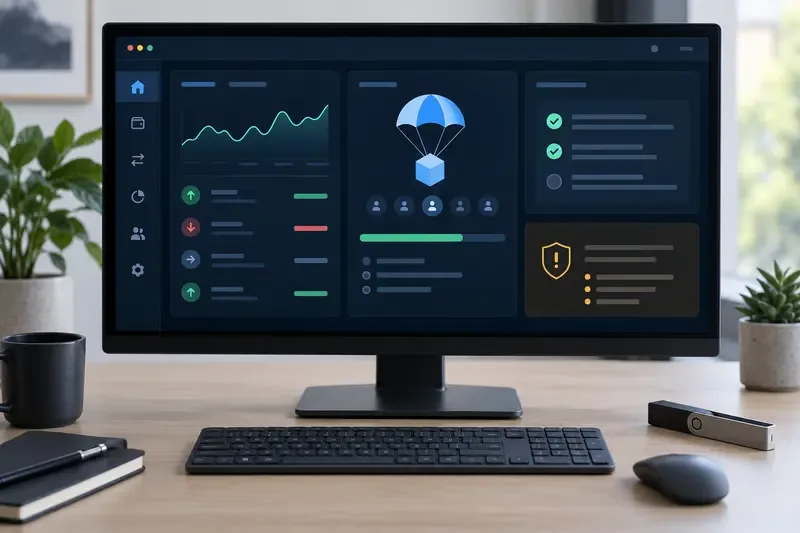
仮想通貨エアドロップとは何か、参加資格のルールはどのように機能するのか、避けるべき誤解、そして財布を危険にさらすことなく大きなチャンスを掴む方法について学びましょう。
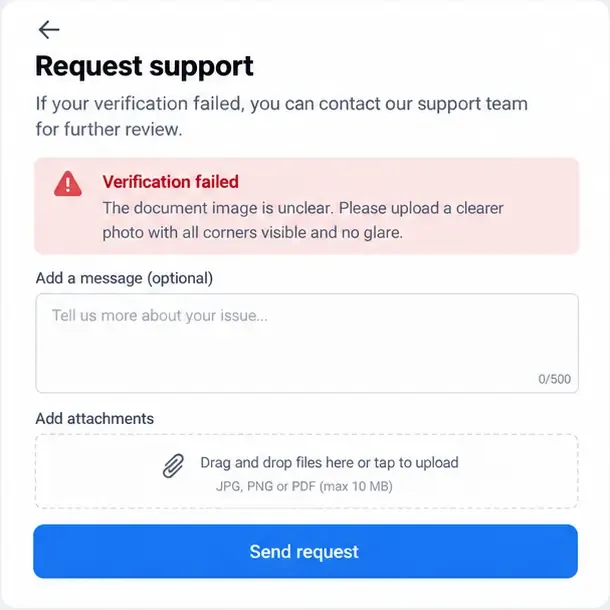
Binance、Bybit、OKXにおける本人確認(KYC)認証の失敗を、書類、自撮り写真、データ不一致、アカウントの問題を修正することで解決する方法を学びましょう。
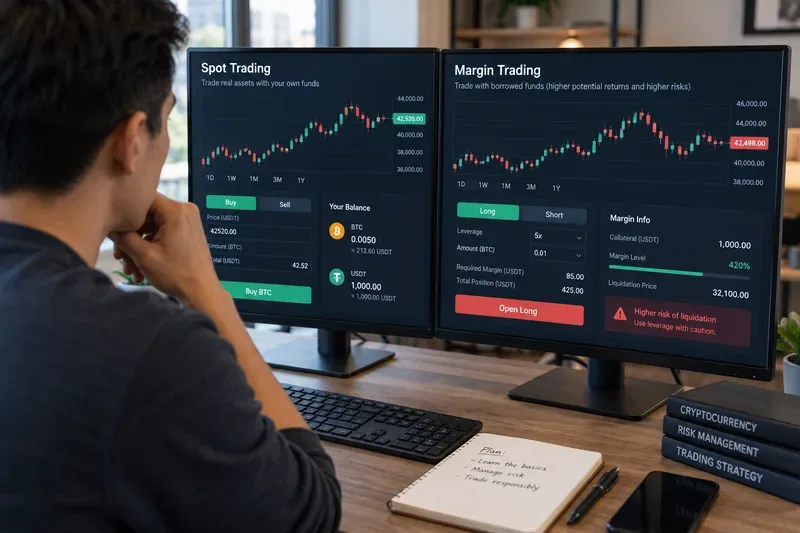
暗号資産における現物取引と証拠金取引の違いについて、所有権、レバレッジ、清算リスク、コスト、注文の種類、初心者向けのリスクチェックなどを含めて学びましょう。
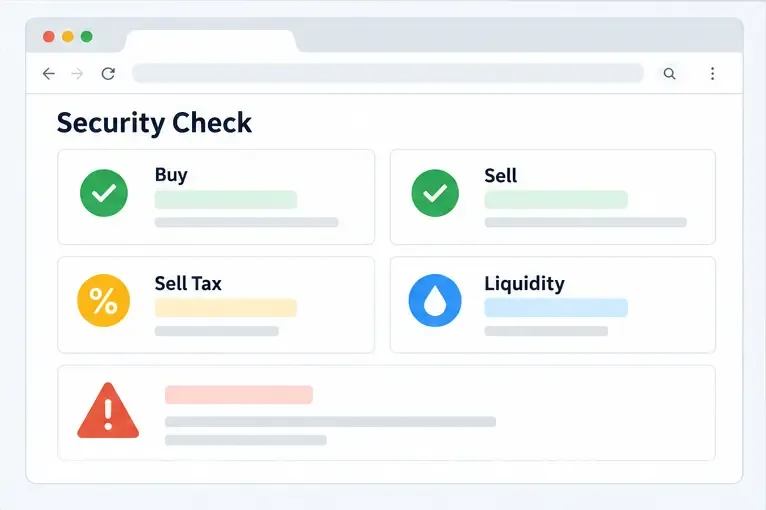
Learn how honeypot crypto scams block token sales, how to check sell simulations, taxes, liquidity, and contract controls before risking funds.
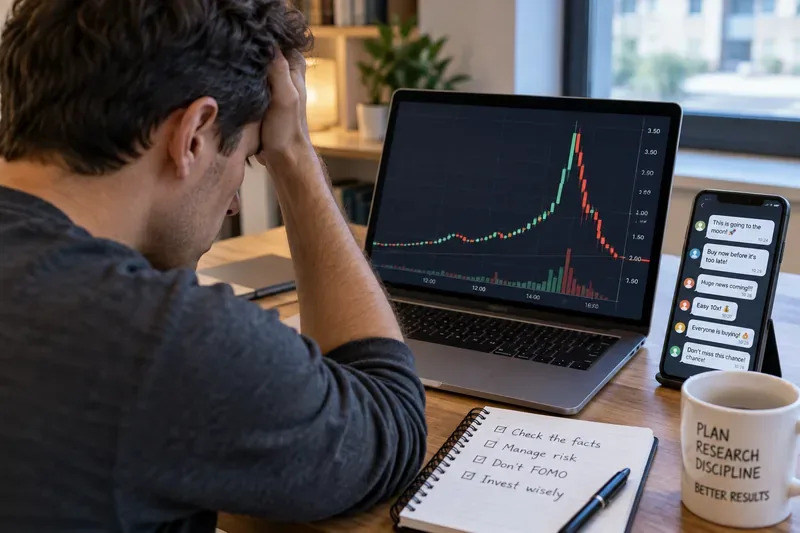
株価操作(ポンプ・アンド・ダンプ)の仕組み、注意すべき兆候、そして操作された株式や暗号資産から資金を守るための実践的な手順を学びましょう。
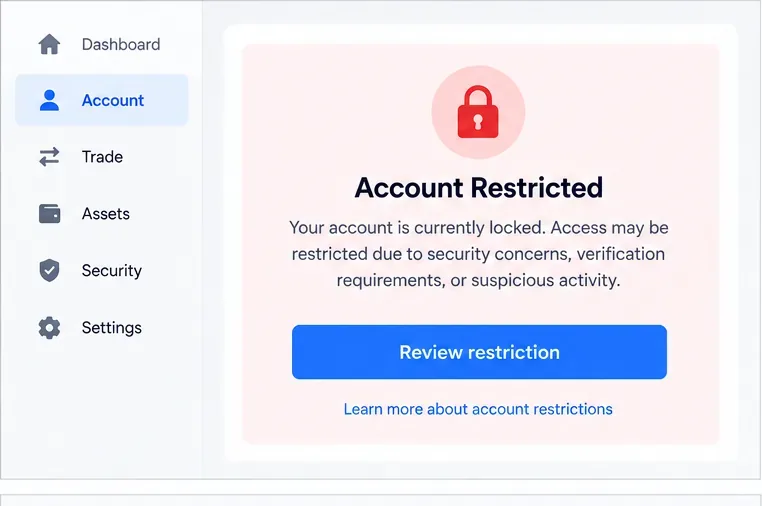
ロックされた仮想通貨取引所アカウントを安全に復旧する方法、本人確認書類の準備方法、セキュリティチェックの完了方法、詐欺の回避方法、審査遅延への対処方法を学びましょう。
Learn how Binance Dual Investment works, including Buy Low, Sell High, settlement, APR, liquidity limits, market risk, and Auto-Compound.