ソラナ・エコシステム分析:2026年第4四半期の勢いを維持できるか?

Solanaの2026年エコシステムは、DeFi、ステーブルコイン、リスク加重資産(RWA)、決済など、幅広い分野に拡大しています。ここでは、第4四半期の勢いを維持、あるいは弱める可能性のある要因について見ていきましょう。
Cosmos is easiest to misunderstand when it is treated like a single smart-contract network. The more useful mental model is a network of purpose-built blockchains that can communicate without giving up their own execution rules, governance, or economic design. That distinction matters because the quality of the Cosmos ecosystem is not determined by one headline metric. It depends on whether independent chains can deliver better products than they could as applications on a general-purpose chain, while still moving assets and data across the wider interchain.
For a newcomer, the goal is therefore not simply to memorize names such as ATOM, IBC, Osmosis, or Injective. A better outcome is to understand what each layer does, what evidence shows the model is working, and where the appchain approach introduces costs that can outweigh its benefits.
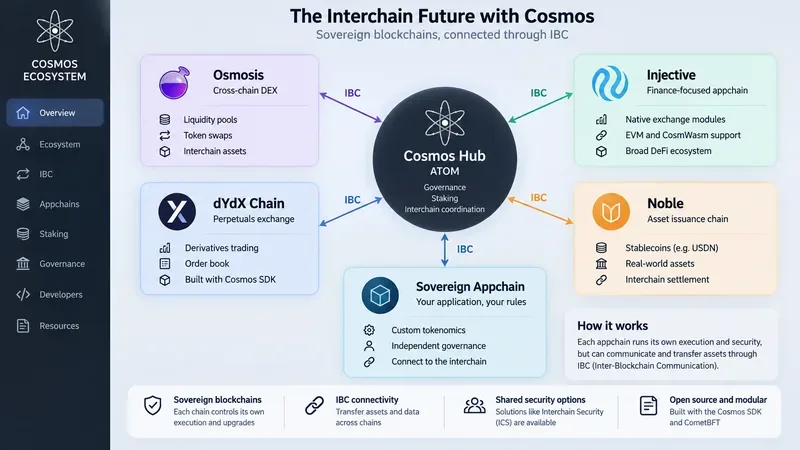
The Cosmos SDK documentation describes the SDK as a framework for building application-specific blockchains. Instead of forcing every application into the same execution environment, developers can customize transaction logic, fee models, governance, tokenization, and other protocol-level behavior. Cosmos SDK chains commonly use CometBFT for consensus and can add virtual-machine layers such as CosmWasm or EVM compatibility when needed.
This is the foundation of the appchain idea. An appchain, or application-specific blockchain, is a chain whose protocol is optimized around a particular product or category rather than serving as a neutral home for every possible application.
IBC, short for Inter-Blockchain Communication, is the protocol that lets compatible chains exchange authenticated data. Current IBC v2 documentation describes a model in which on-chain light clients verify the state of counterparties, while relayers carry packets between chains. The important result is that interoperability does not require every chain to share one execution environment.
For users, IBC can make separate chains feel more like parts of a larger network. For developers, it creates a way to specialize without becoming completely isolated. The practical test is not whether a chain has “IBC support” on a feature list, but whether transfers are reliable, liquidity is available where users need it, and cross-chain workflows remain understandable when something goes wrong.
Cosmos Hubのドキュメントでは、 ATOMがHubの主要トークンとして指定されています。ATOMはCosmos Hubにおけるステーキングとガバナンスに使用されます。Hubはインターチェーンにおける重要なチェーンの一つですが、Cosmosアプリチェーンはそれぞれ独自のトークン、バリデーター、手数料モデル、ガバナンスシステムを持つことができます。
この分離は、理解しておくべき最も重要な制約の一つです。より広範なCosmosテクノロジースタックの成長は、ATOMにとって必ずしも同じ経済活動や価値獲得につながるわけではありません。ATOMを具体的に評価するには、Cosmosテクノロジーを使用しているプロジェクトの数だけでなく、Cosmos Hubの利用状況、ステーキングとガバナンスへの参加、トランザクションの経済性、そしてHubが他のチェーンに提供するサービスなどを考慮する必要があります。
アプリチェーンは運用上の複雑さを増大させる。バリデーターや別のセキュリティモデル、ノードインフラストラクチャ、アップグレード、ガバナンス、RPCサービス、エクスプローラー、リレーヤー、流動性接続などが必要となる。こうした追加作業は、何らかの有意義な成果をもたらすべきである。優れたアプリチェーンの理論には、通常、チェーンレベルで存在する明確な理由が少なくとも一つは存在する。
| 質問 | 正の信号 | 警告標識 |
|---|---|---|
| 専門化は製品の品質向上につながるのか? | プロトコルレベルの機能は、速度、市場設計、料金、または制御を大幅に改善します。 | このチェーンは、通常のスマートコントラクトと同等の体験を、はるかに少ない複雑さで提供できる可能性がある。 |
| 相互運用性は実際に役立つのか? | ユーザーは、適切に管理されたIBCルートとサポートされているインターフェースを通じて、資産とデータを移動できます。 | 資産は、輸送ルート、橋渡しルート、あるいは流動性の低い資金プールに分散してしまう。 |
| セキュリティは理解できるものだろうか? | バリデーターまたは共有セキュリティモデル、アップグレードプロセス、および障害発生時の想定事項が文書化されています。 | ユーザーは、何がチェーンを保護しているのか、あるいは障害発生時やアップグレード時に何が起こるのかを知ることができない。 |
| そのチェーンには持続的な需要があるのだろうか? | ブロックスペースが使用されるのは、アプリケーションが必要としているからであり、単にインセンティブが活動を補助しているからという理由だけではない。 | 報酬やキャンペーンが終了すると、アクティビティは消滅します。 |
| 生態系は安定して機能できるのか? | リレイヤー、RPC、インデクサー、ウォレット、取引所には冗長性がある。 | 小さなインフラ障害でも製品が使用不能になる。 |
すべてのユーザーにとって客観的に「最適」なCosmosアプリチェーンは存在しません。より有益な比較方法は、明らかに異なる業務に特化したチェーンを検証し、チェーンレベルでのカスタマイズが結果を改善するかどうかを問うことです。
Osmosisのドキュメントでは、このネットワークはクロスチェーン型の分散型取引所および流動性ハブとして紹介されています。その役割は、アプリケーションが独自のチェーンを必要とする理由を示す好例です。取引動作、流動性メカニズム、手数料処理、資産のオンボーディングなどは、ホストチェーンの一般的なルールに制約されることなく、ネットワークのネイティブな要素として開発できます。
評価すべき点:トレーダーが十分な流動性を確保できるか、IBC資産が予測可能な形で入出金できるか、そして専用の取引所機能が明らかに優れたユーザーエクスペリエンスを生み出すか。チェーンレベルの設計が、他のスマートコントラクトDEXと比べてほとんど優位性をもたらさない場合、運用上の負担を正当化するのは難しくなる。
dYdX Chainの公式ドキュメントでは、dYdX ChainはCosmos SDKとCometBFTを用いて構築された、分散型無期限証券取引所向けのオープンソースのアプリケーション固有ブロックチェーンソフトウェアであると説明されています。その設計により、注文板やマッチングアーキテクチャといった重要な取引所機能が、チェーン自体により近い位置に配置されます。
これは、デリバティブ取引が注文処理、清算、オラクル入力、レイテンシーに関して厳しい要件を伴うため、アプリチェーン理論の強力なテストケースとなります。適切な評価基準は「Cosmosで構築されているか?」ではなく、「実行環境を自社で所有することで、取引所が市場構造とパフォーマンスをコントロールし、取引を大幅に改善できるか?」です。そうでない場合は、汎用的な実行レイヤーの方がシンプルかもしれません。
Injectiveの開発者向けドキュメント(2026年更新)では、オンチェーン取引モジュール、トークンファクトリー、オラクル関連コンポーネント、IBCサポートなど、金融モジュールに特化したCosmos SDKアーキテクチャについて説明しています。また、InjectiveはCosmWasmとEVMの両方の開発パスについても解説しています。
ここで重要な品質指標は、専門的なネイティブモジュールとアプリケーション開発者間のコンポーザビリティです。開発者が各アプリケーション内で同じオーダーブック、トークン、またはオラクルの仕組みを再構築するのではなく、堅牢なチェーンレベルのプリミティブを再利用できる場合、金融に特化したチェーンはより魅力的になります。ただし、トレードオフとして、カスタムモジュールはチェーン固有の複雑さを増大させ、汎用EVMネットワークに標準コントラクトをデプロイする場合よりも移植性が低下する可能性があります。
Nobleのドキュメントによると、NobleはCosmos SDKを使用して構築された、資産発行に特化したアプリケーション固有のブロックチェーンであり、ステーブルコインと実物資産に重点を置いています。IBCに対応しており、対応する資産向けにCircleのクロスチェーン転送プロトコルも実装しています。
Nobleは、DEXやデリバティブチェーンとは全く異なる専門性を示しています。このチェーンの価値提案は、あらゆるDeFiアプリケーションをホストすることではなく、資産の発行と移動のためのインフラストラクチャとして機能することです。したがって、成功は、ホストする無関係なdAppsの数ではなく、分散性、統合性、信頼性、そしてそこで発行される資産の有用性によって判断されるべきです。
ソブリン・アプリチェーンは通常、セキュリティを独自に解決する必要がありますが、それが唯一の選択肢ではありません。Cosmos Hubのドキュメントでは、インターチェーン・セキュリティによって、他のチェーンがCosmos Hubのバリデーターセットの一部または全部を使用できるようになると説明されています。IBC仕様では、クロスチェーン検証がこの共有セキュリティモデルの基盤となるメカニズムです。
これにより、プロジェクトが初日から完全に独立したバリデーター経済を構築する必要がないため、チェーンの立ち上げ障壁を下げることができます。しかし、共有セキュリティにはトレードオフが伴います。コンシューマーチェーンの設計、バリデーターの義務、ガバナンスの調整、経済性、アップグレードの依存関係など、すべてが重要です。プロジェクトは、「Cosmosアプリチェーンは共有セキュリティを使うべきだから」という理由ではなく、リスクと運用モデルを改善できるという理由で共有セキュリティを選択すべきです。
2026年のエコシステムを評価する読者にとって、最も有用な指標はイデオロギー的なものではなく、運用面でのものです。実行環境を所有する明確な理由を持つチェーン、ユーザーが実際に頼りにしているIBCルート、リスクを隠蔽することなく不要なクロスチェーンの複雑さを隠蔽するウォレットとインターフェース、信頼性の高いリレーヤとRPCインフラストラクチャ、そしてユーザーが平易な言葉で説明できるセキュリティモデルを探してください。
もう一つの好ましい兆候は、専門化によって再利用可能なインフラストラクチャが生まれることです。Osmosisのようなチェーンが他のチェーンがアクセスできる流動性プラットフォームになったり、Nobleがインターチェーン全体に資産を分散させる発行レイヤーになったりすれば、ネットワークは孤立したミニブロックチェーンではなく、相互補完的なサービスの集合体のように機能し始めます。
ブロックチェーンを運用することが、必ずしもコントラクトをデプロイするよりも優れているとは限りません。アプリケーションにカスタム実行が必要ない場合、バリデーターの経済性が弱い場合、ユーザーが過剰なブリッジングやウォレットの摩擦に直面する場合、またはクロスチェーンの依存関係が製品価値よりも運用リスクを高める場合は、チームはアプリチェーンの採用を再検討する必要があります。
断片化は、このモデルの中心的な限界点です。各主権チェーンは、別のトークン、バリデーターセット、ガバナンスプロセス、ブロックスペース市場、ブリッジルート、およびインフラストラクチャ依存関係を導入できます。IBCは通信障壁を軽減しますが、経済の断片化を解消したり、すべての資産をあらゆる場所で均等に流動化したりするものではありません。インターチェーンは、その断片化を補うのに十分な専門化が実現されている場合に最も効果を発揮します。
「Cosmosが勝つか」と問うのではなく、より絞り込んだチェックリストを使用しましょう。まず、特定のチェーンが主権を持つことで何が優れているのかを特定します。次に、他のチェーンとの接続方法と、それらの接続を介して実際に移動する資産やメッセージを検証します。3つ目に、セキュリティモデルと、その運用コストを誰が負担するのかを理解します。4つ目に、チェーンのトークンエコノミクスと、Cosmos HubにおけるATOMの役割を切り離します。最後に、インセンティブが参加の主な理由ではなくなった後も、ユーザーが継続的に利用するかどうかを観察します。
このフレームワークは、すべてのCosmos SDKチェーンを単一の経済単位として扱うよりも、Cosmosエコシステムに対するより永続的な理解をもたらします。インターチェーンの未来は、すべてのチェーンが実際に単一のネットワークになることを約束するものではありません。それは、専門化と相互運用性を両立させようとするアーキテクチャです。その成功は、個々のアプリチェーンが主権を正当化するのに十分な実質的な製品上の優位性を生み出すかどうか、そしてIBCと共有インフラストラクチャが、それぞれの独立したリスクを覆い隠すことなく、それらの独立したシステムを相互に繋がっていると感じさせることができるかどうかにかかっています。
Solanaの2026年エコシステムは、DeFi、ステーブルコイン、リスク加重資産(RWA)、決済など、幅広い分野に拡大しています。ここでは、第4四半期の勢いを維持、あるいは弱める可能性のある要因について見ていきましょう。
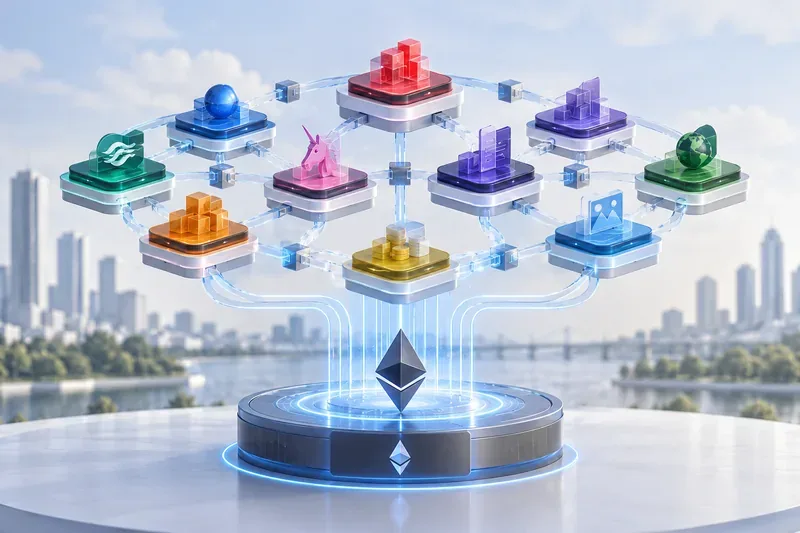
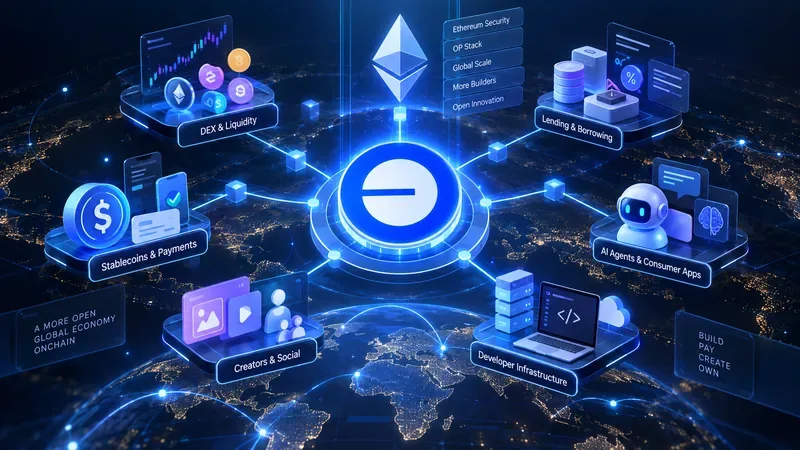
2026年版オプティミズム・スーパーチェーンガイド:検証済みの採用指標、OPスタックのトレードオフ、そしてUniswap、Aerodrome、Velodrome、Aave、Morphoがそれぞれ異なるニーズにどのように適合するか。
Understand how Cosmos, ATOM, IBC, and appchains fit together, plus how to judge Osmosis, dYdX Chain, Injective, Noble, and the interchain model.
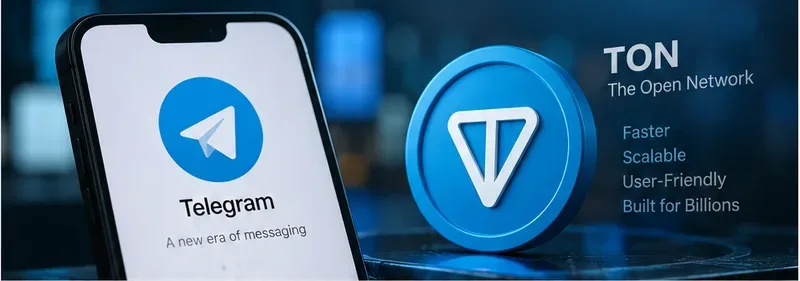
TONエコシステム、Telegramミニアプリ、ウォレット、決済、DeFi、リスクについて解説するとともに、2026年のToncoinからGramへの名称変更とその意味についても触れます。
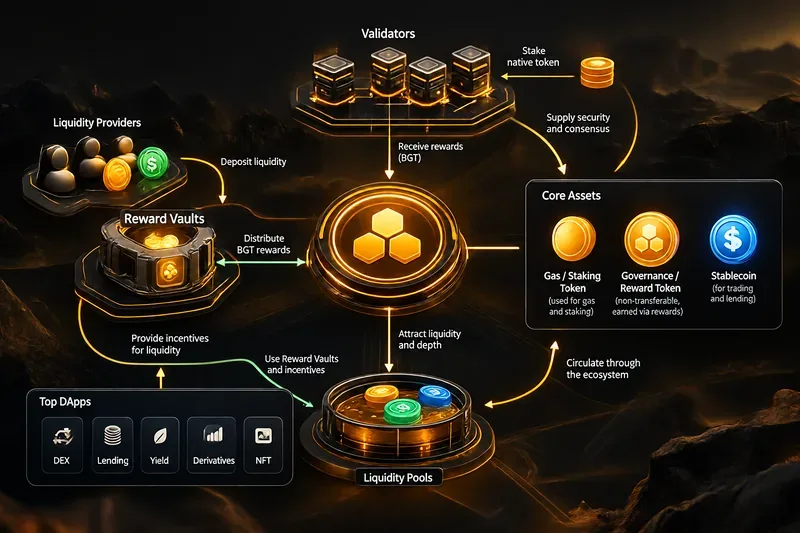
Explore Berachain’s Proof of Liquidity model, BERA, BGT, HONEY, Reward Vaults, and notable DApps including BEX, Bend, Infrared, Kodiak, Dolomite, and BeraBorrow.
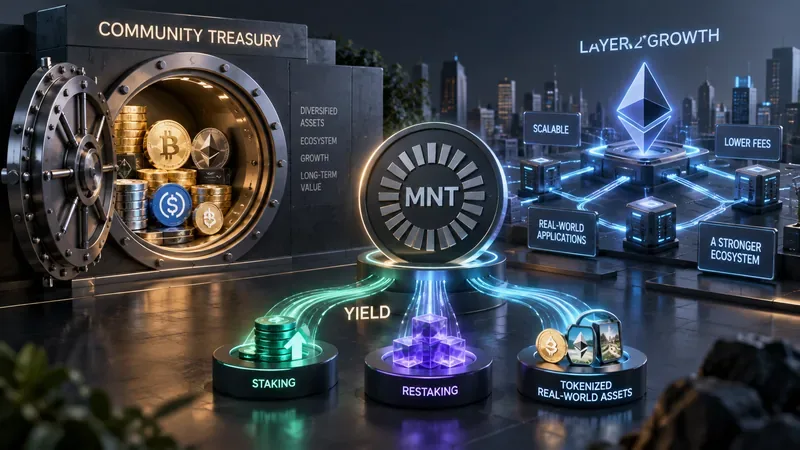
MantleのMNTを基盤としたエコシステム、財務構造、利回りレイヤー、L2アーキテクチャ、成長シグナル、そして投資家が2026年に注視すべきリスクについて理解を深めましょう。
Monadの並列EVM、エコシステムの普及状況、開発者にとってのトレードオフ、そしてEthereum、Sei、MegaETHとの比較について、2026年時点での実践的な評価。
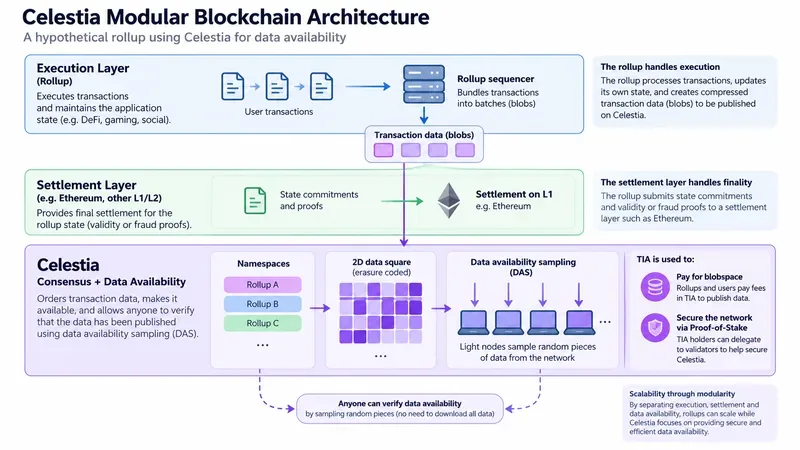
Celestiaの実践的な詳細解説。モジュール型ブロックチェーン、データ可用性サンプリング、ネームスペース、Blobstream、TIAユーティリティ、そしてロールアップに伴うトレードオフについて解説します。
2026年のBaseエコシステムを探索してみましょう。AerodromeやMorphoから、Aave、Uniswap、Virtuals、Zora、Moonwell、そしてx402エージェント決済まで、幅広いプラットフォームを網羅しています。
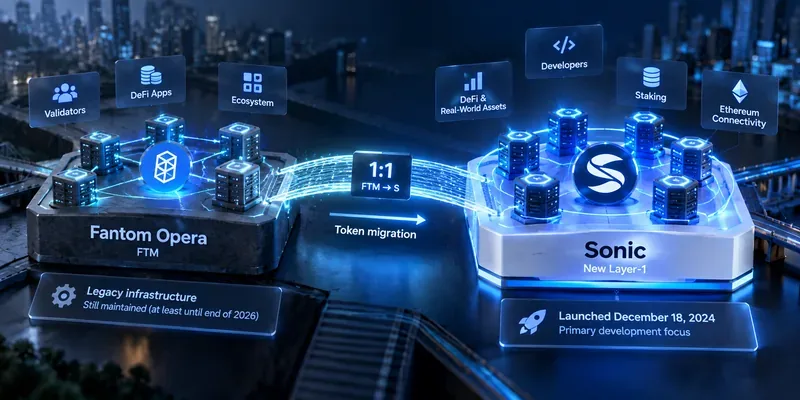
FantomのSonicへの移行、FTMからSへの移行、Sonicのアーキテクチャ、トークノミクス、開発者へのインセンティブ、エコシステムへの影響、そして2026年においても依然として重要なリスクについて分析する。