Short answer: For a canonical withdrawal from either network to Ethereum, neither route is an instant cash-out. Arbitrum’s current user documentation says to allow at least seven days for Arbitrum One and Nova. Base’s current protocol documentation lists a five-day finalization window for the standard single-proof path, or a one-day window when the dual-proof path is available and used. Both routes also involve transaction fees, and their official documentation surfaces are different: Arbitrum directs users to its Portal bridge, while Base now points users to independent bridge providers and says its old bridge site is deprecated.
Those timelines apply to standard withdrawals that settle through the chain’s canonical bridge path. A third-party service may deliver funds sooner by advancing liquidity, but that is a different route with its own provider, fees, token support, and risk. Verify the route and the final amount before signing. This comparison reflects official documentation available September 29, 2026; network software and provider routes can change.
Which withdrawal is faster: Arbitrum or Base?
For a typical canonical withdrawal to Ethereum, Base currently has the shorter documented finalization window: five days on its standard single-proof route, compared with Arbitrum’s published minimum of seven days. Base documents a one-day dual-proof path, but that timing is conditional on a withdrawal being backed by both a TEE proof and a zero-knowledge proof. Do not assume every Base withdrawal qualifies for that path; check the transaction and current route details.
Base also says that posting the relevant Base state to Ethereum usually adds about 20 to 60 minutes before the proving and finalizing steps, then the finalization window must pass. Submitting the prove and finalize transactions takes additional time. Arbitrum’s user guide displays an estimated 7–8 day countdown for a standard withdrawal and says funds arrive on Ethereum after at least seven days. These are planning windows, not guarantees of the exact minute funds will be spendable.
The waiting periods are part of the optimistic-rollup security model. The networks need time for the relevant state or claim to be checked and challenged before assets are released on Ethereum. The Base documentation describes its finalization window and proof conditions in its withdrawal specification. Arbitrum explains its withdrawal flow and wait in the bridge quickstart, and its BoLD overview describes the dispute protocol.
Does “withdrawal started” mean the money is already on Ethereum?
No. A wallet can show a successful transaction on the source L2 even though the withdrawal has not completed on Ethereum. The source-chain transaction initiates the withdrawal; it does not mean the destination-chain asset is already available. Check the destination network and the withdrawal’s status in the bridge or transaction interface.
Base documents three stages for its canonical withdrawal: initiate the message on Base, prove the withdrawal on Ethereum after the relevant state is posted, and finalize it on Ethereum once the finalization window has passed. The Base spec says anyone can submit the prove or finalize transaction, so the interface or a relayer may handle a step for you; the exact user interaction can vary. In the Arbitrum Portal, the guide describes initiating a withdrawal, waiting through its countdown, then using the Claim action when it is ready. A claim or finalize transaction is a separate step from the initial L2 transaction.
“Finality” can therefore mean different things in a wallet or explorer: the L2 transaction may be confirmed, while the cross-chain withdrawal remains pending. For a transfer needed by a deadline, allow for the full canonical window plus time to submit any required proving or claim transaction. Do not treat a pending L2 withdrawal as liquid funds on Ethereum.
How do the official routes differ?
Arbitrum: Arbitrum’s current Portal hosts its bridge at portal.arbitrum.io/bridge. The documentation covers ETH and ERC-20 transfers between a parent chain and an Arbitrum chain, and it describes a wait-and-claim process for withdrawals to Ethereum. Confirm that the selected source is the intended network, such as Arbitrum One, and the destination is Ethereum. Arbitrum Nova and other Arbitrum chains are distinct routes; do not infer their token or timing support from an Arbitrum One transaction.
Base: Base’s documentation says the previous bridge at bridge.base.org has been deprecated. Its current Bridge to Base page lists Superbridge and Brid.gg for supported assets between Ethereum and Base. Base identifies these as independent providers and disclaims responsibility for their operations. For a withdrawal, confirm on the provider’s current interface whether the quoted route uses a canonical withdrawal or a faster liquidity route. The protocol-level explanation is in Base’s withdrawal specification.
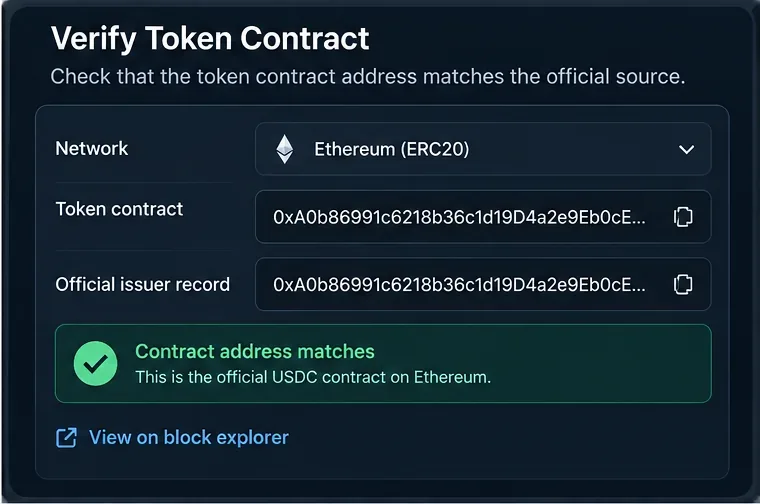
“Official route” should mean you reached the route through the project’s current documentation or portal, not that every provider listed is operated by the network. Bookmark links from the official documentation, check the domain carefully, and verify the connected chain, destination, token contract, and amount. A lookalike bridge page can put funds at risk.
Which route costs less?
There is no dependable fixed winner on fees without knowing the token, amount, current gas conditions, and exact path. A canonical withdrawal normally requires gas for the transaction on the source L2 and Ethereum-side activity to prove and complete the withdrawal. Ethereum transaction costs can vary substantially with network demand. A provider may also charge a route fee, include a spread in the quoted rate, or use a liquidity provider. A faster quote may cost more than waiting for canonical settlement, but compare the actual amount received rather than assuming.
| Cost to compare | Canonical Arbitrum withdrawal | Canonical Base withdrawal | Faster third-party route |
|---|
| Source transaction | Arbitrum gas to initiate | Base gas to initiate | Source-chain gas; route-dependent |
| Ethereum-side steps | Claim when the withdrawal is ready; the Portal may abstract protocol steps | Prove and finalize steps are part of the documented protocol flow; a provider or relayer may submit them | May not use the canonical withdrawal process for immediate delivery |
| Extra provider charge | Check the displayed route and wallet prompts | Check the listed provider’s quote and terms | Check fees, spread, and destination amount before signing |
| When to check | Review the wallet’s estimated gas and keep funds for the later claim | Review the full quote and whether proof/finalization are relayed or paid separately | Compare the final received amount and route conditions |
Do not assume that the word “official” means “free,” or that a low L2 gas estimate includes the later Ethereum transaction. Before confirming, look for the estimated network fee, any provider fee, the asset and network you will receive, and whether another transaction will be needed. If the wallet or provider does not show a clear total or final amount, pause and check its documentation rather than estimating from a previous transfer.
When is a fast bridge worth considering?
A fast bridge can be useful when you need funds on Ethereum sooner than the canonical challenge window allows and the provider supports the exact asset and destination you need. These services can use liquidity, relayers, or market makers to deliver funds before the canonical withdrawal has fully finalized. Base’s documentation explicitly distinguishes such faster services from the canonical finalization process: they do not shorten the protocol’s own finalization window.
The trade-off is that speed comes with provider-specific terms and additional dependencies. Review the provider’s fee and exchange quote, liquidity limits, supported tokens, refund or failure handling, and the chain/address receiving the funds. Token names alone are not enough: different networks can use distinct token contracts or wrapped versions of an asset. If you cannot verify that the receiving service supports the exact token and network, do not send it.
If you are not in a hurry, the canonical route gives you a clear protocol-defined settlement process and avoids relying on an outside liquidity provider for early delivery. If you are in a hurry, compare the fast route against waiting, and make sure the time saved is worth the quoted cost and provider exposure for your situation.
What should you check before starting?
- Confirm the destination. “Ethereum” means Ethereum mainnet, not another L2 or an exchange account’s internal balance.
- Confirm the source chain and asset. Arbitrum One, Arbitrum Nova, and Base are different networks. Check the exact token contract if sending an ERC-20.
- Read the current timing estimate. Arbitrum’s guide currently says at least seven days and displays about 7–8 days. Base documents five days for the standard single-proof path and one day for an eligible dual-proof path. Check for current network upgrades and route conditions.
- Budget for more than the first transaction. Keep enough native currency for the source transaction and any later claim, proof, or finalization step you may need to submit.
- Compare the amount received. Include source gas, destination gas, provider fee, and any quoted exchange spread when comparing fast and canonical routes.
- Use a small test when appropriate. For an unfamiliar provider, token, or address, a small transfer can help verify that the destination setup is correct before moving a larger amount. It still costs fees and does not remove smart-contract or provider risk.
So which one should you choose?
For a canonical withdrawal to Ethereum when you can wait, Arbitrum’s documented process is familiar and clearly exposes a waiting countdown followed by a claim; Base’s standard documented window is currently shorter at five days, with a one-day route only under the stated dual-proof condition. For either chain, estimate the total cost using the live wallet or provider quote rather than choosing from a blanket fee claim.
Choose a faster third-party option only when the time advantage matters and you have verified the provider, asset, fees, and destination. If your funds are already held on an exchange that supports a direct withdrawal to the destination network, that may be a separate option, but it is an exchange withdrawal rather than a canonical bridge withdrawal; check the exchange’s network support and fees. The practical comparison is not simply “Arbitrum versus Base”: it is the exact source, token, settlement path, current proof window, and total amount that reaches the destination.