Home
» Ecosystem
»
Sei Network Analysis: Speed, Scalability, and DeFi Ecosystem
Sei Network Analysis: Speed, Scalability, and DeFi Ecosystem
Short answer: Sei is an EVM-compatible Layer 1 built around fast block production and parallelized execution. That makes it interesting for trading, payments, and DeFi applications that can keep many transactions independent. The trade-off is that speed alone does not prove deep liquidity, low execution risk, or sustainable decentralization. A useful Sei Network analysis therefore has to separate what is live today from what belongs to the Giga roadmap, then evaluate the chain by the user or developer’s actual need.
Server racks and a connected-node display illustrate the infrastructure considerations behind Sei’s high-throughput, parallelized execution design.
Sei’s current position: fast EVM execution, with a changing architecture
As of September 15, 2026, the most important distinction is between the current Sei mainnet and the longer-term Giga design. Sei’s official documentation describes a parallelized EVM with roughly 400-millisecond blocks. In July and August 2026, the project announced the first Giga components, Ares and Eidos, moving onto mainnet through Sei 6.6. Those upgrades are part of a broader, continuing rollout rather than proof that every Giga target is already production performance.
The Giga Whitepaper V2 announcement discusses targets such as sub-250-millisecond finality and more than 200,000 transactions per second, expressed through a five-gigagas-per-second design target. These figures belong to the roadmap and design direction. They should not be used as a current, independently verified Sei mainnet throughput number. The whitepaper also distinguishes ordering finality from state-attestation finality, an important detail when comparing chains by the word “finality.”
How the speed and scalability trade-off works
Parallel execution is useful, but not universal
Traditional blockchain execution often processes transactions in a strict sequence. Sei’s parallelization engine attempts to execute transactions concurrently when their state changes do not conflict, then checks whether the result is consistent. In practical terms, a large batch of unrelated swaps, transfers, or orders may have more room to run in parallel than a chain of transactions that repeatedly touches the same pool, account, or contract storage slot.
This is why a headline block time is only one part of a scalability analysis. The result experienced by an application depends on transaction dependency patterns, contract design, state reads and writes, validator hardware, RPC capacity, indexing, and demand at the time of use. An application with highly contested state can see less benefit than a workload made up of independent transactions. The right question is not simply “How fast is Sei?” but “How does this application behave under Sei’s execution model?”
Fast confirmation can improve product design
Short block intervals and fast confirmation can make order updates, in-app swaps, payments, and game-like interactions feel more responsive. They can also reduce the time a user waits before a front end refreshes a balance or a market maker updates its view of an order.
The cost is operational. High-throughput systems put pressure on validators, RPC providers, indexers, and application infrastructure. If performance depends on increasingly expensive machines or a small group of well-provisioned operators, the network may face a decentralization and availability trade-off. Sei’s discussion of the Eidos storage upgrade acknowledges that higher throughput can raise hardware requirements and that storage performance is a separate bottleneck from consensus or execution. That is a reason to monitor node diversity and service reliability, not just benchmark claims.
Comparison table: what matters in a Sei evaluation
Criterion
What Sei offers or is changing
What to verify before relying on it
Confirmation speed
Official documentation describes approximately 400-millisecond blocks; Giga targets are faster.
Measure the application’s end-to-end confirmation, RPC response, and indexer delay.
Execution
Parallelized EVM execution can process independent state changes concurrently.
Test the contract’s contention, storage access, gas behavior, and failure handling.
Developer access
EVM compatibility supports Solidity and familiar Ethereum tooling, with documented differences.
Re-run tests and review Sei-specific compatibility notes instead of assuming byte-for-byte behavior.
Cosmos transition
The network is moving toward an EVM-first architecture; new CosmWasm deployments have been disabled.
Check whether the project depends on new CosmWasm code, IBC assets, or legacy Cosmos infrastructure.
DeFi usability
Fast execution may suit exchanges, stablecoin payments, and other high-frequency applications.
Check real liquidity, slippage, oracle coverage, bridge design, audits, and recovery procedures.
Sei’s DeFi ecosystem: where the thesis is strongest
Sei’s ecosystem direction is centered on EVM applications for trading, stablecoins and payments, DeFi, tokenized assets, and newer agentic or automated applications. The official ecosystem directory is useful for discovering wallets, protocols, infrastructure providers, bridges, and developer tools. It is a directory, not a security endorsement, so inclusion should not be treated as a due-diligence result.
Trading is the clearest architectural fit. Exchanges and market applications care about rapid state updates, predictable ordering, and the ability to process many independent user actions. Parallel execution can help when orders touch separate markets or accounts. It does not remove market-structure risks: liquidity can be thin, price impact can be large, oracle updates can fail, and a fast chain can simply move a bad transaction faster.
Stablecoins and payments are another plausible fit because users value quick settlement and low friction more than a complex composability stack. For lending, derivatives, and leveraged DeFi, however, risk analysis must go further. Review oracle sources, liquidation behavior, collateral liquidity, pause controls, upgrade authority, and the protocol’s audit and incident history. The chain’s base-layer speed cannot compensate for a fragile application contract.
Important ecosystem and migration trade-offs
EVM compatibility is an advantage, not a guarantee
Existing Solidity teams can often reuse familiar wallets, libraries, and deployment workflows. Sei’s documentation covers common EVM tools and also points out behavior differences that developers need to understand. A production migration should include tests for gas estimation, transaction ordering, logs, precompiles, contract addresses, RPC methods, and indexer output. A successful deployment is not the same as a verified migration.
CosmWasm and IBC users need a separate decision
The SIP-03 transition notice states that new CosmWasm code uploads and new contract instantiations are disabled, while existing CosmWasm contracts and IBC message paging were described as unaffected at the time of that notice. Sei 6.4 also added the protocol capability to disable inbound IBC transfers, subject to governance action. This creates a material choice for Cosmos-native developers and holders of IBC assets: the EVM-first direction may be attractive for a new Solidity product, but it can be a poor fit for a project whose core value depends on new CosmWasm deployments or long-term IBC connectivity.
Users holding bridged or IBC representations should verify the current status of the exact asset, route, issuer, and redemption process before moving funds. “Same ticker” does not necessarily mean the same token or the same claim on underlying assets.
Recommendations by use case
For an EVM developer building a high-frequency application: Sei is worth a controlled test if fast settlement and parallelizable transactions are central requirements. Start with a small deployment, load testing, and a review of the current EVM compatibility documentation.
For a trading or market-infrastructure team: investigate Sei’s execution design, but make liquidity and data availability gating criteria. Compare real spread, depth, RPC latency, order-processing behavior, and oracle freshness across the markets you need.
For a Cosmos-native or CosmWasm team: treat the EVM-first transition as a strategic constraint. Confirm whether existing contracts can continue operating as intended and whether a new product should move, remain on another Cosmos chain, or adopt an EVM implementation.
For a DeFi user seeking lower friction: choose individual applications based on contract quality, liquidity, bridge risk, and oracle design. Use a small test transaction and verify the canonical contract address before supplying meaningful capital.
For a conservative portfolio: do not value SEI exposure or ecosystem participation from speed claims alone. Consider protocol upgrades, validator concentration, token utility, fee economics, and the possibility that roadmap outcomes or timelines change.
Practical Sei Network due-diligence checklist
Label every performance figure as current mainnet data, a benchmark, or a roadmap target.
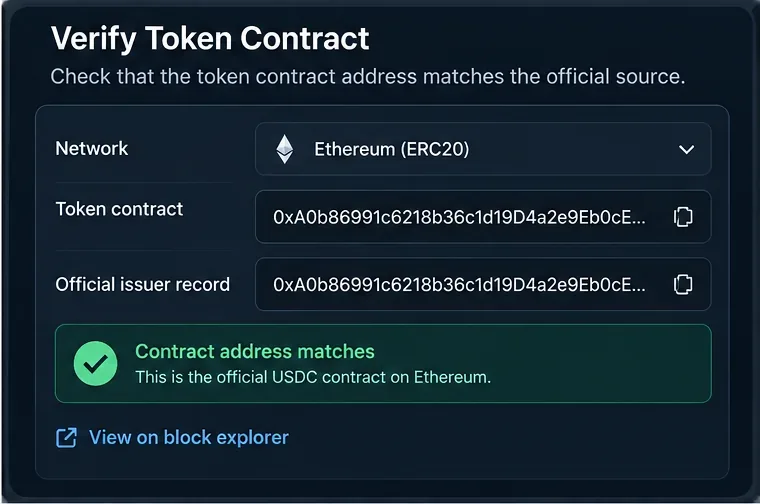
Confirm the network, chain ID, RPC endpoint, and canonical token contract from official documentation or the project’s verified channels.
Test the application with the transaction dependency pattern it will actually use.
Check liquidity depth and expected slippage at the size you plan to trade or deposit.
For Cosmos assets, verify the current IBC status and whether the route depends on a planned protocol change.
Monitor release notes and governance because the Giga rollout is continuing and its stated roadmap is subject to change.
Bottom line
Sei’s strongest case is not that it is universally “the fastest chain.” It is that a purpose-built, parallelized EVM can give certain applications a better speed and throughput profile, especially trading, payments, and workloads with many independent transactions. The price of that specialization is a more important diligence burden around workload fit, infrastructure requirements, ecosystem liquidity, cross-chain assets, and architectural transition.
For current users, the sensible approach is to treat the live approximately 400-millisecond block experience and the first Sei 6.6 Giga components as the present context, while treating sub-250-millisecond finality and 200,000-plus transaction targets as roadmap claims. That distinction keeps the analysis useful whether you are choosing a chain, planning a migration, or deciding how much application-level risk you are willing to take.