Home
» Ecosystem
»
Stablecoin Redemption vs. Exchange Selling: Costs, Limits, and Depeg Risks
Stablecoin Redemption vs. Exchange Selling: Costs, Limits, and Depeg Risks
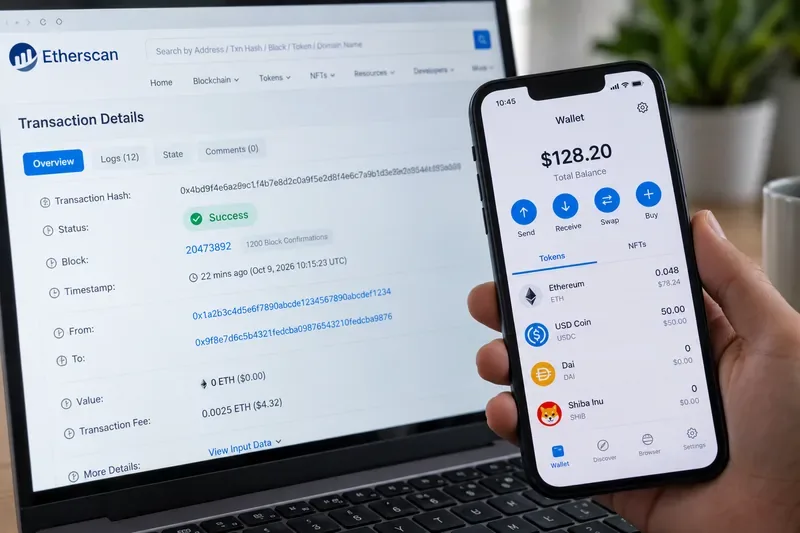
A phone, exchange screen, and bank transfer form represent two different routes from a dollar stablecoin to fiat.
When a dollar stablecoin is worth slightly less than one dollar on an exchange, “redeem it” and “sell it” can sound like the same fix. They are different transactions. Redemption asks an issuer or authorized provider to exchange eligible tokens for fiat under its rules. Exchange selling matches your order with a market buyer at the price available on that venue. The right route depends on access, amount, deadline, total costs, and why the price has moved.
Use this guide to compare the amount that will actually reach your bank account. It focuses on dollar-linked tokens such as USDC and USDT; terms differ by issuer, token, country, chain, and platform. Figures below are examples checked against provider pages on September 30, 2026, and may change.
Quick comparison
Question
Direct redemption
Exchange sale
Who sets the exit price?
Issuer or authorized off-ramp under its redemption terms, often targeting par for eligible tokens
The order book or quoted price on that platform
Who can use it?
Only customers who meet the issuer’s account, identity, jurisdiction, minimum, and token requirements
Customers who can access a supported exchange market and fiat withdrawal method
Main costs
Redemption charges above applicable thresholds, bank charges, network transfer costs, and currency conversion
Trading commission or quoted spread, price impact, withdrawal or bank charges, and network transfer costs
Main constraint
Eligibility, limits, banking hours or settlement rails, compliance review, and processing time
Liquidity, order-book depth, venue availability, account limits, and withdrawal timing
Price risk
Less direct exposure to an exchange discount once redemption is accepted, but not zero issuer, operational, or timing risk
Sale executes at a market price that may be below the peg, especially in stressed or thin markets
What redemption means in practice
A direct redemption is not simply a universal “cash out” button embedded in every token. It is a claim processed through an issuer’s or authorized provider’s system. The customer may need a verified account, a supported bank account, an accepted jurisdiction, a minimum balance, and tokens on a supported network. The issuer can also apply limits and compliance checks.
Access is a material difference for retail holders. Circle says Circle Mint supports direct 1:1 USDC redemption for exchanges, institutional traders, banks, and large financial institutions, and that Mint is not available to individuals or small businesses. Retail users commonly convert through an exchange, wallet, neobank, or on/off-ramp. In the European Economic Area, separate legal and regulatory terms can affect who may request redemption, so check the rules that apply to your residence and token.
Tether’s published direct fiat redemption instructions currently require a verified Tether.to account and state a minimum redemption amount of 100,000 USD equivalent. That makes direct redemption impractical for many individuals, even though they can sell USDT on a supported exchange. Always check the issuer’s live minimum and fee page before transferring tokens; sending funds to an account or chain that cannot accept them can create delay or loss.
Compare the full cost, not a headline fee
Estimate the net fiat proceeds for both routes using the same amount and deadline:
Net proceeds = fiat received − trading or redemption fee − spread or price impact − network fee − bank or payment fee − currency-conversion cost.
For redemption: check the fee tier and threshold, wire or bank charges, the network fee to move tokens into the redemption account, and any exchange rate applied if your bank account receives a different currency.
For an exchange sale: check the exact pair, maker or taker fee, the order-book spread, the depth available at your size, fiat withdrawal costs, and any fee to move tokens into the exchange.
For either route: include the cost of time. A cheaper path that misses a payment deadline may not be cheaper for your purpose.
For a concrete illustration, Kraken’s published schedule, checked September 30, 2026, lists a 0.20% maker and taker fee at its entry tier for stablecoin, pegged-token, and FX pairs. On a hypothetical $10,000 order, 0.20% is $20 before spread, price impact, withdrawal charges, or network costs. This is one venue’s posted schedule, not a universal rate; your platform, account tier, pair, and order type may differ.
Direct redemption can also carry costs that are not a simple per-transaction charge. Circle’s current fee pages describe a tiered redemption structure that took effect March 15, 2026, including daily thresholds, limits, and monthly net-redemption adjustments for eligible Circle Mint customers. Its product fee schedule separately says a receiving bank may charge for a wire and that outbound token transfers incur network fees. Read both the fee table and the account-specific terms instead of assuming “1:1” means “no cost.”
Limits and timing to verify before moving tokens
Account eligibility: confirm that you can open and use the issuer or exchange account in your country, and that the account holder name matches the bank account requirements.
Token identity: confirm the exact asset and network. Native USDC, bridged USDC, and other similarly named tokens may have different issuers, redemption rights, and conversion paths.
Minimum and maximum: check per-transaction, daily, and rolling-period limits. For an exchange, check both trading and fiat-withdrawal limits.
Settlement window: distinguish 24/7 blockchain transfers from bank settlement. A token transfer can settle outside banking hours while a fiat wire waits for the next processing window.
Review holds: account verification, source-of-funds checks, or a compliance review can delay either route. Do not plan a time-sensitive payment around the fastest advertised case.
Network compatibility: verify deposit address, chain, memo or tag requirements, and minimum deposit. Make a small test transfer when appropriate and economically sensible.
How the two routes behave during a depeg
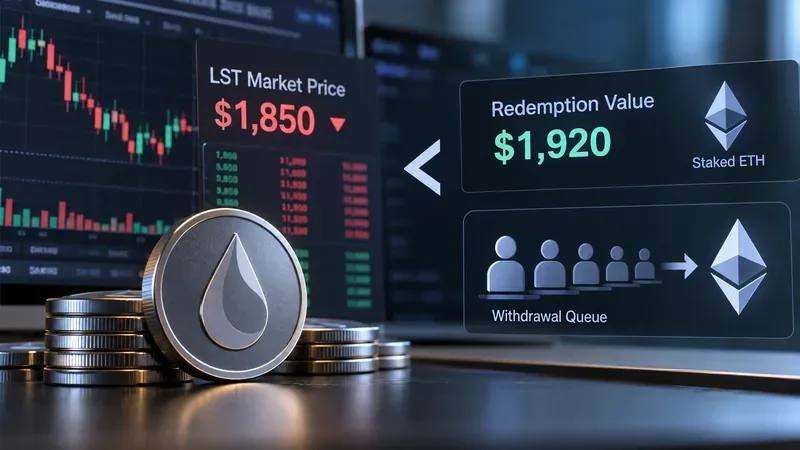
A depeg is a market price moving away from the stated reference value. Exchange selling makes that price visible immediately: if bids are scarce, a market order can execute below the last traded price, and a large sale can consume several price levels. A limit order controls the minimum acceptable sale price but may not fill.
Redemption may create an arbitrage path for an eligible, well-funded participant: buy discounted tokens and redeem them near par, subject to fees, limits, and processing. That mechanism can support a peg, but it does not promise an immediate recovery for every holder. Retail users who cannot redeem directly still depend on exchange liquidity or a provider that serves them. If many holders try to exit together, congestion, account reviews, banking constraints, or venue outages can widen discounts or delay cash access.
Stablecoin risk also depends on more than the exchange quote. Reserve quality and liquidity, issuer operations, banking access, legal rights, smart-contract or bridge risk, and confidence in the issuer can all matter. A token’s name or past trading near $1 does not establish that your particular balance can be redeemed on demand. Review the issuer’s current reserve disclosures and the legal terms for the exact token you hold.
Choose by situation
You are a retail holder with a modest balance: compare supported exchange or regulated on/off-ramp quotes. Direct issuer redemption may be unavailable or below a minimum threshold.
You are an institution with an eligible account and a large amount: request a current redemption quote and fee-tier estimate, then compare it with executable exchange depth and settlement timing.
You need cash by a fixed date: prioritize a confirmed withdrawal method and settlement window. Check account limits and bank cutoffs before transferring.
The stablecoin is trading below its peg: compare an actual executable sale with the redemption value and time available to you. Avoid assuming that a temporary discount will close before you need the funds.
You hold a bridged or wrapped version: verify whether the issuer recognizes that exact token for redemption or whether it must first be bridged to a native version.
Before you confirm: a short checklist
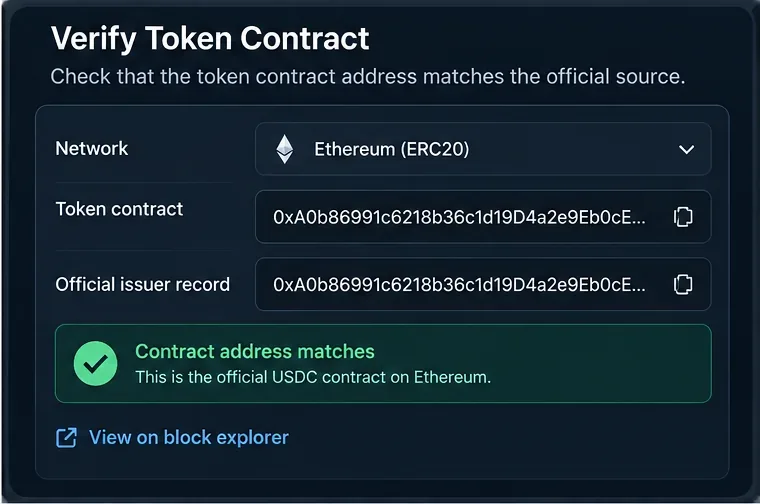
Identify the issuer, exact token contract, and network.
Confirm that your account is eligible for the route and that the destination bank accepts the currency.
Read the live fee schedule, minimums, limits, and settlement terms.
For an exchange, preview the sale and inspect the estimated average fill price and order-book depth.
Calculate net proceeds after all fees, spread, transfer costs, and FX conversion.
Check current reserve information and whether a depeg, outage, or redemption delay is affecting the asset or venue.
Keep transaction records and never send tokens to an address copied from an unsolicited message.
The practical distinction is straightforward: redemption follows an issuer’s access rules and settlement process, while exchange selling follows a market price and venue rules. Neither route is automatically cheaper or faster for everyone. Compare the net amount you can actually receive, when you can receive it, and the risks you must accept.