Current update (September 30, 2026): Ethereum’s public roadmap lists a planned change to validator exit capacity in the Glamsterdam upgrade. It is marked “scheduled for inclusion,” not as a live mainnet rule. Until a change is activated, the current queue mechanics still matter. The broad lesson for stakers is that a withdrawal estimate can change quickly when new requests arrive faster than a protocol can safely process them.
What is a staking withdrawal queue?
A staking withdrawal queue is a protocol or provider’s ordered backlog of requests to release staked assets. It is similar to a line with a limited service rate: requests wait while the network or provider processes earlier requests within security, operational, or liquidity limits. “Queue” does not mean the tokens are necessarily lost or that a transaction is stuck. It usually means the request has been accepted but the withdrawal has not reached the stage where funds are transferable.
The exact meaning depends on how you stake. A native validator exit, a delegated stake cooldown, a pooled-staking redemption, and an exchange’s unstaking request can all have different queues and clocks. There is no universal staking withdrawal time that applies to every chain or service.
Why can the displayed wait suddenly rise?
The estimate is not always a fixed countdown. It is often a snapshot calculated from the queue ahead of you, the rate at which requests can be processed, and assumptions about future arrivals. If many more people request exits, the backlog grows. If the protocol limits how much stake can leave per time period, the estimate can jump even though your own request has not moved backward.
- A wave of exit requests arrives. Price volatility, changing reward rates, a security concern, a large validator operator’s decision, or broader market stress can cause many users to request withdrawals at once. These are possible drivers, not proof of why a particular queue grew; check official network or provider notices before assigning a cause.
- Capacity is intentionally limited. Proof-of-stake protocols can rate-limit validator entry and exit to avoid rapid changes to the set of participants securing the chain. In Ethereum, validator exits are constrained by a churn limit, whose capacity is based on protocol rules and active stake. A larger backlog takes longer to clear at the same processing rate.
- The estimate includes more than one stage. A request may first wait for an exit slot, then wait until the validator is fully inactive, then wait for the network’s withdrawal sweep to transfer funds. A dashboard that combines these stages may show a longer estimate after an update, even if the first stage is progressing normally.
- Other operations may share capacity. Some protocols make different staking operations compete for limited capacity. The Ethereum roadmap describes planned changes that would separate exit and consolidation capacity; until such a change is active, use the rules currently in force rather than assuming a future upgrade has shortened today’s queue.
- A provider has its own redemption bottleneck. A pool may need available unstaked liquidity, validator exits, or both before it can redeem a user’s share. An exchange may also add internal processing, batching, or compliance steps. Those provider stages are distinct from the base chain’s queue.
- Protocol conditions or assumptions change. Estimates can be recalculated when the active validator set changes, requests arrive, epochs advance, a network upgrade changes parameters, or a service revises its model. A sudden change in the displayed estimate is not automatically a change in your position’s safety.
Ethereum example: an exit queue is not the final transfer
Ethereum is a useful example because its official documentation distinguishes validator exits from withdrawals. A validator operator requests a full exit. The validator then waits for its scheduled exit point, which varies with network demand. Once the validator has fully exited and is marked withdrawable, the remaining balance is transferred to its withdrawal address during an automatic sweep. The time to reach the exit point and the time to be swept are separate parts of the path.
Ethereum’s withdrawal documentation, last updated August 17, 2026, also separates full exits from partial withdrawals. For many legacy validators, eligible balance above 32 ETH is automatically swept. Compounding validators have a different threshold and process. These automatic sweeps are not the same thing as a user asking to exit the entire validator. If you are using a pool or holding a liquid-staking token, the provider’s redemption process may add another queue or depend on available liquidity.
As of September 30, 2026, Ethereum.org’s Glamsterdam roadmap lists EIP-8061, an exit and consolidation churn change, as scheduled for inclusion. The roadmap describes a design intended to increase exit capacity and give consolidations dedicated capacity. That is a planned protocol change, not a promise that a current withdrawal will clear sooner. Recheck the roadmap and official upgrade announcements for activation status before relying on it.
Other chains can use different timing rules
On Solana, staking accounts change between delegated, deactivating, and inactive states across epoch boundaries. Solana’s documentation says deactivation takes several epochs and that a per-epoch limit controls how much stake can become inactive. Because the duration depends partly on what other participants are doing, the exact cooldown can be difficult to predict. This illustrates why an Ethereum exit-queue estimate should not be applied to a Solana stake account, or vice versa.
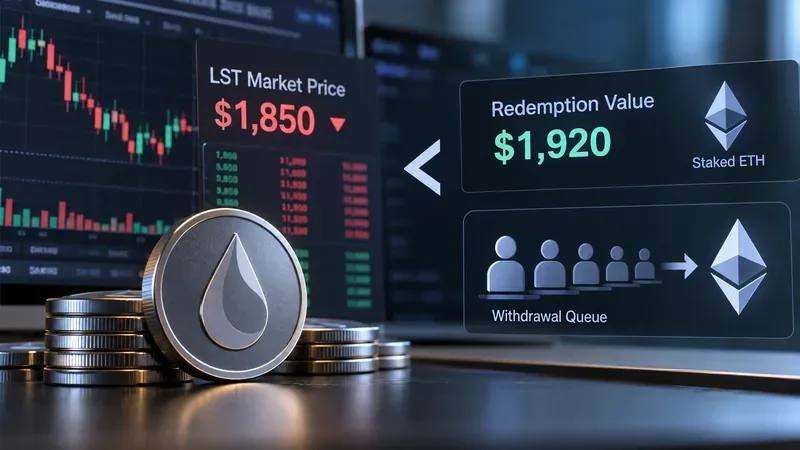
Liquid-staking tokens introduce another distinction: selling a receipt token on a market is not identical to redeeming it for the underlying asset. A token may remain tradable while the protocol stake is still locked in its normal exit path. Its market price can differ from the redemption value, and selling transfers the token to a buyer rather than completing an on-chain unstake.
How should you investigate a wait-time increase?
- Identify what you actually submitted. Find the asset, network, wallet or account, validator or pool, and exact request type. Confirm whether it is a full exit, partial withdrawal, undelegation, or provider redemption.
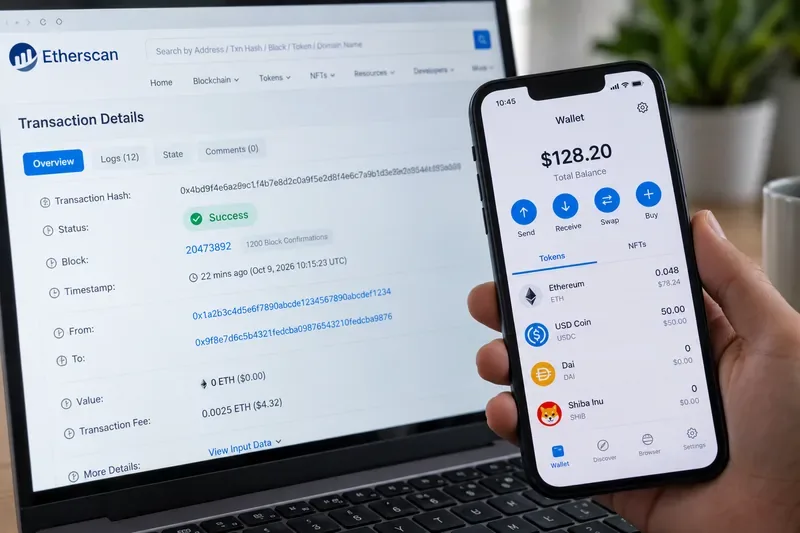
- Check the request state on the authoritative source. For a native stake, use the network’s official explorer or protocol documentation and verify the transaction or validator status. For a custodial service, check its status page and withdrawal terms. A wallet’s estimate may not expose every stage.
- Separate the clocks. Record when the request was submitted, accepted, scheduled, made withdrawable, and actually transferred. Ask whether the estimate covers only the protocol queue or also provider processing and bank or exchange crediting.
- Look for a verified cause. Check protocol upgrade notices, validator queue data, provider announcements, and incident updates. If none identifies a cause, describe the increase as a larger backlog or a revised estimate rather than attributing it to a market event.
- Review the destination and eligibility requirements. Confirm the withdrawal address, account permissions, lockup conditions, minimum balance, and any provider-specific redemption rules. On Ethereum, withdrawal credentials are required for funds to be transferred from a validator account.
- Avoid duplicate requests. Do not repeatedly submit the same operation because the displayed time changed. First establish whether the request is pending, accepted, failed, or already queued. Follow the network or provider’s official instructions if a transaction failed.
What a queue estimate can—and cannot—tell you
A queue estimate can help you plan liquidity, but it is not a guaranteed completion date unless the responsible protocol or provider explicitly says it is. It may assume no further surge in requests, normal network operation, and a particular processing rate. Conditions can change while you wait.
Before staking, read the chain’s unbonding and exit rules, the provider’s redemption terms, and what happens to rewards during the waiting period. If you may need the assets on short notice, treat the queue as a liquidity constraint. A liquid-staking token or a secondary-market sale may offer another route, but it carries market, smart-contract, provider, and price risks and may not return the same amount as direct redemption.
Official sources to check
For current Ethereum mechanics, consult Ethereum.org’s staking withdrawals guide, including its August 17, 2026 update, and its guide to liquid and pooled staking. For the planned Glamsterdam changes, see the Ethereum Glamsterdam roadmap and verify whether the status has changed. For Solana’s model, read its official stake-account documentation.
The practical takeaway is straightforward: a withdrawal queue is a capacity and timing mechanism, and a rising estimate usually reflects changed demand, limited throughput, an additional processing stage, or a revised calculation. Find out which queue your request is in before deciding what the delay means.