過小評価されているDeFi 3.0の逸材は、大ブレイクアウトの準備ができているのか?2026年に調査すべき5つのプロトコル
検証済みの2026年の触媒を持つ5つのDeFi 3.0プロトコルに加え、どの暗号通貨も過小評価されていると判断する前に使用すべきトークン、収益、ロック解除、リスクのチェック項目。
The hardest part of investing in the real-world asset narrative is not finding projects that mention tokenization. It is figuring out whether growth in tokenized Treasuries, private credit, securities, commodities, or other assets can actually create durable demand for the altcoin you are buying. Those are two very different questions.
That distinction matters more in 2026 because tokenization is moving further into regulated finance. In January 2026, the U.S. Securities and Exchange Commission published a statement on tokenized securities explaining that a security does not stop being a security merely because ownership is represented on a crypto network. Investor.gov also emphasizes that tokenized securities can use different legal structures and may give holders very different rights depending on whether the token is issuer-sponsored, custodial, or synthetic.
So the phrase “massive upside potential” should be treated as a research question, not a forecast. An RWA altcoin can rise dramatically, fall dramatically, or underperform even while the underlying tokenization sector grows. This article identifies five tokens with credible exposure to the RWA theme and, more importantly, explains what would have to go right for that exposure to matter to token holders. All project and token information was checked against primary sources on September 14, 2026. This is general information, not individualized investment advice.
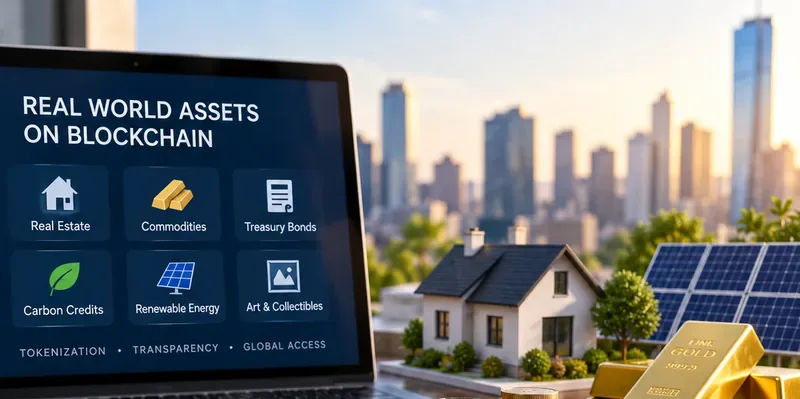
Consider a hypothetical investor named Maya. This is an illustration only, not a real portfolio, testimonial, recommendation, or backtest. Maya already has a diversified financial plan and sets aside a small speculative crypto budget she can afford to lose. She is interested in RWA altcoins, but she refuses to buy a token merely because the project has a partnership announcement or a large “assets tokenized” number.
Instead, Maya gives every candidate five tests: Is there verifiable real-world adoption? Does the token have a credible role in the system? Is there a mechanism that can translate usage into token demand or value capture? Is dilution manageable? And what specific evidence would invalidate the thesis?
That framework produces a more useful shortlist than simply ranking coins by recent price performance.
| Token | RWA role | What makes the thesis interesting | Main risk to the thesis |
|---|---|---|---|
| LINK | Data, interoperability, reserve verification, tokenized-asset infrastructure | Service revenue can be converted into LINK through Payment Abstraction and accumulated in the Chainlink Reserve | RWA growth may not translate into enough incremental fee demand to justify the token's valuation |
| ONDO | Governance around the Ondo ecosystem and Flux; exposure to a major tokenization brand | Ondo is expanding tokenized Treasuries and securities infrastructure | ONDO does not give holders a verified direct claim on Ondo Finance product revenue; large locked supply matters |
| SYRUP | Maple governance and staking around onchain institutional credit | Maple publishes protocol revenue and token buybacks, giving the token a more observable value-capture path | Credit losses, lower loan demand, or weaker revenue can quickly weaken the thesis |
| CFG | Centrifuge tokenization infrastructure and ecosystem token | Centrifuge says more than $2 billion in real-world assets have been tokenized through its platform | Value capture and governance remain less direct, while additional CFG is still vesting |
| PLUME | Native token of an RWA-focused network | Gas, staking, governance, and an ecosystem specifically built around RWA finance | High ecosystem incentives, token supply distribution, and competition can dilute the benefit of adoption |
LINK is not a pure-play tokenized-asset coin. That is exactly why it deserves a place near the top of an RWA watchlist. Tokenized securities and funds need trusted pricing, reserve data, identity/compliance inputs, lifecycle automation, and the ability to move information and value across multiple chains and traditional systems. Chainlink positions its platform as infrastructure for those functions, including data services, Proof of Reserve, CCIP interoperability, and its Digital Transfer Agent standard. Its official tokenized-assets page cites a live UBS Tokenize and DigiFT fund subscription/redemption transaction using Chainlink DTA.
The more important point for an altcoin investor is token economics. Chainlink's economics page says LINK is used for service payments and cryptoeconomic security. Payment Abstraction can convert enterprise and onchain service revenue into LINK, and the Chainlink Reserve accumulates LINK funded by those revenue sources. When checked on September 14, 2026, the page showed more than 5 million LINK in the Reserve, more than 42 million LINK staked, roughly 748 million LINK circulating, and a 1 billion maximum supply.
Common misconception: LINK is not a share of Chainlink, nor is every tokenized RWA transaction automatically a LINK purchase. The bullish case depends on Chainlink winning meaningful paid usage and its economic mechanisms continuing to route enough of that usage into LINK demand.
Maya's action: she would monitor growth of paid services and the Chainlink Reserve, not just partnership counts. If institutional integrations expand while Reserve accumulation and fee-linked demand stagnate, she would downgrade the thesis.
Ondo is one of the clearest names associated with tokenized Treasuries and tokenized securities. In July 2026, Ondo Finance announced the launch of custodial tokenized U.S. securities in the United States, with Broadridge supporting governance, proxy voting, and shareholder communications. Ondo also operates products such as OUSG and USDY and has built infrastructure for tokenized public securities.
But ONDO itself must be analyzed separately. The Ondo Foundation's token distribution and governance documentation describes ONDO as a governance token for the Ondo DAO, including rights related to Flux Finance, treasury management, emissions, and other DAO functions. It lists a maximum supply of 10 billion ONDO. I could not verify from the cited official materials that holding ONDO gives a contractual claim on revenue from OUSG, USDY, Ondo Global Markets, or Ondo Finance as a company.
Supply is also central to the valuation question. The Ondo Foundation Group disclosed that, as of August 26, 2026, it controlled 4,422,519,707 locked ONDO. That disclosure does not by itself tell you future market selling, but it is a reminder that circulating market capitalization alone can understate eventual token supply.
Common misconception: buying ONDO is not the same thing as buying tokenized Treasuries or tokenized stocks. Those are separate instruments with separate legal rights and risk structures.
Maya's action: she would track whether ONDO receives additional durable utility or value-capture mechanisms and compare that progress with the unlock schedule. If Ondo's asset platform grows quickly but the governance token remains economically detached from that growth, she would not assume the token must follow the business.
SYRUP is one of the more interesting RWA-related tokens because Maple publishes operating metrics that can be compared with token activity. Maple focuses on onchain credit and institutional lending rather than tokenized real estate or equities. Its official Transparency page, checked September 14, 2026, displayed about $4.65 billion in assets under management and $22.15 million in revenue over the preceding 12 months. The same page reports monthly SYRUP buybacks, including purchases in June, July, and August 2026.
Mapleの2026年8月のアップデートでは、新たにローンチしたsyrupUSDGが拡大し、Robinhood Earnの担保として使用されていることも明らかにされました。これは、RWAのテーゼが単に「債券をオンチェーンに置く」ことではないという点で重要です。規制された、あるいは機関投資家が引受を行う信用商品が、フィンテックやDeFiの流通において再利用可能な構成要素になり得るということです。
SYRUPにはガバナンス機能とステーキング機能も備わっています。しかし、Mapleの公式文書には、ステーキングには契約上の、あるいは約束されたリターンは伴わないことが明記されています。この区別は重要です。プロトコルの買い戻しやガバナンス上の決定はトークンエコノミクスを支えることができますが、債券のクーポンや株主配当とは異なります。
よくある誤解:運用資産額(AUM)が高いからといって、必ずしもトークンの価値が高いとは限りません。クレジットプロトコルは、マージンが縮小したり、デフォルト率が上昇したり、インセンティブが増加したりする中でも、資産を増やすことができます。
マヤの行動方針は、融資実績、運用資産残高(AUM)の質、プロトコル収益、純金利マージン、および完了した買戻し状況を監視することだった。AUMが上昇し続けても、収益の質が低下したり、信用損失が大幅に増加したりすれば、表面的な成長だけではもはや十分ではないだろう。
Centrifugeは、RWA(リスク加重資産)インフラの実用化を示す強力な証拠を提示している。最新の公式文書によると、20億ドル以上の実体資産が同プラットフォームを通じてトークン化されており、Apollo、Janus Henderson、S&P Dow Jones Indicesといった機関投資家の戦略が挙げられている。また、Sky、Aave、MorphoなどのDeFiプロトコルとの統合についても言及している。
トークンに関する理論は、より複雑な様相を呈している。CentrifugeのCFGトークノミクスページによると、2026年6月時点での総供給量は697,164,473 CFGである。CP149に基づいて導入された1億1500万トークンのうち、1億トークンは2029年4月までに順次権利確定する。これは無視すべきではなく、モデル化すべき重要な希薄化変数である。
ガバナンスもまた、従来の前提が間違っている可能性がある分野の一つです。Centrifugeのガバナンスに関するドキュメントによると、アクティブなDAOガバナンスは2025年後半にCP171の下で一時停止され、Centrifuge Network Foundationの監督下で実行が移管されました。2026年8月下旬のガバナンスフォーラムのRFCでは、限られた一連の基本的な決定事項について保有者の承認を復活させることが提案されましたが、RFCは実装された変更とは異なります。
よくある誤解:「数十億ドルがトークン化される」というのは、CFG保有者に数十億ドル相当の価値がもたらされるという意味ではありません。そのためには、プラットフォームの採用、手数料、財務方針、ガバナンス権限、トークン供給量が適切に連携する必要があります。
マヤの対応策は、プロトコルの成長がCFGにとって継続的な経済的価値を生み出すというより明確な証拠が出るまで待ち、2029年までの予定された権利確定をモデル化するというものだった。供給量が拡大する一方で手数料の獲得が依然として弱い場合、トークン化された資産が成長を続けていても、トークンの評価を下げるだろう。
Plumeは、この5つのトークングループの中で最も投機的な名前だが、その理念は明確だ。トークン化された実体資産を副産物ではなく中心的なユースケースとするブロックチェーンエコシステムを構築する。2026年2月のプロジェクトのアップデートによると、当時Plumeは28万人以上のRWA保有者と約6億4500万ドルのRWAを抱えていた。現在のVault製品は、米国債やプライベートクレジットなどの規制対象の実体資産へのエクスポージャーを表しており、償還条件は基礎となる戦略によって異なる。
PLUMEは、純粋なガバナンストークンというよりも、ネイティブネットワークにおける役割がより明確です。公式トークンドキュメントには、ガス料金、ガバナンス、ステーキング、エコシステムインセンティブなどがその用途として挙げられています。また、同ドキュメントによると、総供給量は100億で、トークン生成イベント時に最初に流通したのは20%、コミュニティ/エコシステム/財団の目的に割り当てられたのは59%、初期支援者に割り当てられたのは21%、コア貢献者に割り当てられたのは20%となっています。
この組み合わせは、機会とリスクの両方を生み出します。PlumeがRWAの発行、取引、担保、利回り戦略の主要な場となれば、ネイティブネットワークの需要は増加する可能性があります。しかし、大規模なインセンティブ配分は、報酬が減少すると消滅する活動を支える可能性があり、トークンのロック解除が自然発生的な需要を圧倒する可能性もあります。
よくある誤解:ネットワークがRWAウォレットやTVLでトップになる場合、必ずしもそのネイティブトークンが優れたパフォーマンスを発揮するとは限りません。インセンティブ、ガス設計、ステーキングへの参加、手数料水準、供給量の増加などが、エコシステムの活動がトークン需要にどれだけ結びつくかを決定します。
マヤの対策は、インセンティブに基づく活動と自然発生的な活動を区別することだった。彼女は取引手数料、定期的な保管庫の使用状況、報酬キャンペーン終了後のアクティブなアプリケーション数、および供給のロック解除状況を追跡した。これらの指標が持続的な需要を示すまでは、PLUMEは高リスク候補のままとなるだろう。
現在の評価額、将来の希薄化、リスク許容度、投資期間、そして投資家のポートフォリオ全体を考慮せずに、普遍的な勝者を断定することは不可能です。「アップサイド」とは、トークンが将来的にどれだけの価値を持つ可能性があるかと、市場が既に織り込んでいる価値との比率です。優れたプロトコルであっても、期待値が高すぎると投資対象として不向きになることがあります。また、小規模なプロジェクトでも、驚異的なリターンを生み出すこともあれば、完全に失敗に終わることもあります。
マヤの架空のウォッチリストにおいて、5つのトークンは互換性のある競合相手ではなく、異なる賭けを表している。
この架空の例は、検証可能なチェック機能がある場合にのみ有用となる。マヤはまず価格目標を設定し、それを正当化する理由を探すのではなく、少数の経営指標を記録し、定期的に見直す。
| 質問 | 論文を裏付ける証拠 | それを弱める証拠 |
|---|---|---|
| RWAの普及は現実のものなのか? | 資産、取引、利用者、発行者、または信用活動の増加は、一次情報源によって確認されている。 | 一時的なインセンティブや未確認の発表によって成長が左右されている |
| トークンは価値を捕捉しますか? | 手数料、買い戻し、ステーキングのセキュリティ、ガス需要、または測定可能な経済的関連性を持つガバナンス | トークンとの関連性が見られないプラットフォームの成長 |
| 供給は管理可能な範囲にあるのか? | 透明性のある排出量と需要の増加は、少なくとも実効供給と同じペースである。 | 大規模なロック解除、インフレ、またはインセンティブ発行が、それに伴う自然な需要を伴わない場合 |
| 法的な構造は理解しやすいですか? | 発行者、保管、償還、投資家の権利、およびコンプライアンスに関する明確な開示 | 権利関係が不明確、所有権として提示される合成エクスポージャー、または償還方法が曖昧 |
| その論文は無効にできるだろうか? | 再評価のきっかけとなる具体的な指標と日付 | 証拠に関係なく保有し続けるための物語的な理由だけ |
最も危険な思い込みの一つは、アルトコインを「現実世界の資産」に紐づけることで、アルトコインが基礎となる国債、ローン、建物、ファンドのように振る舞うというものです。実際はそうではありません。SECの2026年ガイダンスでは、トークン化された証券に付随する法的権利は構造に依存すると強調されており、Investor.govの暗号資産投資家向け警告では、価格変動、流動性の低さ、保管上の問題、技術的リスク、そして投資家保護の欠如の可能性について警告しています。
RWAシステム特有のリスクも存在します。例えば、オフチェーンの借り手が債務不履行に陥る可能性、カストディアンが破綻する可能性、償還が遅延する可能性、法的所有権がトークン保有者の想定と異なる可能性、オラクルやスマートコントラクトが誤作動を起こす可能性、規制によって配布が制限される可能性、トークンインセンティブによって実際よりも持続的に見える活動が生じる可能性などが挙げられます。
だからこそ、マヤの仮説的なプロセスはスローガンではなく一次資料に焦点を当てているのだ。彼女は、トークンが何を表しているのか、誰が誰に何を負っているのか、資産はどこに保管されているのか、誰が償還できるのか、どのような手数料が存在するのか、供給量はどのように変化するのか、そしてアルトコインがRWAビジネスと直接的な関係があるのか、それとも単なる物語上の関係なのかを検証するだろう。
LINK、ONDO、SYRUP、CFG、PLUMEは、2026年に調査すべき信頼できるRWA関連のアルトコイン5銘柄ですが、それぞれ異なる種類のエクスポージャーを提供しています。LINKは、インフラストラクチャとサービス需要という観点から最も明確な位置づけを持っています。ONDOは、主要なトークン化エコシステムに直接的にエクスポージャーを持つという点で異例ですが、製品収益とガバナンストークンの間の検証済みの関連性は弱いです。SYRUPは、目に見えるプロトコル収益と買い戻しが際立っていますが、実際の信用サイクルリスクを抱えています。CFGは、機関投資家によるトークン化の採用が相当数ありますが、価値の獲得と権利確定に関するストーリーはまだ証明が必要です。PLUMEは、このグループの中で最もベータ値の高いネットワーク理論を提供していますが、実行リスクと希薄化リスクも相当程度存在します。
したがって、有益な問いは「どのRWAコインが10倍になるか?」ではなく、「どのような測定可能な発展があれば、現実世界の資産採用が市場の予想を上回る需要を生み出すのか?」である。この問いに一次情報源に基づく証拠で答えられない場合、上昇シナリオは依然としてほとんど物語に過ぎない。
検証済みの2026年の触媒を持つ5つのDeFi 3.0プロトコルに加え、どの暗号通貨も過小評価されていると判断する前に使用すべきトークン、収益、ロック解除、リスクのチェック項目。
Five crypto projects screened below $10M in September 2026, compared by utility, liquidity, token economics, catalysts, and risks that can erase upside.
Baseエコシステムの5つのトークン(AERO、WELL、EXTRA、SEAM、ALB)について、誇大広告ではなく、実用性、トークノミクス、触媒、リスクチェックを用いて調査してください。
ゲーム関連の仮想通貨は初めてですか?小型株のWeb3ゲームトークンを評価する方法を学び、その後、稼働中の製品、2026年のカタリスト、明確なリスクを備えた6つのプロジェクトをレビューします。
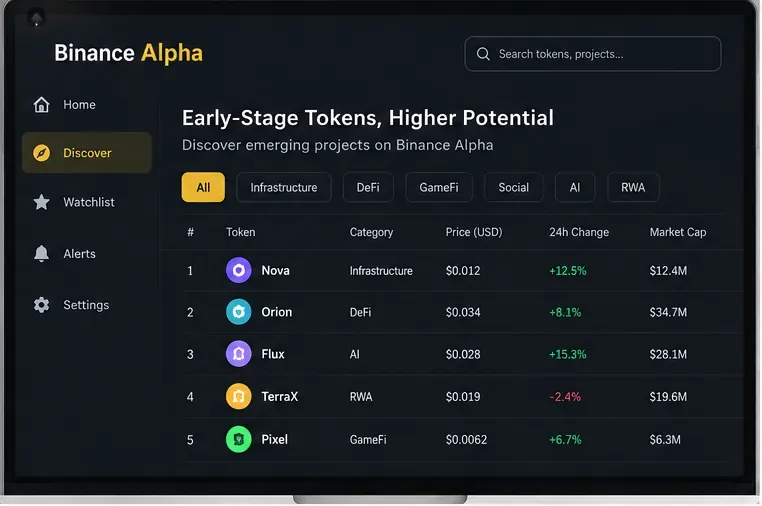
トークノミクス、契約、流動性、オンチェーンデータ、開発活動、およびBinance Alphaを活用して、Binanceへの上場が期待される初期段階の有望な仮想通貨を見つけるための実践的なガイド。
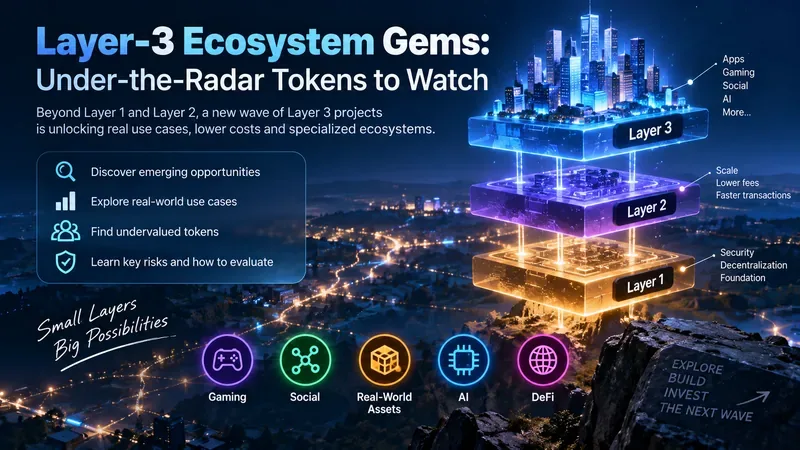
2026年に調査する価値のある5つのレイヤー3エコシステムトークン(ORBS、B3、XAI、DMT、RARI)について、検証済みのアーキテクチャ、触媒、トークンの有用性、および主要なリスクを詳しく見ていきましょう。
A 2026 evidence-based look at LINK, ONDO, SYRUP, CFG, and PLUME, focusing on real RWA adoption, token value capture, dilution risk, and thesis breakers.
A practical 2026 DePIN watchlist covering GEOD, HONEY, DIMO, WXM, and IO, with token-capture mechanics, risks, and a due-diligence checklist.
5,000万ドル未満の仮想通貨プロジェクトの中から、非対称的な上昇ポテンシャルを持つ5つのプロジェクトを、実用性、トークンエコノミクス、触媒、希薄化、流動性、および失敗リスクの観点から検証する。
実際の製品、トークンの実用性、そして2026年の触媒となる要素を備えた、5つの小規模なAI暗号プロジェクトを、研究者の視点から徹底的に分析する。さらに、その理論を頓挫させる可能性のあるリスクについても考察する。