被低估的 DeFi 3.0 瑰寶,即將迎來爆發式增長? 2026 年值得研究的 5 個協議
五個 DeFi 3.0 協議,擁有經過驗證的 2026 年催化劑,以及在稱任何加密貨幣被低估之前可以使用的代幣、收入、解鎖和風險檢查。
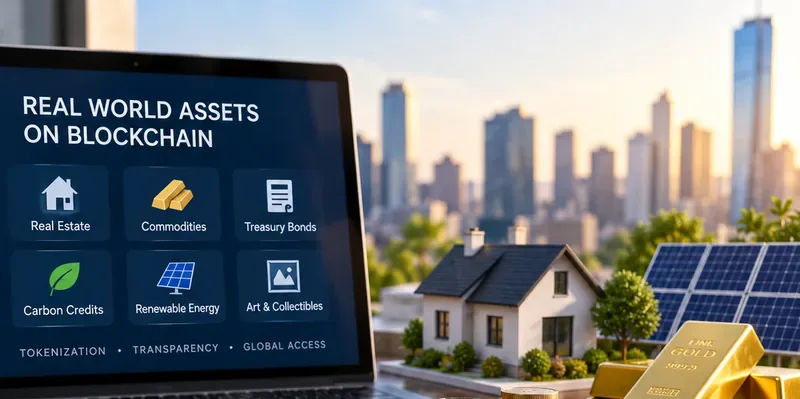
The hardest part of investing in the real-world asset narrative is not finding projects that mention tokenization. It is figuring out whether growth in tokenized Treasuries, private credit, securities, commodities, or other assets can actually create durable demand for the altcoin you are buying. Those are two very different questions.
That distinction matters more in 2026 because tokenization is moving further into regulated finance. In January 2026, the U.S. Securities and Exchange Commission published a statement on tokenized securities explaining that a security does not stop being a security merely because ownership is represented on a crypto network. Investor.gov also emphasizes that tokenized securities can use different legal structures and may give holders very different rights depending on whether the token is issuer-sponsored, custodial, or synthetic.
So the phrase “massive upside potential” should be treated as a research question, not a forecast. An RWA altcoin can rise dramatically, fall dramatically, or underperform even while the underlying tokenization sector grows. This article identifies five tokens with credible exposure to the RWA theme and, more importantly, explains what would have to go right for that exposure to matter to token holders. All project and token information was checked against primary sources on September 14, 2026. This is general information, not individualized investment advice.
Consider a hypothetical investor named Maya. This is an illustration only, not a real portfolio, testimonial, recommendation, or backtest. Maya already has a diversified financial plan and sets aside a small speculative crypto budget she can afford to lose. She is interested in RWA altcoins, but she refuses to buy a token merely because the project has a partnership announcement or a large “assets tokenized” number.
Instead, Maya gives every candidate five tests: Is there verifiable real-world adoption? Does the token have a credible role in the system? Is there a mechanism that can translate usage into token demand or value capture? Is dilution manageable? And what specific evidence would invalidate the thesis?
That framework produces a more useful shortlist than simply ranking coins by recent price performance.
| Token | RWA role | What makes the thesis interesting | Main risk to the thesis |
|---|---|---|---|
| LINK | Data, interoperability, reserve verification, tokenized-asset infrastructure | Service revenue can be converted into LINK through Payment Abstraction and accumulated in the Chainlink Reserve | RWA growth may not translate into enough incremental fee demand to justify the token's valuation |
| ONDO | Governance around the Ondo ecosystem and Flux; exposure to a major tokenization brand | Ondo is expanding tokenized Treasuries and securities infrastructure | ONDO does not give holders a verified direct claim on Ondo Finance product revenue; large locked supply matters |
| SYRUP | Maple governance and staking around onchain institutional credit | Maple publishes protocol revenue and token buybacks, giving the token a more observable value-capture path | Credit losses, lower loan demand, or weaker revenue can quickly weaken the thesis |
| CFG | Centrifuge tokenization infrastructure and ecosystem token | Centrifuge says more than $2 billion in real-world assets have been tokenized through its platform | Value capture and governance remain less direct, while additional CFG is still vesting |
| PLUME | Native token of an RWA-focused network | Gas, staking, governance, and an ecosystem specifically built around RWA finance | High ecosystem incentives, token supply distribution, and competition can dilute the benefit of adoption |
LINK is not a pure-play tokenized-asset coin. That is exactly why it deserves a place near the top of an RWA watchlist. Tokenized securities and funds need trusted pricing, reserve data, identity/compliance inputs, lifecycle automation, and the ability to move information and value across multiple chains and traditional systems. Chainlink positions its platform as infrastructure for those functions, including data services, Proof of Reserve, CCIP interoperability, and its Digital Transfer Agent standard. Its official tokenized-assets page cites a live UBS Tokenize and DigiFT fund subscription/redemption transaction using Chainlink DTA.
The more important point for an altcoin investor is token economics. Chainlink's economics page says LINK is used for service payments and cryptoeconomic security. Payment Abstraction can convert enterprise and onchain service revenue into LINK, and the Chainlink Reserve accumulates LINK funded by those revenue sources. When checked on September 14, 2026, the page showed more than 5 million LINK in the Reserve, more than 42 million LINK staked, roughly 748 million LINK circulating, and a 1 billion maximum supply.
Common misconception: LINK is not a share of Chainlink, nor is every tokenized RWA transaction automatically a LINK purchase. The bullish case depends on Chainlink winning meaningful paid usage and its economic mechanisms continuing to route enough of that usage into LINK demand.
Maya's action: she would monitor growth of paid services and the Chainlink Reserve, not just partnership counts. If institutional integrations expand while Reserve accumulation and fee-linked demand stagnate, she would downgrade the thesis.
Ondo is one of the clearest names associated with tokenized Treasuries and tokenized securities. In July 2026, Ondo Finance announced the launch of custodial tokenized U.S. securities in the United States, with Broadridge supporting governance, proxy voting, and shareholder communications. Ondo also operates products such as OUSG and USDY and has built infrastructure for tokenized public securities.
But ONDO itself must be analyzed separately. The Ondo Foundation's token distribution and governance documentation describes ONDO as a governance token for the Ondo DAO, including rights related to Flux Finance, treasury management, emissions, and other DAO functions. It lists a maximum supply of 10 billion ONDO. I could not verify from the cited official materials that holding ONDO gives a contractual claim on revenue from OUSG, USDY, Ondo Global Markets, or Ondo Finance as a company.
Supply is also central to the valuation question. The Ondo Foundation Group disclosed that, as of August 26, 2026, it controlled 4,422,519,707 locked ONDO. That disclosure does not by itself tell you future market selling, but it is a reminder that circulating market capitalization alone can understate eventual token supply.
Common misconception: buying ONDO is not the same thing as buying tokenized Treasuries or tokenized stocks. Those are separate instruments with separate legal rights and risk structures.
Maya's action: she would track whether ONDO receives additional durable utility or value-capture mechanisms and compare that progress with the unlock schedule. If Ondo's asset platform grows quickly but the governance token remains economically detached from that growth, she would not assume the token must follow the business.
SYRUP is one of the more interesting RWA-related tokens because Maple publishes operating metrics that can be compared with token activity. Maple focuses on onchain credit and institutional lending rather than tokenized real estate or equities. Its official Transparency page, checked September 14, 2026, displayed about $4.65 billion in assets under management and $22.15 million in revenue over the preceding 12 months. The same page reports monthly SYRUP buybacks, including purchases in June, July, and August 2026.
Maple在2026年8月的更新中也提到,其新推出的syrupUSDG已經擴大規模,並被用作Robinhood Earn的抵押品。這一點很重要,因為這裡的RWA(風險加權資產)概念並非簡單地「將債券上鍊」。它指的是,受監管或機構承銷的信貸產品可以成為金融科技和DeFi分銷中可重複使用的建構模組。
SYRUP 也具備治理和質押功能。然而,Maple 本身的法律文件明確指出,質押並不涉及任何合約約定或承諾的回報。這一區別至關重要:協議回購和治理決策可以支持代幣經濟,但它們與債券利息或股東分紅截然不同。
常見誤解:高資產管理規模不一定代表高代幣價值。即使保證金收窄、違約率上升或激勵機制增強,信用協議仍能實現資產成長。
瑪雅的行動方案是:她會密切關注貸款表現、資產管理規模品質、協議收入、淨利差以及已完成的回購情況。如果資產管理規模持續成長,但收入品質下降或信貸損失大幅增加,那麼表面上的成長就不足以彌補損失。
Centrifuge擁有強而有力的證據,證明其RWA基礎設施已被實際採用。其官方文件顯示,已有超過20億美元的真實資產透過該平台代幣化,並列舉了包括Apollo、Janus Henderson和標普道瓊指數在內的機構投資者。此外,該文件還重點介紹了與Sky、Aave和Morpho等DeFi協議的整合。
代幣理論更為複雜。 Centrifuge 的CFG 代幣經濟模型頁面顯示,截至 2026 年 6 月,CFG 的總供應量為 697,164,473 枚。在 CP149 發行的 1.15 億枚代幣中,有 1 億枚將以線性順序解鎖至 2029 年 4 月。這是一個重要的稀釋變量,應該納入模型進行分析,而不是被忽略。
治理是另一個舊假設可能失效的領域。 Centrifuge 的治理文件指出,根據 CP171 協議,活躍的 DAO 治理已於 2025 年底暫停,執行工作移交至 Centrifuge 網路基金會監管之下。 2026 年 8 月底的一份治理論壇 RFC 提案建議恢復持有者對一系列關鍵決策的批准權,但 RFC 並不等於已實施的變更。
常見誤解:「數十億代幣化」並不意味著CFG持有者會獲得數十億美元的價值。平台採用率、費用、資金政策、治理權和代幣供應必須相互配合,才能實現這一點。
Maya 的行動方案:她將等待更明確的證據表明協議增長能為 CFG 帶來持續的經濟價值,並模擬到 2029 年的定期解鎖計劃。如果費用獲取仍然疲軟,而供應量卻在擴大,即使代幣化資產持續成長,她也會降低代幣的評分。
Plume是這五個代幣中最具投機性的,但它的理念卻十分明確:建構一個區塊鏈生態系統,其中代幣化的真實世界資產並非附屬產品,而是核心應用情境。該計畫在2026年2月的更新中指出,當時Plume擁有超過28萬名RWA持有者,RWA規模約為6.45億美元。其目前的金庫產品提供對受監管的真實世界資產(例如美國國債和私募信貸)的投資敞口,贖回條件則根據底層策略而有所不同。
PLUME 相較於純粹的治理代幣,在原生網路中扮演更為清晰的角色。官方代幣文件列出了其用途,包括 Gas 費、治理、質押和生態系統激勵。該文件還指出,PLUME 總供應量為 100 億枚,其中 20% 在代幣生成活動中初始流通;59% 用於社區/生態系統/基金會用途;21% 分配給早期支持者;20% 分配給核心貢獻者。
這種組合既帶來了機遇,也帶來了風險。如果Plume成為RWA發行、交易、抵押和收益策略的主要平台,原生網路需求可能會成長。但大量的激勵分配也可能導致獎勵減少時,這種活躍度下降,代幣解鎖也可能壓倒自然需求。
常見誤解:即使網路在RWA錢包或TVL方面領先,其原生代幣的表現也未必優於其他代幣。激勵機制、gas費用設計、質押參與度、費用水準和供應成長決定了生態系統活動轉化為代幣需求的程度。
瑪雅的行動方案:她會將激勵驅動的活動與自然活動區分開來。她會追蹤交易費用、金庫的定期使用情況、獎勵活動結束後活躍的申請數量以及供應解鎖情況。在這些指標顯示持續的需求之前,PLUME仍將被視為高風險候選項目。
如果不考慮當前估值、未來稀釋、風險承受能力、投資期限以及投資者的整體投資組合,就無法可靠地認定某個項目是萬能的贏家。 「上漲空間」指代幣的潛在價值與市場已定價值之間的比率。即使協議本身很優秀,但如果預期過高,也可能成為糟糕的投資;規模較小的項目可能帶來驚人的回報,也可能徹底失敗。
在瑪雅的假想觀察名單中,這五個代幣代表不同的賭注,而不是可以互換的競爭對手:
只有當假設的例子能夠得出可證偽的結論時,它才有用。瑪雅不會先設定價格目標,然後再尋找理由來證明其合理性。她會記錄一小部分營運指標,並定期進行審查。
| 問題 | 能夠加強論點的證據 | 削弱它的證據 |
|---|---|---|
| RWA(風險權重法)真的會被採用嗎? | 經一手資料證實,資產、交易、使用者、發行人或信貸活動均有所成長。 | 成長主要受臨時激勵措施或未經證實的消息驅動 |
| 該令牌是否捕獲了值? | 費用、回購、質押擔保、gas需求或具有可衡量經濟意義的治理 | 平台成長與代幣之間沒有明顯關聯 |
| 供應是否可控制? | 透明排放和需求成長速度至少與有效供應速度一樣快 | 大規模的資金釋放、通貨膨脹或激勵性貨幣發行,卻沒有相應的自然需求。 |
| 法律結構是否易於理解? | 明確發行人、託管人、贖回人、投資者權利和合規揭露訊息 | 權利不明確、以所有權形式呈現的合成風險敞口或贖回條款含糊不清 |
| 這個論點可以被推翻嗎? | 觸發重新評估的具體指標和日期 | 僅基於敘事理由而堅持己見,而不考慮證據。 |
最危險的假設之一是,將一種山寨幣與「現實世界資產」掛鉤,就能使該山寨幣像其對應的國債、貸款、房產或基金一樣運作。事實並非如此。美國證券交易委員會 (SEC) 2026 年發布的指導意見強調,代幣化證券所附帶的法律權利取決於其結構;而Investor.gov 發布的加密資產投資者警示則警告投資者註意波動性、流動性不足、託管失敗、技術風險以及潛在的投資者保護缺失等問題。
RWA 系統也存在一些特有的風險:鏈下借款人可能違約;託管人可能破產;贖回可能延遲;法律所有權可能與代幣持有者的假設不同;預言機和智能合約可能出現故障;監管可能限制分發;代幣激勵措施可能產生看起來比實際情況更持久的活動。
這就是為什麼瑪雅的假設流程側重於原始文件而非口號。她會核實代幣代表什麼,誰欠誰什麼,資產存放在哪裡,誰可以贖回,有哪些費用,供應量如何變化,以及這種山寨幣與RWA業務之間是直接關係還是僅僅是敘述性的關係。
LINK、ONDO、SYRUP、CFG 和 PLUME 是 2026 年值得研究的五種與 RWA 相關的可靠山寨幣,但它們提供的投資機會各不相同。 LINK 的基礎設施和服務需求角度最為清晰。 ONDO 與領先的代幣化生態系統有著異常直接的聯繫,但產品收入與治理代幣之間的關聯性較弱。 SYRUP 的優勢在於可觀察的協議收入和回購,但同時也存在真正的信用週期風險。 CFG 擁有相當數量的機構代幣化用戶,但其價值取得和歸屬機制仍需進一步驗證。 PLUME 在這組代幣中擁有最高的 beta 值,但同時也存在較大的執行風險和稀釋風險。
因此,真正有價值的問題不是“哪種RWA代幣會漲10倍?”,而是:什麼樣的可衡量的發展才能促使現實世界的資產應用,從而創造出比市場預期更高的對該特定代幣的需求?如果這個問題無法用一手資料來回答,那麼關於其上漲前景的論點仍然主要停留在敘事層面。
五個 DeFi 3.0 協議,擁有經過驗證的 2026 年催化劑,以及在稱任何加密貨幣被低估之前可以使用的代幣、收入、解鎖和風險檢查。
2026 年 9 月估值低於 1000 萬美元的五個加密項目,從實用性、流動性、代幣經濟性、催化劑和可能抵消上漲潛力的風險等方面進行比較。
研究 Base 生態系統中的五種代幣——AERO、WELL、EXTRA、SEAM 和 ALB——使用實用性、代幣經濟模型、催化劑和風險檢查,而不是炒作。
剛接觸遊戲加密貨幣?學習如何評估小市值 Web3 遊戲代幣,然後了解六個擁有實際產品、2026 年催化劑和明確風險的項目。
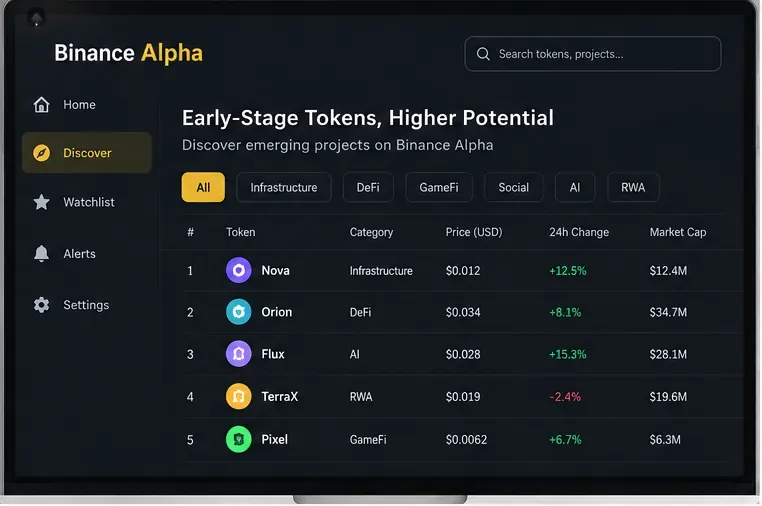
這是一份實用指南,教你如何在幣安上線之前,利用代幣經濟模型、合約、流動性、鏈上數據、開發活動和幣安 Alpha 來尋找有前途的早期加密貨幣。
探索 2026 年值得研究的五種 Layer-3 生態系統代幣——ORBS、B3、XAI、DMT 和 RARI——它們都經過了驗證,具有成熟的架構、催化劑、代幣用途和關鍵風險。
A 2026 evidence-based look at LINK, ONDO, SYRUP, CFG, and PLUME, focusing on real RWA adoption, token value capture, dilution risk, and thesis breakers.
一份實用的 2026 年 DePIN 觀察名單,涵蓋 GEOD、HONEY、DIMO、WXM 和 IO,包括代幣捕獲機制、風險和盡職調查清單。
透過實際效用、代幣經濟、催化劑、稀釋、流動性和失敗風險,對五個估值低於 5000 萬美元的加密貨幣項目進行分析,這些項目具有不對稱的成長潛力。
本文首先對五個較小的 AI 加密項目進行研究,這些項目具有實際產品、代幣實用性和 2026 年的催化劑——以及可能破壞這一理論的風險。