Home
» News
»
October 2026 Bitcoin and Ethereum Options Expiries: How to Verify Dates and Open Interest Safely
October 2026 Bitcoin and Ethereum Options Expiries: How to Verify Dates and Open Interest Safely
Bitcoin and Ethereum options do not share one universal expiry calendar. The correct date, settlement time, contract unit, and open-interest figure depend on the exchange and product you are looking at. For October 2026, that distinction matters because major venues offer different mixes of daily, weekly, monthly, and quarterly contracts.
This reference focuses on a safe verification workflow rather than on a single headline number. The goal is simple: confirm the exact contract first, then confirm its expiry timestamp, then read open interest from the same venue and unit before you use it in a trading or risk decision.
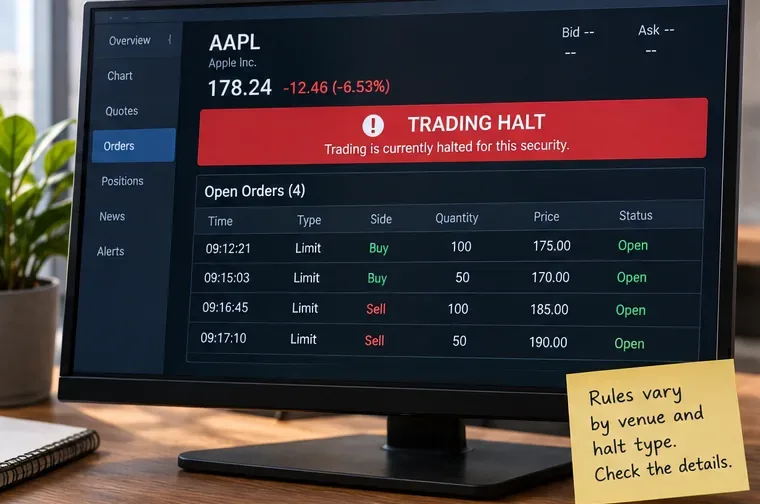
A practical options-expiry workflow starts with the venue, exact contract, expiry time, and open-interest unit. The screen shown here is illustrative rather than live market data.
October 2026 quick reference
For Deribit BTC and ETH options, the exchange's current contract-introduction policy states that daily options expire every day at 08:00 UTC, weekly options expire each Friday at 08:00 UTC, monthly options expire on the last Friday of the calendar month at 08:00 UTC, and quarterly options expire on the last Friday of March, June, September, and December. See the Deribit Contract Introduction Policy.
October 2026 date
What it means on Deribit
Time
October 2
Friday weekly expiry
08:00 UTC
October 9
Friday weekly expiry
08:00 UTC
October 16
Friday weekly expiry
08:00 UTC
October 23
Friday weekly expiry
08:00 UTC
October 30
Friday weekly expiry and October monthly expiry
08:00 UTC
There is no standard Deribit quarterly expiry in October because quarterly expiries are tied to March, June, September, and December. Daily expiries may also exist throughout the month, subject to the exchange's listing policy and current instrument set.
On CME Group, the structure is different. CME currently offers Monday-through-Friday weekly options across its larger Bitcoin and Ether options products, alongside monthly and quarterly expirations. CME's official Bitcoin options calendar lists the October 2026 standard Bitcoin option contract with a last-trade and settlement date of October 30, 2026. Verify the exact product you intend to trade using the CME Bitcoin options calendar and the broader CME expiration calendar.
What should you verify before relying on an expiry date?
1. Confirm the venue before the date
A date such as October 30 can be relevant on several exchanges, but the contract rules are not interchangeable. Deribit BTC options, CME Bitcoin options on futures, CME Micro Bitcoin options, and other venue-specific products can differ in settlement mechanics, trading hours, contract size, and data conventions.
Do not copy an expiry from a market calendar and assume it applies everywhere. Start from the official product page or API for the venue that actually lists the position.
2. Confirm the exact instrument, not just “BTC” or “ETH”
Deribit's API documentation explicitly recommends discovering listed options through public/get_instruments and using each instrument's expiration_timestamp rather than inferring expiry only from the instrument name. The exchange's Options Data Collection guide also notes that the same workflow applies to BTC and ETH options.
This is especially useful around listing changes. A recurring rule tells you what should normally exist; the live instrument list tells you what actually exists now.
3. Confirm the settlement timestamp in UTC
Timezone mistakes are common around global crypto derivatives because traders may view calendars in local time while the exchange defines expiry in UTC or exchange-specific local time. Deribit states that its expiring options settle at 08:00 UTC. Its settlement documentation explains that the final delivery price for expiring instruments is based on a 30-minute time-weighted average of the relevant Deribit index from 07:30 to 08:00 UTC.
That means “expires Friday” is incomplete information. For risk management, the exact hour matters.
How do you verify open interest safely?
Open interest is the amount of outstanding derivative exposure in contracts or contract-equivalent units. It is not trading volume, and it is not a count of bullish traders. Every open contract has counterparties on both sides, so open interest by itself does not identify market direction.
Use the exchange's own market-data field
For Deribit, the public method get_book_summary_by_currency can return open interest for all instruments in a currency and can be filtered with kind=option. The documentation says this is appropriate for a point-in-time full-chain snapshot. For continuous real-time monitoring, Deribit recommends WebSocket ticker subscriptions instead of repeatedly polling the REST endpoint.
The same API documentation also defines the unit. For options and linear futures, open_interest is expressed in the underlying base-currency coin. That means BTC option open interest is reported in BTC-equivalent amount units and ETH option open interest in ETH-equivalent amount units. This is an important check before comparing one dataset with another that may show contracts or U.S.-dollar notional.
Do not mix venue totals without normalizing units
A safe comparison requires at least four fields: venue, instrument family, expiry, and unit. If one source reports 25,000 contracts and another reports 25,000 BTC-equivalent units, adding those numbers would be meaningless.
If you want a cross-venue notional estimate, first verify each contract multiplier and the source timestamp, then convert each venue into the same unit using a documented method. Keep the original exchange figure alongside the normalized value so that the transformation can be audited later.
Check the timestamp and data status
Open interest changes as positions are opened and closed. A screenshot from yesterday and a live API response are not directly comparable without timestamps. CME product pages also warn that website market data can be delayed and should be treated as reference data rather than as a substitute for a real-time market-data feed. For example, CME's Ether options volume and open-interest page displays its update status and data timing on the page.
Before using an OI figure, record when it was captured and whether it is preliminary, delayed, prior-day, or real-time.
A practical verification checklist
Venue: Is the position on Deribit, CME, or another exchange?
Product: BTC, Micro BTC, ETH, Micro ETH, inverse option, linear option, or options on futures?
Exact instrument: Verify the live instrument identifier rather than relying on a generic calendar label.
Expiry timestamp: Confirm date and hour in the exchange's stated timezone, preferably UTC in your own records.
Settlement method: Check whether the option is cash-settled, settles into a future, or follows another venue-specific mechanism.
OI unit: Contracts, BTC, ETH, or a notional value?
Timestamp: When was the open-interest value last updated?
Data status: Live, delayed, preliminary, or prior-day?
Source: Official exchange page, exchange API, or licensed real-time feed.
What can open interest tell you—and what can it not tell you?
Open interest is useful for locating where positions are concentrated across expiries and strikes. A large amount of OI in one expiry can help explain why that date receives more attention from liquidity providers and risk desks. Comparing OI over time can also show whether participation is building or shrinking.
But OI alone does not prove that an expiry will cause a large price move. It also does not tell you which side is “winning,” whether positions are hedged elsewhere, or whether a large strike concentration will act as support, resistance, or neither. Those interpretations require additional evidence such as trade flow, implied volatility, spot and futures positioning, and liquidity conditions.
How should you treat October 30, 2026?
October 30 deserves special attention because it is the last Friday of October. Under Deribit's published policy, that makes it the October monthly expiry for BTC and ETH options at 08:00 UTC, while it is also a regular Friday expiry. CME's standard Bitcoin options calendar separately lists October 30 as the October 2026 settlement date for that product.
That does not make October 30 a universal “crypto options expiry” for every exchange or every contract. It means that multiple major product families have important expirations around that date. The safe approach is to build a venue-specific list and keep each market's OI separate until you have normalized the units.
Bottom line
For October 2026, the most reliable workflow is to treat expiry and open interest as contract-specific data, not as a single market-wide statistic. On Deribit, weekly BTC and ETH expiries fall on October 2, 9, 16, 23, and 30 at 08:00 UTC, with October 30 also serving as the monthly expiry under the exchange's current policy. CME maintains its own calendars and contract families, including weekday weeklies and monthly products.
Before acting on any expiry or OI figure, verify the official instrument, exact timestamp, settlement rule, unit, and data freshness. If any one of those is unclear, the number is not yet ready to use in a trading decision.