Home
» News
»
Top AI-Powered Layer 1 Blockchains to Keep on Your Radar in 2026
Top AI-Powered Layer 1 Blockchains to Keep on Your Radar in 2026
“AI-powered blockchain” can mean very different things. Some Layer 1 networks use token incentives to coordinate machine-learning services. Others are building decentralized compute and storage for AI workloads. A few focus on autonomous agents, user-owned data, or running inference directly inside smart contracts.
That distinction matters more than the label. A chain that is compelling for an agent marketplace may be a poor fit for training models. A network optimized for private data may not be the best place to deploy a general-purpose DeFi app. Rather than naming one “best” AI blockchain, this guide compares six Layer 1 networks that represent different technical bets: Bittensor, 0G, Fetch.ai, Internet Computer, NEAR Protocol, and Vana.
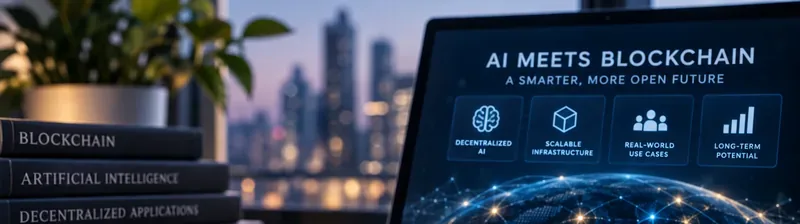
AI-focused Layer 1 networks are pursuing different combinations of decentralized compute, data ownership, smart contracts, agent infrastructure, and cross-chain execution.
Quick comparison: which AI thesis does each Layer 1 pursue?
Network
Primary AI angle
Strong fit for
Main trade-off
Bittensor
Incentive markets for machine intelligence
AI services, model evaluation, specialized subnets
More specialized architecture and token economics than a conventional app chain
0G
AI-native chain plus compute and storage
AI apps needing a vertically integrated infrastructure stack
Newer ecosystem with less production history than older L1s
NEAR is a general-purpose L1; much of its AI advantage comes from upper-layer infrastructure
Vana
User-owned data for AI
Consent-driven data applications, DataDAOs, private data access
Its specialization is data ownership rather than decentralized model compute
1. Bittensor: for markets that reward useful machine intelligence
Bittensor is one of the clearest examples of a blockchain whose core economic design is directly tied to AI services. Its network is organized into specialized “subnets.” Each subnet defines a task or digital commodity, while miners provide services and validators evaluate the quality of those outputs. The network then uses incentives to reward useful performance.
The official Bittensor documentation describes miners and validators as the basic participants inside a subnet, with the Subtensor blockchain connecting those participants. Its Yuma Consensus mechanism is designed around the problem of distributing rewards for work that can include many different types of digital commodities and services. See the Bittensor building-block documentation and Yuma Consensus documentation.
Bittensor is especially interesting when the application itself is a competitive market for intelligence: inference, prediction, model evaluation, data processing, or another measurable AI service. Its Dynamic TAO design also gives individual subnets their own economic layer, so capital allocation and network incentives can vary across specialized markets. The trade-off is complexity. Developers are not simply deploying a normal smart contract and calling an API; they are often designing an incentive system, a scoring mechanism, and adversarially robust validation rules.
Keep Bittensor on your radar if: your thesis is that decentralized AI should reward competing providers of measurable intelligence rather than simply host AI-enabled dApps.
2. 0G: for a vertically integrated AI infrastructure stack
0G takes a different route. Instead of focusing primarily on a marketplace for model outputs, it combines an EVM-compatible Layer 1 with decentralized compute and storage components. Its current builder documentation describes 0G Chain as an “EVM-compatible L1, tuned for AI apps,” while the broader platform integrates compute, storage, inference, and fine-tuning tooling. See the 0G Chain documentation and 0G developer documentation.
That architecture is attractive for teams that do not want to stitch together one chain for settlement, a separate decentralized storage network, and a third marketplace for GPU services. Solidity compatibility also lowers the switching cost for teams already familiar with Ethereum tooling.
The main trade-off is maturity. 0G is much newer than established general-purpose Layer 1s, so builders should evaluate mainnet stability, provider diversity, tool quality, liquidity, and real application usage instead of relying only on theoretical throughput or roadmap claims. Its architecture is ambitious precisely because it tries to coordinate several infrastructure layers at once.
Keep 0G on your radar if: you want one AI-oriented stack covering smart contracts, large data, inference, and compute while retaining EVM development patterns.
3. Fetch.ai: for autonomous agents that discover and transact with one another
Fetch.ai has spent years building around autonomous software agents rather than treating AI as an add-on to a DeFi chain. Its ecosystem includes the uAgents framework, Agentverse for agent discovery, and blockchain settlement infrastructure. Fetch.ai’s own technical material describes the chain as a settlement layer that helps agents transact and coordinate, with an on-chain Almanac contract functioning as a discovery mechanism for registered agents. See Fetch.ai’s overview of multi-agent systems and its settlement layer.
The strongest use case is not heavy model training directly on the blockchain. It is giving agents identity, discovery, economic coordination, and a way to interact with external services or other agents. Fetch.ai continues to develop its AI stack around Agentverse and ASI:One, while its infrastructure remains connected to the Cosmos ecosystem.
The trade-off is architectural separation. A developer evaluating “how much AI is actually on-chain?” should distinguish the blockchain settlement layer from inference, language-model services, and hosted agent infrastructure. That separation is not necessarily a weakness; it can be a practical design choice. But it means Fetch.ai should be assessed as an agent ecosystem rather than as a chain that executes every AI workload inside consensus.
Keep Fetch.ai on your radar if: your product needs discoverable autonomous agents that can coordinate, negotiate, call services, and settle value.
4. Internet Computer: for AI that lives closer to the smart-contract layer
Internet Computer takes one of the most aggressive approaches to putting application logic on-chain. Its canister smart contracts can serve web content, persist large amounts of data, and perform substantially more computation than conventional smart contracts. The project has also demonstrated AI inference running within canisters and now documents an LLM canister interface supporting Llama 3.1 8B for AI-enabled canisters. See the ICP application-canister reference.
That makes ICP especially relevant for sovereign AI agents: applications where developers want the agent logic, application state, asset control, and user-facing service to remain under blockchain-enforced execution rather than relying on a conventional cloud backend.
There is an important nuance. ICP’s own AI roadmap has described some LLM capabilities as evolving from an MVP toward more decentralized worker infrastructure. In other words, “AI on-chain” is not a single binary state; developers should verify which model, inference path, trust assumptions, and performance characteristics apply to the feature they intend to use. The broader platform also uses a canister/WebAssembly programming model rather than the EVM, which can be either a benefit or a learning curve depending on the team.
Keep Internet Computer on your radar if: your priority is hosting more of the AI application stack inside blockchain-controlled execution, including persistent agents and full-stack applications.
5. NEAR Protocol: for cross-chain agents and intent-based execution
NEAR is not an AI-only blockchain. It is a general-purpose, sharded Layer 1 that has increasingly oriented its product roadmap around autonomous agents, private inference, chain abstraction, and intent-based execution. That distinction is important: NEAR’s AI proposition comes from combining a mature L1 with infrastructure that allows agents to act across multiple networks.
NEAR Intents lets users or agents specify desired outcomes while a solver network handles execution. Chain Signatures allow NEAR smart contracts to authorize transactions on other chains, and NEAR’s current roadmap explicitly frames these capabilities as infrastructure for an agentic economy. See NEAR’s chain-abstraction overview and the 2026 NEAR roadmap.
This makes NEAR appealing for agents that need to rebalance assets, make payments, or execute across several chains without forcing users to manually bridge and manage separate wallets. The trade-off is that AI is not embedded in the base consensus mechanism the way Bittensor’s incentive design is tied to machine intelligence. Much of the differentiated AI experience comes from agent tooling, secure execution environments, intents, and interoperability services layered on top of the base chain.
Keep NEAR on your radar if: your AI agent needs to control assets and execute across chains more than it needs decentralized model training.
6. Vana: for user-owned data and permissioned AI access
Vana addresses a different bottleneck in AI: data ownership. Its Layer 1 is built around data portability, permissions, and economic structures that let users contribute data to applications or pooled datasets under explicit rules. Vana’s current protocol documentation describes data portability as a core primitive of the Vana L1, with Data Liquidity Pools, DataDAOs, query engines, and confidential processing used to make data available for AI or analytics without simply publishing raw user records. See the Vana protocol contract documentation and Vana pooled-data query documentation.
That makes Vana relevant to AI teams whose competitive advantage depends on high-quality, consented, user-contributed data. A model-training startup, consumer assistant, health-data collective, or personalization platform may care more about proving permission and compensating contributors than about raw L1 transaction speed.
The trade-off is specialization. Vana is not primarily positioning itself as a decentralized GPU network or a generalized AI inference marketplace. Its strongest thesis is that the data layer should be owned and governed by the people who generate the data.
Keep Vana on your radar if: your AI application needs a permissioned, user-controlled data layer and transparent economic relationships with data contributors.
How to choose among AI-focused Layer 1 blockchains
The simplest way to compare these networks is to start with the scarce resource your product actually needs.
Need a market for intelligence or model outputs? Bittensor is the most specialized option in this group.
Need compute, storage, and an EVM chain in one AI-oriented stack? 0G deserves closer technical due diligence.
Need autonomous agents that discover and pay other agents? Fetch.ai is built around that workflow.
Need AI logic hosted as part of the smart-contract application itself? Internet Computer has one of the most distinctive execution models.
Need agents to transact across many chains? NEAR’s Intents and Chain Signatures are the most relevant features to examine.
Need consented, monetizable, user-controlled datasets? Vana approaches AI from the data-rights side.
What to verify before treating an “AI blockchain” as investable or build-ready
Marketing around AI and crypto moves faster than production infrastructure, so a practical checklist helps.
Question
Why it matters
Is the AI capability live on mainnet?
Roadmap features should not be evaluated as if they are production services.
Where does inference actually run?
On-chain, validator nodes, TEEs, independent GPU providers, and centralized APIs have different trust assumptions.
Where is training data stored?
Data availability, privacy, ownership, and cost can determine whether an AI application is viable.
How is useful AI work measured?
Decentralized networks need a credible way to score providers and resist gaming.
Can developers use familiar tooling?
EVM compatibility may speed deployment; specialized runtimes can offer unique capabilities but require retraining.
What is actually decentralized?
A decentralized settlement chain can still depend on centralized inference endpoints or hosted front ends.
Is there real application demand?
Developer activity and production usage matter more than an “AI” label alone.
The bigger takeaway
The AI-blockchain category is splitting into several distinct markets rather than converging on one winning architecture. Bittensor treats intelligence as an incentivized commodity. 0G tries to supply a full AI infrastructure stack. Fetch.ai centers on autonomous agent commerce. Internet Computer pushes more AI application execution into smart contracts. NEAR focuses on agents that can act across chains. Vana makes user-owned data the core primitive.
That diversity is useful. It means the right question is not “Which AI Layer 1 has the strongest narrative?” but “Which chain solves the bottleneck my application actually has?” For builders and investors alike, the networks worth monitoring are the ones that can convert their AI thesis into verifiable usage, durable developer tooling, clear trust assumptions, and applications that work better because blockchain is there—not merely because AI is popular.