Home
» Knowledge
»
The Ultimate Guide to Building a Long-Term Crypto Holding Portfolio
The Ultimate Guide to Building a Long-Term Crypto Holding Portfolio
A long-term crypto holding portfolio is not a list of coins chosen once and forgotten. It is a risk-management system: decide how much loss you can absorb, assign each holding a clear role, buy according to rules, protect access, keep records, and review the plan on a schedule. The framework below is educational, not individualized investment or tax advice. Crypto assets can lose substantial value, and no allocation or custody method guarantees a profit or prevents loss.
This guide is written for a U.S. reader and reflects official guidance checked on September 16, 2026. Rules, product availability, taxes, and platform protections can change. For current tax treatment, read the IRS digital assets guidance. For investor-risk and custody context, review the SEC's crypto asset custody bulletin.
What should a long-term crypto portfolio accomplish?
The objective is not to predict the next winning token. It is to make a portfolio that remains understandable when prices fall, headlines become emotional, or a trading platform changes its rules. A workable plan answers five questions before the first purchase:
What is the investment horizon?
How much of the overall household balance sheet may be exposed to crypto?
What job does each asset perform?
Where are the assets held, and how will access be recovered?
What event would make you buy less, sell, or stop using a service?
Start with money that is genuinely long term. An emergency reserve, near-term bills, high-interest debt, and essential insurance should not depend on a volatile digital-asset position. The SEC says crypto asset investments can be exceptionally risky and that investors should consider only money they can afford to lose entirely. That is a useful portfolio-level constraint, not a prediction about any particular coin.
Action: Write one sentence stating the time horizon and one maximum-loss boundary for the crypto portion. If either sentence is impossible to write, postpone the purchase and clarify the household budget first.
How much crypto belongs in the overall portfolio?
There is no official percentage that is right for everyone. A suitable amount depends on income stability, emergency savings, debt, other investments, dependents, time horizon, and tolerance for a large drawdown. A person with a diversified retirement plan and a funded emergency reserve faces a different decision from a person who may need the money next year.
Use a portfolio-level cap rather than letting each new token purchase make the decision for you. Define the maximum value of all crypto exposure as a share of investable assets, then check what happens if that sleeve falls sharply. The cap should include direct holdings and, where relevant, exposure through funds, employer benefits, lending arrangements, or other products. Do not borrow to reach the cap: leverage can turn a market decline into a forced sale or a debt problem.
Action: Record the cap in dollars and as a percentage, including whether it covers every wallet and account. Set a date to review it instead of changing it after a rally or panic.
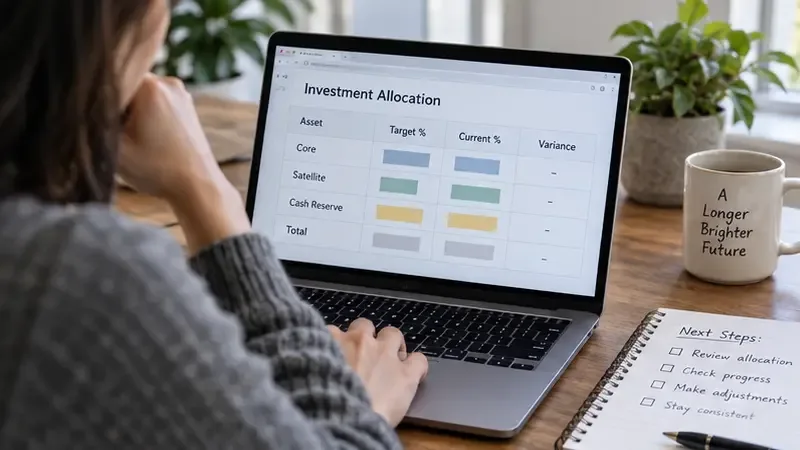
A spreadsheet-style allocation worksheet separates the crypto budget from the rest of the household portfolio before any asset is selected.
How should holdings be organized?
Organize assets by role, not by the number of ticker symbols. A simple structure helps you decide what to research and what to do when a holding no longer fits.
Portfolio role
Purpose
Questions to answer
Core
Longer-horizon exposure to assets you understand best
What is the thesis, what could invalidate it, and why does it deserve the largest attention?
Satellite
Smaller, higher-uncertainty ideas
What evidence supports the use case, and what loss limit prevents one idea from dominating?
Operational reserve
Cash for fees, transfers, or planned purchases
Can this amount cover expected activity without forcing a sale?
Speculative or yield sleeve
Optional exposure with extra platform, smart-contract, liquidity, or counterparty risk
Is the added return worth the added failure modes, and can the position be lost without damaging the plan?
“Core” does not mean guaranteed, government-backed, or appropriate for every investor. It only means the asset has a defined role within your own plan. The SEC notes that crypto assets vary significantly and can present different benefits and risks. Avoid treating a familiar name, large market value, or long trading history as proof that an asset is safe.
Action: Give every intended holding a role, a one-paragraph thesis, and a maximum position size before buying. If you cannot explain the role without repeating a price forecast, classify the idea as unresearched.
What should you research before buying?
Use a repeatable checklist. It is more useful than trying to find a perfect ranking of coins.
Purpose and actual use: What problem does the network or asset address? Who uses it today, and what evidence is available beyond promotional language?
Security and operation: How does the network reach agreement, and what failures could interrupt access or settlement?
Supply and incentives: How are new units issued, unlocked, distributed, or concentrated? Check primary documentation and disclosures rather than assuming a fixed supply is the only relevant fact.
Liquidity and market structure: Can you buy or sell at a reasonable spread for the size you plan to hold? Thin liquidity can matter more than a headline price.
Governance and concentration: Who can change important parameters, and how dependent is the project on a small group?
Access and custody: Which reputable services support deposits, withdrawals, and recovery? A technically interesting asset is not practical if you cannot safely access it.
Legal and tax implications: What jurisdiction applies to you, and could a transaction create reporting obligations?
Action: Save the project’s primary documentation, token-supply information, and the platform’s fee and withdrawal pages with the date you checked them. If a claim cannot be verified, mark it as unknown rather than filling the gap with optimism.
What is a disciplined way to buy?
Choose a process that reduces the chance of making the entire decision during a dramatic market move. Some long-term investors use scheduled contributions, sometimes called dollar-cost averaging, to spread purchases over time. That can reduce timing pressure, but it does not eliminate volatility, guarantee a lower average price, or protect against a bad asset choice. A one-time purchase and scheduled purchases both carry market risk.
Before funding an account, compare the service’s trading spread, explicit fees, withdrawal rules, supported networks, identity requirements, and customer-support process. Confirm that you understand whether you are buying the asset itself or a product that gives economic exposure to it. Do not assume that an app’s ease of use means the asset is protected. FINRA notes that crypto platforms and wallets can be hacked or fail, and consumers can lose money.
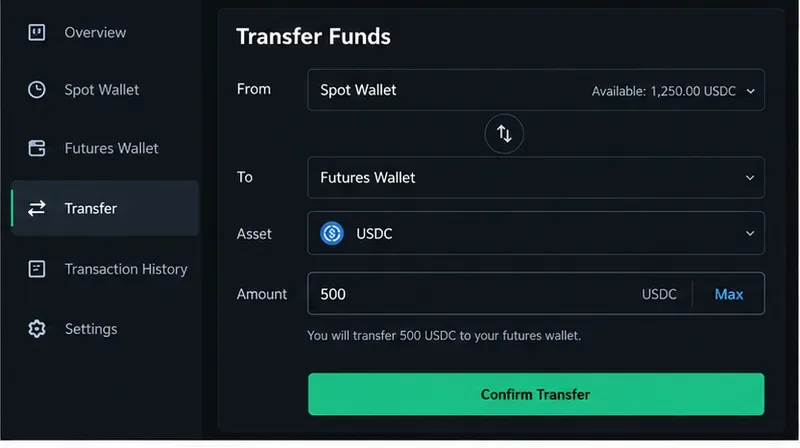
Keep the process boring: use a written contribution schedule, avoid borrowing, do not chase a price move, and pause when a provider asks you to bypass normal security controls. A test transfer with a small amount can verify an address and network before a larger transfer, but it is not proof that a platform will remain solvent or available.
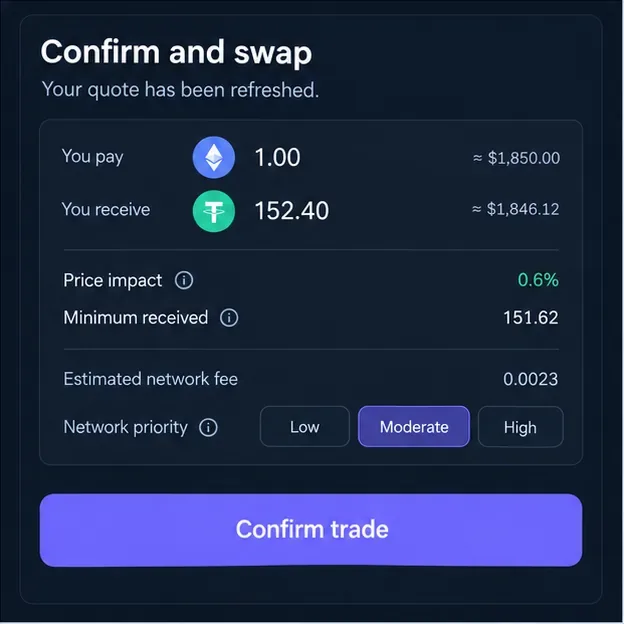
Action: Create a pre-purchase checklist with the amount, asset, network, total fees, destination, and reason for buying. Do not press confirm until each field is clear.
Which custody option fits the holding?
Custody is a separate decision from asset selection. The SEC explains that a crypto wallet generally stores the private keys needed to access assets; it does not store the assets in the same way a physical wallet stores cash. Losing or exposing a private key can mean losing access.
Option
Practical advantage
Main trade-off
Exchange or other third-party custody
Convenient buying, selling, and account recovery
Platform, withdrawal, insolvency, cyber, and policy risk; you rely on the provider’s controls.
Hot wallet
Fast access for transactions
Internet connectivity increases exposure to phishing, malware, and key theft.
Cold or hardware wallet
Private keys can remain offline for less frequent use
More responsibility for setup, backups, device loss, and transaction verification.
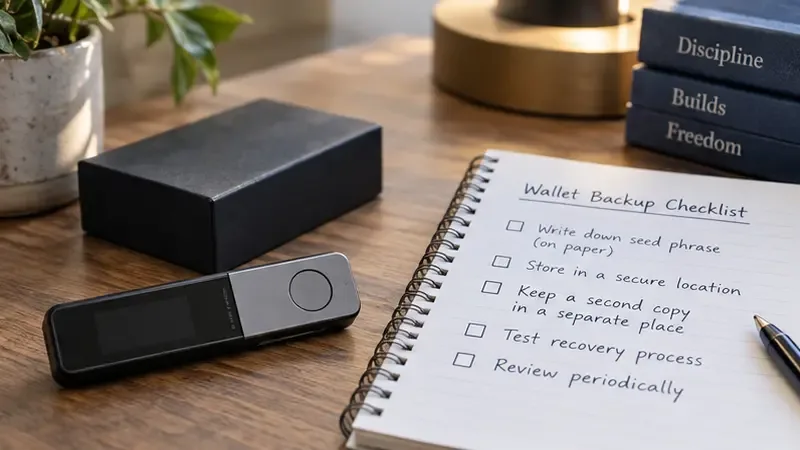
A hardware wallet sits beside a generic backup checklist, illustrating the separate custody decisions needed for a long-term holding.
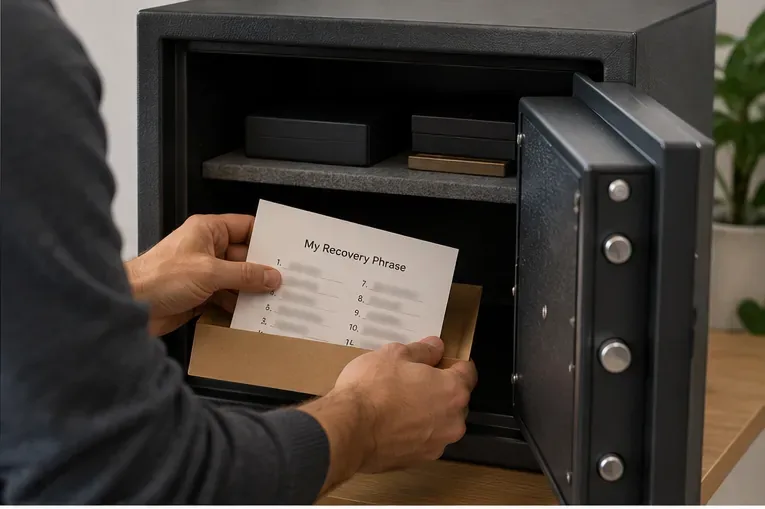
For self-custody, create backups offline, keep recovery information away from cameras and cloud notes, and never share a recovery phrase with support staff or a website. For third-party custody, enable strong account protection, use a unique password, review withdrawal controls, and understand what happens if access is restricted. Consider separating a small transaction wallet from less frequently moved holdings.
Action: Write down who can move the assets, what backup is required, and what happens if the phone, device, or platform becomes unavailable. If the recovery path is unclear, do not transfer the long-term holding yet.
How often should you review and rebalance?
Review the plan on a calendar, not every time a chart moves. A quarterly or semiannual check can cover the portfolio cap, each holding’s thesis, custody access, provider notices, fees, and records. Rebalancing means returning to the role or limit you selected; it should not become a new excuse to trade every headline.
Review sooner after a major security incident, a change in a platform’s withdrawal terms, a material change in the project, a major life event, or a tax-law change. Rebalancing can create fees, spreads, and taxable dispositions. In a taxable U.S. account, selling or exchanging an asset can have consequences even if the proceeds are reinvested.
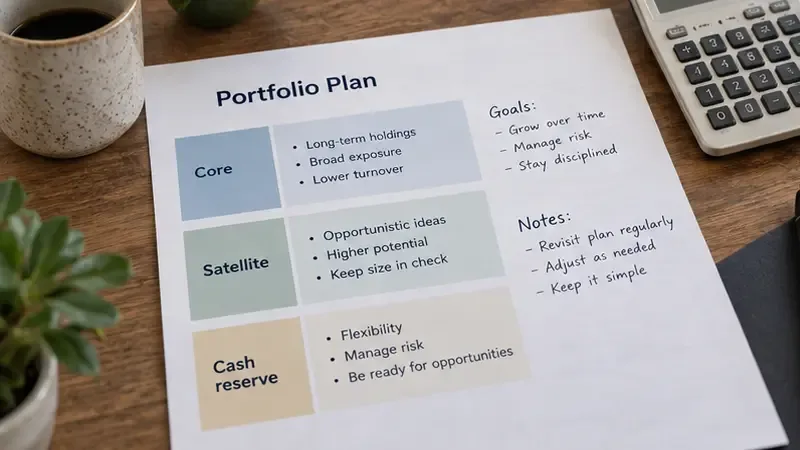
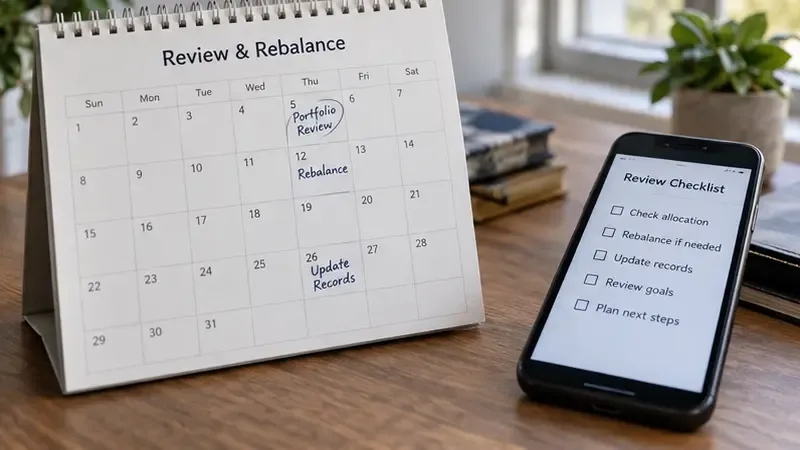
A written portfolio plan groups holdings by role and lists the questions to revisit before changing an allocation.A calendar review reminder pairs a scheduled portfolio check with a short list of custody, thesis, and recordkeeping tasks.
Action: Put the next review date on your calendar now. At the review, write what changed in facts, not just what changed in price.
What records should a U.S. holder keep?
The IRS treats digital assets as property for U.S. federal tax purposes. Its guidance says taxpayers should keep records documenting purchases, receipts, sales, exchanges, and other dispositions, including the date and time, units, fair market value in U.S. dollars, and basis information needed to calculate gain or loss. The holding period matters: a capital asset held one year or less is generally short term, while one held more than one year is generally long term.
Keep a durable transaction log with the asset, network, wallet or account, transaction ID when available, quantity, fees, USD value, date and time, purpose, and related tax lot. Transfers between wallets may not be sales, but the record should still show what moved and where. Rewards, payments, staking, lending, gifts, swaps, and wrapped or bridged assets can require more specialized analysis. Broker reporting is also being phased in, so do not rely on a future tax form to reconstruct old records.
This is U.S.-specific information, not tax advice. State rules and other countries’ rules can differ. Use a qualified tax professional when activity is complex or the amounts are material.
Action: Export account and wallet records regularly, store a second secure copy, and reconcile the log before year end rather than after a filing deadline.
When should you sell or reduce a holding?
Decide the conditions before emotions arrive. A reduction may be appropriate when the position breaches the portfolio cap, the original thesis is no longer supported, custody or platform risk becomes unacceptable, the money is needed for a planned life goal, or your tax and financial plan changes. A sale is not automatically a failure, and holding is not automatically discipline.
Do not use a price target as the only exit rule. A target can encourage anchoring, while panic can turn a temporary decline into an irreversible decision. Document the evidence, costs, tax effects, and replacement plan. If you cannot explain why the position is still held except that it “has to come back,” revisit the thesis.
Action: Add three written sell or reduce triggers to the same document as your buy rules. Require a short cooling-off period for decisions driven by social media or urgent messages.
Long-term crypto portfolio checklist
Emergency savings and near-term obligations are separated from crypto risk.
A maximum crypto exposure is defined for the whole portfolio.
Every holding has a role, thesis, research record, and position limit.
Purchases follow a schedule instead of hype, leverage, or urgency.
Fees, spreads, withdrawal rules, network details, and provider risks are understood.
Custody, recovery, and backup procedures are written and tested with care.
Tax records capture dates, units, USD values, basis, fees, and transfers.
A calendar review covers facts, security, allocation, and life changes.
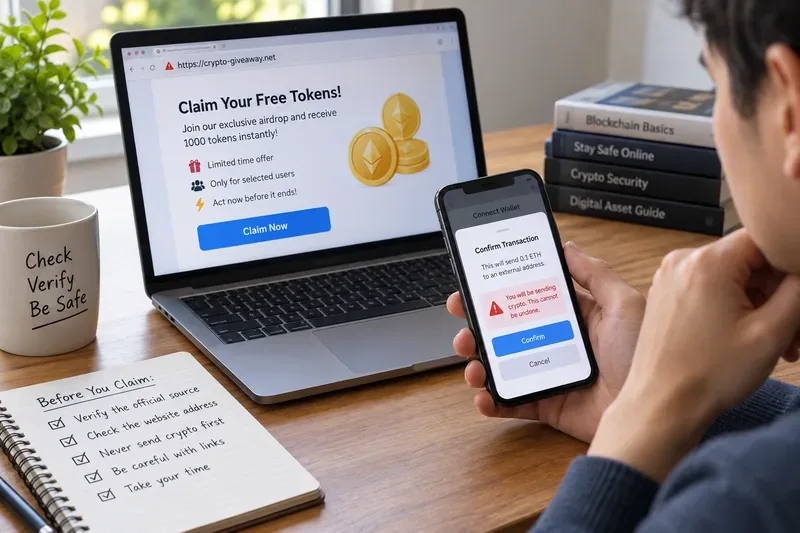
Scam rules are explicit: no guaranteed returns, secret recovery phrases, or rushed transfers.
The core idea is simple but demanding: build the process before building the position. Official investor-protection agencies consistently emphasize volatility, custody risk, fraud risk, and the possibility of total loss. Treat those warnings as design requirements. A long-term portfolio is strongest when you can explain its limits, recover access, document its history, and follow its rules without needing the market to cooperate.