Home
» Ecosystem
»
Base Ecosystem Deep Dive: 8 Projects and Trends to Watch in 2026
Base Ecosystem Deep Dive: 8 Projects and Trends to Watch in 2026
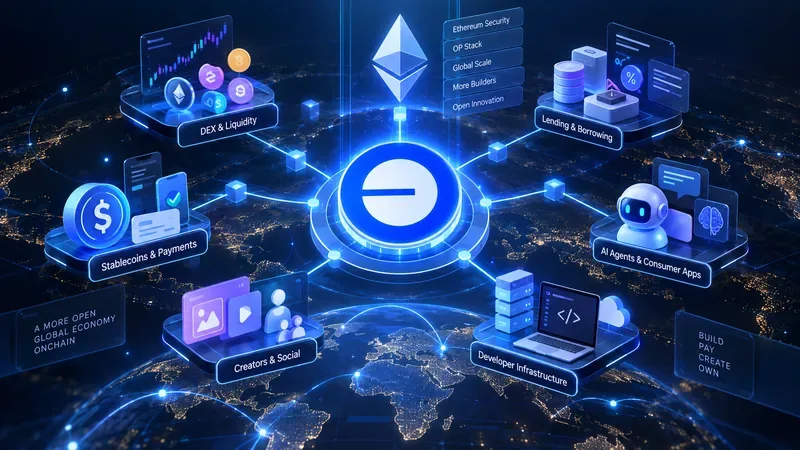
Base has matured from a low-cost Ethereum Layer 2 into a broad onchain economy spanning decentralized exchanges, credit markets, stablecoin payments, creator products, and AI-agent infrastructure. That breadth also makes the ecosystem harder to evaluate. A protocol can be important to Base without its token being attractive, a fast-growing category can still be highly speculative, and a project listed on Base’s ecosystem directory is not automatically endorsed by Coinbase or Base.
This deep dive uses official project documentation and Base’s own materials, checked on September 16, 2026. “Projects to watch” means projects whose products, liquidity, integrations, or technical direction are worth monitoring—not a ranking of investments.
The Base ecosystem now spans liquidity, credit, payments, AI agents, creator applications, and developer infrastructure rather than a single DeFi niche.
What Base actually is in 2026
Base is an Ethereum Layer 2 network incubated by Coinbase. It began on the open-source OP Stack and was designed to make Ethereum applications cheaper and easier to use while remaining part of the broader Ethereum ecosystem. Base’s current public strategy is considerably wider than simply scaling transactions: its 2026 priorities emphasize global onchain markets, stablecoin payments, and infrastructure for both human and AI builders. Base’s official ecosystem page now says more than 700 companies are building on the network.
Common misconception: Base is not the same thing as a custodial Coinbase account. Applications on Base are independent onchain products, and Base explicitly states that ecosystem listings are not endorsements. Users still face smart-contract, liquidity, token, oracle, bridge, and application-specific risks.
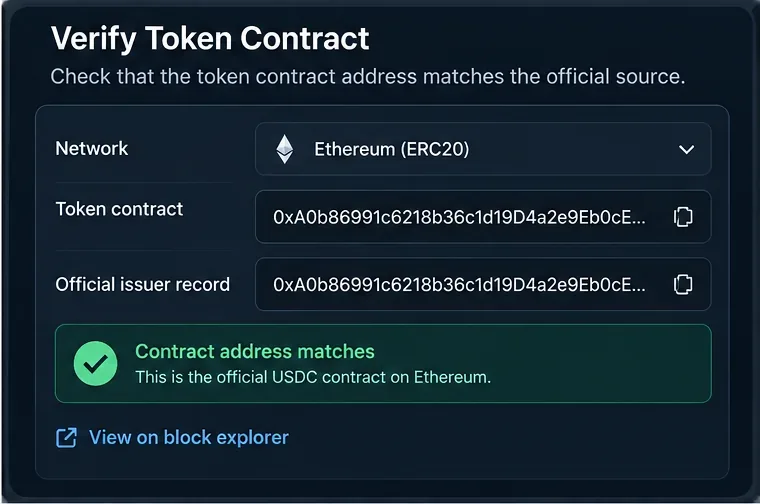
Useful action: Before using any app, open the project’s official documentation from its verified site, confirm the Base network and contract addresses, and verify what entity—if any—can upgrade or pause the contracts. Start with the official Base ecosystem directory and Base’s 2026 vision.
Why the Base ecosystem matters beyond low transaction fees
Low fees are useful, but they are not a durable moat by themselves. Base is attempting to combine Ethereum settlement, Coinbase distribution, deep stablecoin activity, composable DeFi, consumer applications, and emerging machine-to-machine payments. Base says its 2026 strategy is to support markets for tokenized assets, expand stablecoin payment rails, and give AI agents native financial tools. Its developer pages also highlight x402, an HTTP payment protocol that lets software or agents pay for API requests without a conventional subscription flow.
What is verified: Base is explicitly investing in markets, payments, and agents as strategic areas. What depends on circumstances: whether those categories generate sustainable user activity rather than incentive-driven bursts. What is not knowable in advance: which individual application will ultimately capture the most economic value.
Useful action: Track recurring usage—trading volume, borrowing demand, stablecoin settlement, fees, active users, and integrations—rather than relying on token price or social-media attention alone.
Aerodrome is one of the clearest examples of a Base-native protocol becoming core market infrastructure. Its documentation describes it as Base’s trading and liquidity hub. The protocol combines automated market makers with a vote-escrow incentive system: liquidity providers can receive AERO emissions, while veAERO holders direct emissions and receive protocol revenue associated with the pools they support.
Aerodrome’s official documentation reported more than $185 billion in cumulative trading volume and more than $270 million in swap fees as of April 2026. Those figures are protocol-reported and should be read with their timestamp, but they show why Aerodrome matters to the Base liquidity layer. The team also states that Aerodrome and Optimism’s Velodrome are planned to merge into a unified exchange called Aero during 2026.
Common misconception: high emissions do not equal free yield. Liquidity providers can face impermanent loss, token-price risk, pool-specific risk, and changing incentive economics.
Useful action: Watch Aerodrome’s transition toward Aero, the share of volume that remains organic when incentives change, and whether its deepest pools continue to be the routing destination for Base assets. Review the Aerodrome documentation.
2. Morpho: permissionless credit markets and a Base-only fixed-rate experiment
Morpho is a decentralized, noncustodial lending protocol that lets markets and vaults be created using modular lending primitives. Its API documentation lists Base as a fully supported network. The important distinction is that Morpho is not one monolithic lending pool: market configuration, collateral assets, loan assets, oracles, and loan-to-value parameters can differ, which means risk has to be assessed market by market.
Base is especially interesting for Morpho because its newer Midnight product—described by Morpho as a fixed-rate, fixed-term market surface—is deployed only on Base at the time of writing. That makes Base a testing ground for a different form of onchain credit beyond variable-rate pooled lending.
Common misconception: “using Morpho” is not a single risk profile. Permissionless markets can differ significantly in collateral quality, oracle design, liquidity, and curator choices.
Aave provides a useful counterpoint to Base-native lending projects because it is a long-established multichain lending protocol. Aave’s official deployment list includes Aave V3 on Base. In August 2026, Aave Labs also opened a governance discussion proposing an Aave V4 deployment on Base, citing the network’s user activity, stablecoin liquidity, and the scale of Aave’s existing Base market.
The V4 proposal should not be treated as a completed deployment merely because it is under governance discussion. That distinction matters: governance forums often contain proposals, temperature checks, and implementation discussions that may change before execution.
4. Uniswap: multiversion DEX infrastructure with Base support
Uniswap is not Base-native, but it remains strategically relevant because multiple generations of the protocol are deployed on Base. Uniswap’s current deployment registry lists the v4 PoolManager on Base, while its documentation also provides Base addresses for v2 and v3 contracts.
This matters for builders as much as traders. A broad set of token and application teams can use Uniswap’s contracts as a standardized liquidity layer, while v4 introduces a more flexible architecture built around hooks and a singleton PoolManager.
Common misconception: “Uniswap on Base” does not refer to one contract. Different protocol versions have different contract addresses and mechanics, and Uniswap explicitly warns integrators not to assume addresses are identical across chains.
Useful action: Confirm the version and Base contract before interacting programmatically. Use the official Uniswap deployment registry, not an address copied from social media.
5. Moonwell: Base-focused user experience for lending and borrowing
Moonwell is an open lending and borrowing application deployed across Base and several other networks, with a product experience aimed at making money markets approachable. Its Base markets support a range of assets, including USDC, ETH-related assets, cbBTC, EURC, AERO, and WELL, although supported assets and parameters can change through governance.
Moonwell’s lending rates are variable and driven by utilization, and borrowing is overcollateralized. That makes it useful to watch as a retail-facing complement to more modular credit systems such as Morpho.
Common misconception: a displayed supply APY is not a guaranteed return. Moonwell’s documentation explains that rates depend on market utilization and can include separate reward components.
6. Virtuals Protocol: AI agents become an onchain economic category
Virtuals is one of the clearest Base-native bets on autonomous AI agents. Its official materials describe a protocol in which agents can be tokenized, provide services, transact onchain, and participate in agent-to-agent commerce. Base itself lists Virtuals among the agent tools in its ecosystem and provides a Virtuals integration in Base MCP.
Virtuals is worth watching because it connects two themes Base is actively prioritizing: AI agents and onchain payments. However, tokenized-agent markets can be highly speculative, and an agent token’s market value is not proof that the underlying agent has durable utility or revenue.
7. Zora: creator coins and onchain media move onto Base
Zora has evolved from NFT infrastructure toward an onchain media and creator-coin model. Its official support documentation states that Zora wallets operate on Base and that Creator Coins and regular Zora posts use the Base network. Zora also maintains developer tools for creating and querying coins.
This makes Zora useful to watch as evidence of whether Base can support consumer and creator behavior that is not primarily DeFi. The economic model is still experimental, and Zora itself describes Creator Coins as being for entertainment and social engagement purposes rather than as equity or governance rights.
8. x402 and Base’s agent-payment stack: infrastructure rather than a token thesis
Some of the most consequential Base ecosystem developments may not be standalone tokens at all. Base is building around x402, an HTTP payment protocol designed to let agents and applications pay per request, usually with stablecoins, without requiring traditional API keys or subscription billing. Base’s official agent pages also describe agentic wallets, Base MCP integrations, and ERC-8004-style identity infrastructure.
This category matters because it tests whether blockchains can become invisible payment rails inside software workflows. It is also early. Transaction counts can grow quickly while long-term unit economics, repeat demand, and competitive standards remain unsettled.
Useful action: Track the number of useful paid services, repeat payment volume, active agents, and integrations rather than assuming raw transaction count equals adoption. See Base’s agent infrastructure overview.
How to compare Base projects without confusing usage with investment quality
A project can score well on one metric and poorly on another. High total value locked can come from incentives; high volume can be low-margin; high token performance can occur without product growth; and a technically strong protocol can still face poor token economics. That is why “top project” should be treated as a research category, not a shortcut to a buy decision.
What could change the Base ecosystem thesis?
Three areas deserve close attention. First is economic durability: can Base applications maintain fees, borrowers, traders, creators, or paying agents when incentive programs change? Second is distribution: Coinbase can make Base easier to reach, but independent applications still have to retain users. Third is technical and governance evolution: Base has repeatedly stated a commitment to progressive decentralization, while its chain stack continues to evolve.
There are also known risks. Smart contracts can fail, stablecoins can depeg, collateral can become illiquid, governance can change parameters, bridges can introduce additional attack surfaces, and regulatory access varies by jurisdiction. Base’s own ecosystem page warns that yields are variable, third-party products are independent, and digital-asset activity can result in total loss of principal.
Useful action: Revisit a Base ecosystem thesis every quarter using primary-source documentation. Record what changed in usage, protocol versions, governance, incentives, and product scope. That process is more reliable than preserving a static list of “best” tokens.
Bottom line
The strongest way to understand Base in 2026 is as a stack of complementary markets rather than a single narrative. Aerodrome and Uniswap anchor liquidity; Morpho, Aave, and Moonwell show different models for onchain credit; Virtuals and x402 push machine-to-machine commerce; and Zora tests consumer-scale creator economics. The network’s own strategy connects these pieces through markets, payments, and builder infrastructure.
The verified part is that these products and deployments exist and that Base is actively prioritizing the categories around them. The uncertain part is which models will retain users and produce sustainable economics over a full market cycle. The practical response is simple: follow real usage, official deployment data, and protocol economics—and treat price action as one signal, not the thesis itself.