Home
» Ecosystem
»
Blast L2 Ecosystem Analysis: Native Yield, Protocol Status, and What Still Matters in 2026
Blast L2 Ecosystem Analysis: Native Yield, Protocol Status, and What Still Matters in 2026
You bridge ETH or stablecoins to Blast expecting two things at once: passive native yield and a busy DeFi ecosystem where that capital can do more. The first part is built into the network. The second part is much less static. Several protocols that defined Blast’s early growth have changed direction, reduced activity, or shut down, so a 2024 list of “top Blast apps” can be dangerously outdated in 2026.
The useful way to analyze Blast today is to separate the chain-level yield mechanism from the health of individual applications. Native yield can continue to function even when a specific DEX, lending market, or derivatives venue loses liquidity or exits the network. That distinction is the key to evaluating Blast without confusing protocol-level features with ecosystem momentum.
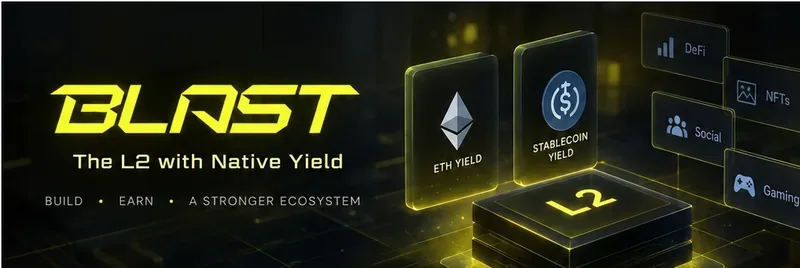
Blast’s core proposition is protocol-level yield on selected assets, while the applications built around that yield can change substantially over time.
What is the practical problem with analyzing Blast?
Blast is an EVM-compatible optimistic rollup designed around native yield. Its official documentation explains that yield originates from Ethereum staking for ETH and from real-world-asset strategies for stablecoins, and that the resulting yield can be passed through to users. See the official Blast overview.
The complication is that “native yield” does not mean every application automatically earns or forwards yield in the same way. It also does not mean a protocol that was prominent during Blast’s launch remains active today. For example, SynFutures later stated that it sunset its Blast deployment in April 2025 to focus on Base, while Hyperlock’s current application says it has entered a withdraw-only state following Thruster’s announced closure. Those are material ecosystem changes, not minor UI updates.
So the first fix is conceptual: evaluate Blast in two layers. Layer one is the network primitive—how balances accrue yield. Layer two is application risk—whether a particular protocol is active, liquid, secure, and still supporting Blast.
How Blast native yield actually works
ETH: rebasing is automatic for wallets, configurable for contracts
For externally owned accounts, or normal user wallets, ETH on Blast can rebase automatically as yield is distributed. Blast’s developer documentation says smart contracts behave differently: newly deployed contracts default to Void yield mode for compatibility, meaning the balance does not grow and no yield is earned. A contract can instead choose Automatic mode, where its ETH balance increases, or Claimable mode, where yield accrues separately and can be claimed. The implementation and contract interface are documented in Blast’s ETH yield guide.
This matters when depositing ETH into a dApp. Once funds leave your wallet, the receiving contract’s yield configuration determines what happens next. A protocol may pass the yield to users, claim it separately, use it in its economics, or in some cases not earn it at all.
USDB and WETH: native yield still exists, but do not treat old percentages as fixed
Blast’s current mobile FAQ explicitly says native yield on ETH, WETH, and USDB continues, and that native yield is paid in the same currency as the balance. See the Blast Mobile FAQ. Older Blast documentation and incentive pages frequently cite approximate rates such as 4% for ETH and 5% for USDB. Those figures are useful historical context, not a guaranteed 2026 rate.
Underlying staking and real-world-asset yields can change. For that reason, a current analysis should avoid hard-coding an APY unless it is verified from a live first-party source at the moment of use. Native yield is a mechanism, not a fixed-rate deposit product.
Gas revenue sharing is a separate builder primitive
Blast also lets smart contracts configure claimable gas revenue. Its developer guide says contracts can opt into a mode where base and priority fees associated with activity on that contract can be claimed, net of L1 fees. This is not user deposit yield; it is a separate revenue mechanism for developers. The distinction is documented in the official gas-fee guide.
Why “native yield” does not automatically mean higher DeFi returns
A common mistake is to add the network’s native yield to a protocol’s advertised APR and assume the two simply stack. Sometimes they can, but only if the application preserves or distributes the underlying yield and the quoted protocol return is genuinely incremental. In leveraged strategies, borrowing costs, liquidation risk, funding rates, swap fees, and token incentives can dominate the native yield component.
The same applies to stablecoins. If a protocol accepts USDB but transforms it into another receipt token, routes it through another market, or uses a non-rebasing accounting design, you need to know how native yield is handled. Read the protocol’s own documentation rather than assuming “USDB in” means “USDB yield retained.”
Leading Blast protocols: what changed and what can still be verified?
Rather than presenting a stale ranking, the table below focuses on protocols that were important to Blast’s DeFi story and the status that can be verified from first-party sources.
Protocol
Role in the Blast ecosystem
Verified status or takeaway
Thruster
Blast-native DEX and liquidity hub
Hyperlock’s current first-party app states that Thruster announced its closure; users should not rely on historical “leading DEX” descriptions as evidence of current activity.
Hyperlock
Yield and liquidity layer built around Thruster LP positions
The official app currently says Hyperlock is in withdraw-only mode and asks users to withdraw existing positions.
SynFutures
Perpetual futures protocol that had a major Blast deployment
SynFutures stated in its Q1 2025 review that it sunset Blast in April 2025 to focus on Base. Historical Blast contract documentation should therefore not be read as proof of an active 2026 venue.
Ambient
DEX supporting concentrated, ambient, and knock-out liquidity
Ambient still publishes Blast deployment addresses and maintains a Blast interface. Its Blast interface showed zero TVL, volume, and fees when checked for this article, so users should verify actual pool liquidity before trading.
Pac Finance
Lending and borrowing
Pac’s official documentation describes a hybrid model combining peer-to-pool and peer-to-peer lending. See its hybrid lending documentation. Because documentation alone does not prove current liquidity, inspect live markets before supplying or borrowing.
Juice Finance
Leveraged lending/yield strategies historically centered on Blast
The official Blast-facing Juice interface still exists, but its public pages retain language tied to older Blast Points and Gold campaigns. Treat historical rewards copy as legacy context and verify what markets are currently live before depositing.
A safer way to explore Blast, from easiest check to hardest
1. Confirm the asset you actually receive
If you bridge through a third party, make sure the destination asset is the yield-bearing asset you expect. Blast’s official bridge documentation warns that native ETH must arrive as native ETH for the expected yield behavior, while supported stablecoins need to be credited as USDB to receive USDB yield. Wrapped or bridged look-alikes can behave differently.
2. Check whether the protocol is active today
Do not start with an old ecosystem directory. Open the official application and documentation. Look for current markets, withdrawals, recent release notes, active contract addresses, and any shutdown or migration notice. A protocol can still have functioning contracts while its front end or team has moved on.
3. Verify how the dApp handles native yield
For ETH, ask whether the contract uses Automatic, Claimable, or Void mode. For USDB or WETH, read the protocol’s accounting rules and reward distribution docs. SynFutures is a useful historical example: because perpetual positions constantly change, it used Blast’s claimable-yield approach rather than simple auto-rebasing and separately distributed the yield to eligible users. Its official explanation shows why application design matters.
4. Separate base yield from incentives
Points, Gold, token emissions, boosted APRs, and campaign rewards are not the same as Blast native yield. Many of Blast’s early protocols were optimized around incentives that have since ended or changed. When comparing opportunities, break the return into native asset yield, trading or lending fees, token incentives, leverage costs, and any temporary campaign reward.
5. Inspect liquidity and exit conditions
A high quoted APR is not useful if the market is thin, the asset is difficult to unwind, or the protocol is already in withdrawal mode. Check pool depth, available borrowing liquidity, utilization, slippage, withdrawal rules, and whether the official interface currently supports exits. Blast’s canonical bridge documentation also notes that standard L2 withdrawals to Ethereum follow an optimistic-rollup process and can take roughly seven days, so exit timing matters.
What risks matter most in the Blast ecosystem now?
Protocol lifecycle risk: Thruster and Hyperlock show that major ecosystem venues can close or move to withdrawal-only operation.
Liquidity risk: contracts may remain deployed even when meaningful trading or lending liquidity has disappeared.
Yield-accounting risk: a dApp may not handle native yield the same way as a wallet.
Smart-contract risk: native yield does not remove bugs, oracle failures, liquidation risk, or governance risk in applications.
Bridge and asset risk: receiving the wrong wrapped asset can change the yield behavior you expected.
Rate risk: historical 4% or 5% figures should not be treated as fixed promises; underlying yields vary.
How to self-check whether your Blast strategy is working
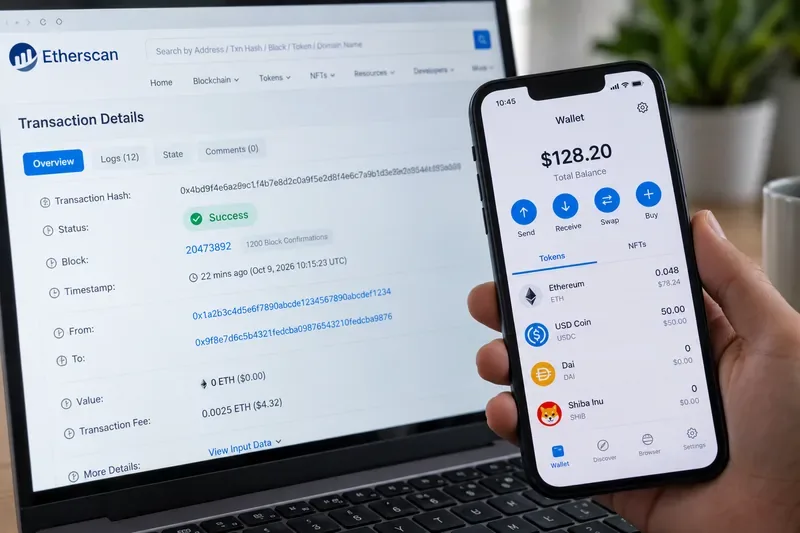
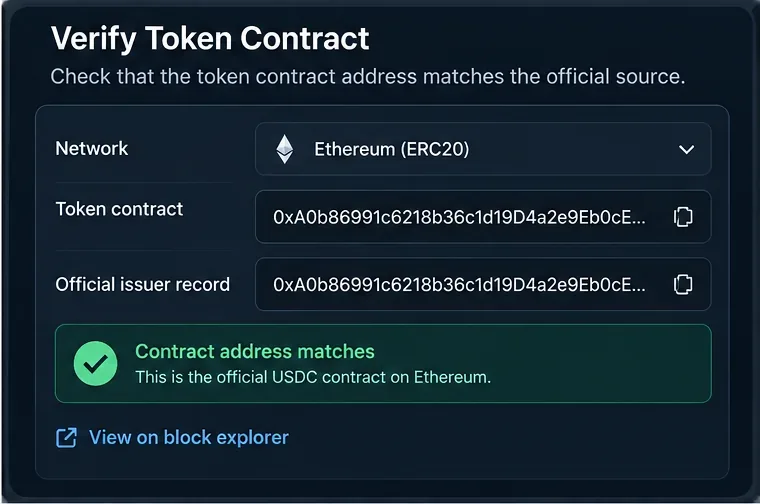
Before adding more capital, run a simple verification. First, confirm your wallet is on Blast and that the asset symbol and contract address match the official source. Second, record the starting balance of ETH, WETH, or USDB. Third, if the funds are deposited into a dApp, confirm the protocol explicitly states how native yield is handled. Fourth, verify that the market has live liquidity and that withdrawals are currently available. Finally, compare your realized balance change with the protocol’s stated mechanism rather than with an old promotional APY.
If those checks are clear, Blast’s native-yield architecture remains an unusual and useful design primitive: idle eligible assets can earn at the network level, and applications can build on top of that. But the 2026 ecosystem is not the same one that launched in 2024. The strongest analysis therefore starts with Blast’s still-active native-yield mechanics, then independently verifies every protocol before treating it as a current opportunity.