Home
» Ecosystem
»
Fantom to Sonic: What the FTM Upgrade Became and How It Changed the Ecosystem
Fantom to Sonic: What the FTM Upgrade Became and How It Changed the Ecosystem
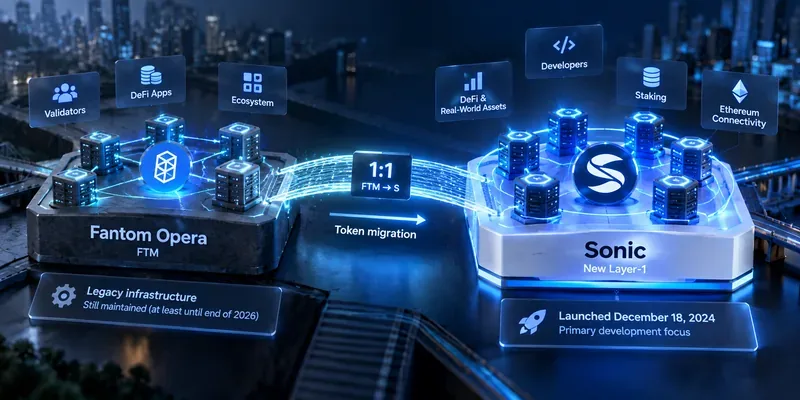
The most important fact about the “Fantom Sonic upgrade” in 2026 is that it is no longer an upcoming software upgrade to Fantom Opera. Sonic launched as a new Layer-1 network on December 18, 2024, with S as its native token, while Fantom Opera became legacy infrastructure. FTM holders were given a 1:1 migration path into S, and development focus shifted to Sonic.
That distinction matters because evaluating Sonic today requires more than asking whether Fantom became faster. The transition changed the network, the token, validator economics, developer incentives, bridge architecture, and where ecosystem activity is expected to concentrate. It also created migration friction for users and applications that remained on Opera.
Another important update arrived in June 2026. Sonic Labs had previously announced plans to sunset remaining Opera infrastructure at the end of June, but reversed course on June 23 after community feedback. The company said Fantom Opera would remain live until at least the end of 2026 and that the bridge would continue to be funded regularly during that period. See Sonic Labs’ June 23, 2026 update.
Fantom’s Sonic transition moved the ecosystem from Opera and FTM toward a new Layer-1 network centered on Sonic and the S token, while Opera remained available as legacy infrastructure in 2026.
Is Sonic an upgrade to Fantom, or a separate blockchain?
Sonic is better understood as a new blockchain rather than an in-place upgrade of Fantom Opera. The Fantom migration documentation explicitly states that Fantom migrated to a new chain called Sonic. Sonic launched with a fresh chain history, and transaction history from Opera did not move over automatically.
This has practical consequences. A user’s historical Opera transactions remain on Opera, while assets and applications must migrate through their own supported mechanisms. The official migration documentation also notes that app-token migrations are separate from the native FTM-to-S process. For the migration overview, see Fantom’s official Sonic migration documentation.
The trade-off is clear: starting with a new chain allowed Sonic Labs to deploy a redesigned architecture without preserving every historical constraint of Opera, but it also required users, liquidity providers, validators, exchanges, and developers to coordinate a migration.
What happened to FTM?
FTM did not simply change its ticker inside the same chain. Sonic introduced S as the native token of the new network. S is used for gas, staking, validator operation, and governance. The official migration path allowed FTM to convert to S at a 1:1 rate.
Initially, the migration supported two-way conversion between FTM and S. That period ended in 2025, after which the standard route became one-way from FTM to S. The Fantom migration docs describe the migration as continuing on a one-way basis after the two-way phase.
For a holder, the most important question is therefore not “Is FTM automatically S?” but “Where is my FTM held, and which migration route still applies?” FTM on Fantom Opera, ERC-20 FTM on Ethereum, and FTM held at centralized exchanges can involve different operational paths. Users should verify the latest official route before moving funds.
What problem was Sonic designed to solve?
The core technical thesis was that Fantom needed a more efficient execution and storage architecture that could support higher throughput, faster finality, and lower infrastructure costs while remaining compatible with Ethereum tooling.
Sonic is EVM compatible, so developers can use Solidity and familiar Ethereum development tools. Sonic Labs also built the network around faster execution, improved node synchronization, live pruning, and a smaller operational footprint for infrastructure providers. Earlier launch materials described sub-second finality as a key target, while current documentation presents Sonic as a high-performance EVM Layer-1.
Performance claims should still be interpreted carefully. Laboratory or protocol-level throughput figures do not automatically equal sustained real-world application throughput under all conditions. For builders, latency consistency, RPC reliability, state growth, validator decentralization, and application demand can matter as much as headline TPS.
What does Sonic change for developers?
The most distinctive ecosystem incentive is Fee Monetization, or FeeM. According to Sonic’s current documentation, approved applications can receive 90% of the network fees generated by their registered contracts, while validators receive the remaining 10% of transaction fees.
That creates a different economic model from chains where all transaction fees primarily accrue to validators or are burned. A successful application can directly capture part of the network activity it creates without launching a separate appchain.
The benefit is straightforward: developers have a built-in revenue channel tied to actual usage. The trade-off is that the network becomes more dependent on accurate fee attribution, oracle infrastructure used by FeeM, and governance around the program. The official mechanism is described in Sonic’s Fee Monetization documentation.
How does Sonic connect to Ethereum?
Sonic is its own Layer-1 network; it does not inherit Ethereum security in the same way an Ethereum rollup does. Instead, Sonic uses the Sonic Gateway to transfer supported assets between Ethereum and Sonic.
The Gateway batches transfers through scheduled “heartbeats.” Sonic’s documentation describes an additional fail-safe mechanism: if the Gateway or Sonic experiences prolonged failure for 14 consecutive days, users can reclaim supported bridged assets on Ethereum under the Gateway’s recovery design.
This is an important distinction for risk analysis. Sonic benefits from access to Ethereum liquidity and tooling, but bridge risk still exists. The fail-safe mechanism reduces one class of bridge risk; it does not make every bridged token, third-party bridge, or downstream DeFi position risk-free. See the official Sonic Gateway documentation.
Did the upgrade improve token economics?
It changed token economics substantially, but whether that is “better” depends on what a holder values. The current Sonic documentation lists a total S supply of roughly 3.8 billion and describes several categories of issuance approved through governance.
These include allocations related to the airdrop, ecosystem growth, institutional initiatives, and future validator rewards. The network also includes burn mechanisms tied to unused ecosystem-growth emissions and portions of unvested airdrop allocations.
For investors, the key issue is not simply whether S is inflationary or deflationary. The more useful questions are:
How much additional S can be issued under approved programs?
How much of that issuance reaches the market versus being locked, burned, or deployed strategically?
How much demand for S comes from gas, staking, validators, governance, and ecosystem activity?
Does network growth outpace dilution over time?
The current issuance framework is detailed in the official S token documentation. Because tokenomics can change through governance, users should check that page rather than relying on older Fantom-era supply assumptions.
What happened to Fantom Opera?
Opera is no longer the primary development target, but it has not disappeared. Sonic Labs said in April 2026 that the ecosystem had largely migrated to Sonic and that Opera had become legacy infrastructure. At that time, it announced plans to retire remaining Opera infrastructure.
That plan changed two months later. On June 23, 2026, Sonic Labs said Opera would remain live until at least the end of 2026 and that the bridge would continue to receive funding. This reversal is important because older articles may still state that the Opera bridge would stop on June 30, 2026.
For users who still have assets on Opera, the lesson is simple: do not rely on an old deadline, but also do not assume legacy support will continue indefinitely. Sonic is the strategic focus, while Opera is being maintained as a legacy environment.
What did the migration mean for DeFi projects?
For applications, migrating from Opera was not always a simple matter of redeploying contracts. EVM compatibility makes contract deployment easier, but liquidity, token supply, LP positions, governance state, oracles, front ends, bridges, and user balances can all require separate migration work.
The official Fantom migration documentation specifically states that LP positions must be broken, the component assets migrated individually, and new positions created on Sonic. It also notes that application tokens can use different approaches, including bridge-based migration, snapshots and airdrops, or hybrid models.
This fragmentation is one of the biggest costs of launching a new chain instead of upgrading an existing chain in place. The benefit is architectural freedom; the cost is coordination.
Did Sonic make the Fantom ecosystem more competitive?
Technically, Sonic improved the ecosystem’s ability to compete for EVM applications by combining high-performance execution, Ethereum-compatible development, an Ethereum gateway, and direct fee incentives for builders. Those are meaningful product differences.
But competitiveness is not determined by architecture alone. A blockchain also needs sticky liquidity, trusted stablecoins, active users, developers, market makers, infrastructure providers, and applications that generate recurring demand. Incentives can attract activity quickly, but the harder test is whether activity remains after incentives decline.
For that reason, ecosystem analysis should separate three layers:
Area
What Sonic improved
What still needs to be proven
Technology
New execution stack, fast finality, EVM compatibility, more efficient node operations
Performance and reliability under sustained real-world demand
Developer economics
FeeM gives apps a share of network fees
Whether the model attracts durable, high-quality applications
Liquidity and users
Ethereum Gateway and ecosystem incentives improve onboarding
Whether liquidity and activity remain sticky over multiple market cycles
Token economics
S has explicit roles in gas, staking, validators, and governance
Whether demand offsets emissions and strategic issuance
Migration
A clear 1:1 FTM-to-S path was created
Legacy Opera assets and projects still require careful handling
Should an FTM holder migrate to S?
Anyone evaluating this question should first identify where their FTM is held. The answer can differ for Opera-native FTM, ERC-20 FTM, or exchange-held balances.
From a network-utility perspective, Sonic is where current development, staking, gas usage, and ecosystem incentives are concentrated. Opera remains legacy infrastructure. That does not mean every holder should take the same action immediately, because migration may have tax, custody, exchange, liquidity, or operational consequences depending on jurisdiction and platform.
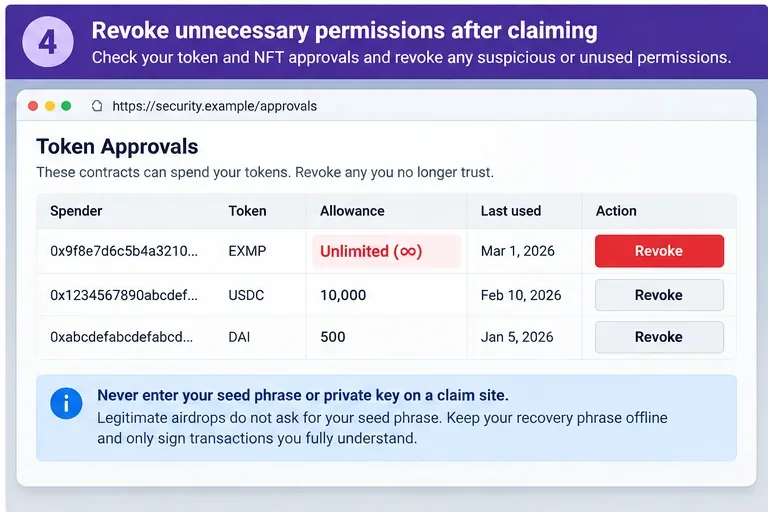
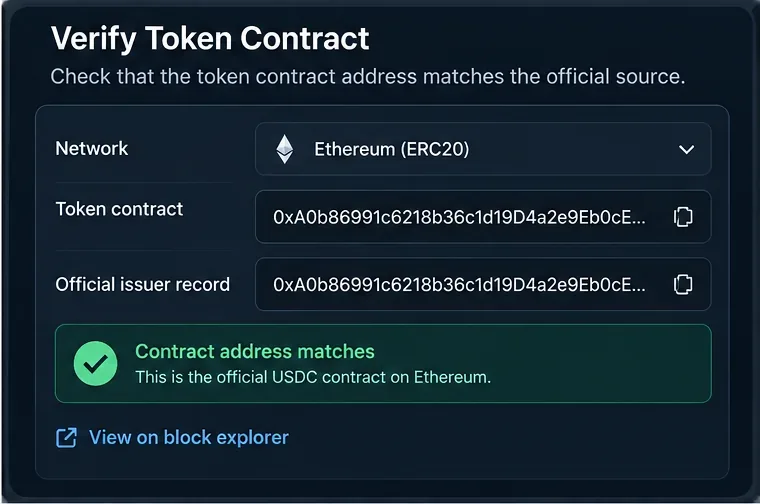
The safest practical approach is to use only the migration path linked from official Sonic or Fantom documentation and verify the network, token address, and transaction direction before signing. Do not rely on unsolicited migration links sent through social media or direct messages.
What are the biggest risks after the Sonic transition?
1. Migration and legacy-asset risk
Assets can remain stranded on an older network if bridges, liquidity, or application support eventually disappear. The June 2026 decision extended Opera support, but it did not reverse Sonic’s role as the primary ecosystem.
2. Token dilution risk
S has multiple approved issuance programs. Some emissions are paired with burn mechanisms or strategic objectives, but holders should still model future supply rather than assuming the old FTM supply schedule remains unchanged.
3. Ecosystem concentration risk
A high-performance chain can still struggle if users and liquidity cluster elsewhere. Incentives can accelerate bootstrapping but do not guarantee long-term retention.
4. Bridge and interoperability risk
The Sonic Gateway includes a fail-safe design, but bridged assets and third-party integrations add smart-contract and operational dependencies.
5. Governance and execution risk
The 2026 reversal on the Opera shutdown shows that plans can change in response to community and operational realities. That flexibility can be positive, but it also means users should monitor official communications rather than assume older roadmaps are fixed.
What should you watch next?
For users and investors, the most useful indicators are not headline transaction-speed claims. Watch whether Sonic can convert technical improvements into persistent economic activity.
Developer retention: Are applications staying after incentive periods?
Fee generation: Does real usage create meaningful FeeM revenue?
Stablecoin and bridge liquidity: Is capital easy to move in and out without excessive fragmentation?
Validator participation: Does staking remain sufficiently distributed and economically sustainable?
S token issuance: How much approved supply is actually minted, distributed, or burned?
Opera wind-down policy: Does Sonic Labs extend legacy support beyond the end of 2026, and under what conditions?
Bottom line
Fantom’s Sonic project ultimately became more than a performance upgrade. It created a new Layer-1 chain, introduced the S token, moved validator and developer economics to a new model, added a native Ethereum gateway, and repositioned Opera as legacy infrastructure.
The transition gives Sonic a stronger technical and economic toolkit than Fantom Opera had, especially for EVM developers who value fast execution and direct fee monetization. The main trade-offs are migration complexity, a broader S-token issuance framework, dependence on ecosystem growth, and the operational challenge of maintaining a legacy chain while concentrating resources on the new one.
As of September 2026, Sonic is the primary network to evaluate when discussing the future of the former Fantom ecosystem, while Opera remains available at least through the end of 2026 under Sonic Labs’ latest public commitment. Anyone making a decision based on older “Fantom Sonic upgrade” material should therefore update their assumptions before acting.