Home
» News
»
The Ultimate Q4 Crypto Trading Strategy? Build a Playbook, Not a Prediction
The Ultimate Q4 Crypto Trading Strategy? Build a Playbook, Not a Prediction
Updated September 15, 2026: There is no verified rule that Q4 automatically produces the year's best crypto returns. The more useful Q4 trading strategy is to match exposure, holding period, and risk limits to the market regime while planning around known volatility events. Two dates are already fixed on the U.S. macro calendar: the Federal Reserve's October 27–28 and December 8–9 FOMC meetings. The December meeting is scheduled to include a Summary of Economic Projections. Those events can affect broad risk appetite, but their market impact cannot be known in advance.
A Q4 crypto trading workspace combining market analysis with position sizing, risk management, and a written trading plan.
There is no single “ultimate” Q4 crypto trade
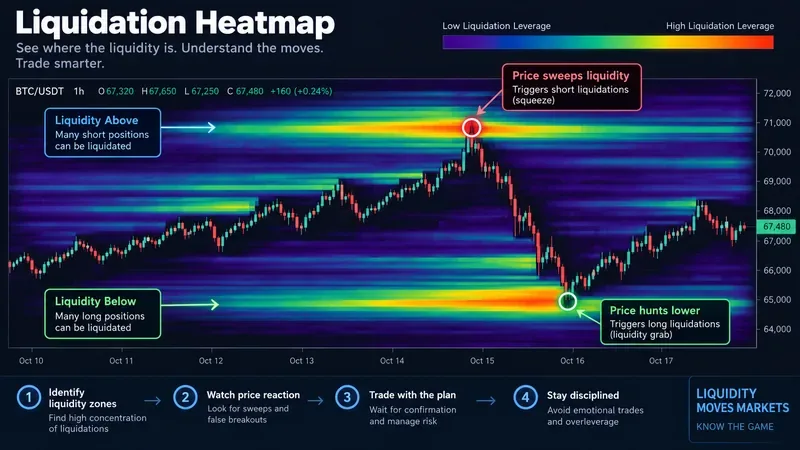
The word “ultimate” is tempting, but a strategy that maximizes upside also tends to increase downside, drawdown, or the probability of being forced out at the wrong time. The U.S. Commodity Futures Trading Commission warns that virtual currencies can be highly volatile and that leverage amplifies both gains and losses. Its guidance also says there is no guaranteed trading strategy. See the CFTC advisory on virtual-currency trading risks.
So the practical objective is not “maximum gains at any cost.” It is to pursue the best return opportunity that fits your risk budget. A trader who can monitor markets every day has different options from an investor who checks positions once a week. Someone protecting a large existing BTC position has different needs from someone deploying fresh cash.
Which Q4 strategy fits your objective?
Approach
Best fit
Main advantage
Main tradeoff
Core spot position
Longer-horizon investors
No liquidation risk from leverage
Full exposure to spot drawdowns
Trend following
Active traders who want confirmation
Can stay aligned with persistent moves
Whipsaws in sideways markets
Breakout trading
Traders seeking momentum expansion
Clear entry and invalidation structure
False breakouts can cause repeated small losses
Rotation / relative strength
Traders comparing BTC, ETH, and liquid alternatives
Targets the strongest part of the market
Leadership can reverse quickly
Cash reserve plus selective entries
Risk-conscious or uncertain traders
Preserves flexibility after selloffs
Cash can lag during uninterrupted rallies
Leveraged futures
Experienced derivatives traders
Capital-efficient exposure and hedging
Magnified losses, margin calls, liquidation risk
For most traders, start with a core-and-tactical structure
A useful compromise is to separate capital by purpose. The core bucket holds assets you are prepared to own through normal volatility. The tactical bucket is reserved for setups with explicit entries, exits, and invalidation levels. A third bucket can remain in cash or cash equivalents for optionality.
This structure solves a common conflict: long-term conviction and short-term trading do not have to share the same exit rule. Selling a core position because of a noisy four-hour chart can be as inconsistent as refusing to exit a failed short-term breakout because you suddenly decided to become a long-term investor.
The percentages should not be universal. A conservative participant may keep a larger reserve and avoid derivatives entirely. An experienced trend trader may allocate more to tactical positions. The important part is deciding the buckets before volatility forces the decision.
Trend following or breakout trading: which is better in Q4?
Choose trend following when direction is already established
Trend following works best when price is making a persistent sequence of higher highs and higher lows, or the reverse in a downtrend. Rather than predicting the quarter's top, the trader stays with the move until the chosen trend definition fails.
The cost is delayed entry and delayed exit. You will rarely buy the exact bottom. That is the price of waiting for evidence. In a choppy market, repeated trend changes can also create whipsaw losses.
Choose breakouts when the market has compressed around a clear boundary
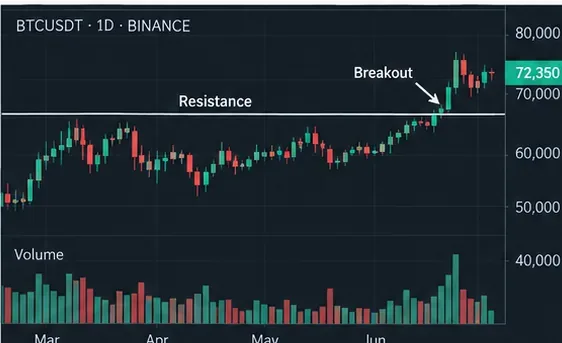
A breakout approach waits for price to leave a well-defined range or resistance area. The setup is attractive because invalidation can often be tied to the broken level or the structure that preceded the move.
The weakness is obvious in crypto: a price can move through resistance, attract momentum buyers, and then reverse. Instead of treating every intraday move as confirmation, traders can require a close on their chosen timeframe, a successful retest, increased participation, or another predefined confirmation rule. More confirmation usually reduces false entries but also produces a later, less favorable entry price.
Should Q4 traders rotate from Bitcoin into altcoins?
Rotation can improve returns when market leadership broadens, but “altcoin season” should not be assumed simply because the calendar reaches Q4. A more defensible process is to compare relative strength. For example, an ETH/BTC chart answers whether ETH is outperforming Bitcoin, while an altcoin/BTC pair can reveal whether a dollar gain is actually beating the crypto market leader.
Liquidity matters too. The CFTC specifically warns that thinly traded or new tokens can be vulnerable to pump-and-dump behavior and advises against buying solely because of social-media tips or sudden price spikes. See the CFTC pump-and-dump advisory.
For traders seeking aggressive upside, a smaller satellite allocation to liquid, relatively strong assets can make more sense than replacing the entire BTC or ETH position with lower-liquidity tokens. For capital preservation, staying concentrated in more liquid markets—or holding part of the portfolio uncommitted—reduces one source of execution risk.
How should you trade around the Q4 macro calendar?
Q4 2026 contains two scheduled FOMC decisions: October 28 and December 9, following two-day meetings. The Federal Reserve's official calendar also shows that the December meeting is associated with updated economic projections. Verify dates on the Federal Reserve FOMC calendar, because scheduled events can be updated.
There are three reasonable choices. A directional trader can hold through the event and accept gap-like volatility in crypto prices. A risk-reduction trader can cut position size beforehand. A confirmation trader can stay flat and wait for the market's post-announcement structure. The first approach preserves maximum upside if the move is favorable; the latter two sacrifice some early upside in exchange for less event uncertainty.
Do not confuse knowing the date with knowing the outcome. The decision, projections, press conference, and market expectations all interact. A seemingly favorable headline can still be followed by falling prices if traders had already priced in something more favorable.
Position sizing matters more than finding the perfect coin
A trading thesis is incomplete until it specifies how much can be lost if it is wrong. One practical framework starts with a maximum dollar risk per trade, then derives position size from the distance between entry and invalidation. Wider stops require smaller positions if the dollar risk is held constant; tighter stops permit larger positions but are easier for normal volatility to hit.
This is especially important with leverage. The CFTC notes that margined futures can amplify price changes and may force traders to add funds or close positions when the market moves against them. A high-conviction thesis does not eliminate liquidation mechanics.
For traders who do not understand funding, margin, liquidation, contract settlement, and counterparty mechanics, spot exposure is the simpler choice. The SEC's investor guidance likewise describes bitcoin and ether as highly speculative and urges investors to weigh volatility and other risks even when gaining exposure through exchange-traded products. See the SEC investor bulletin on bitcoin and ether ETP exposure.
Use a Q4 playbook instead of a Q4 prediction
A prediction gives you one future. A playbook tells you what to do across several futures. Before October begins, define the conditions for at least three regimes.
Strong uptrend: favor core exposure and trend-following entries; avoid repeatedly taking profits simply because price has risen.
Range-bound market: reduce breakout frequency, demand stronger confirmation, and consider smaller tactical positions because whipsaw risk is higher.
Risk-off decline: protect capital, respect invalidation levels, reduce leverage, and preserve liquidity rather than averaging down automatically.
This conditional approach also makes performance easier to review. If the market was trending but your range strategy kept fading strength, the problem is identifiable. If the market was choppy and you repeatedly chased breakouts, the next adjustment is equally clear.
What does “maximizing gains” mean for different traders?
For a long-term investor, maximizing gains may mean remaining exposed to a major trend while avoiding unnecessary leverage and excessive turnover. The main tradeoff is accepting potentially large temporary drawdowns.
For an active swing trader, it may mean concentrating on a small number of liquid assets, taking only setups that meet predefined criteria, and increasing exposure only when the market confirms the thesis. The tradeoff is missing moves that launch without a clean entry.
For an aggressive trader, leverage and smaller-cap assets can increase upside, but they also increase the probability and speed of large losses. The CFTC advises using only risk capital and understanding how a product can lose money before trading it. More upside potential is not the same as a better risk-adjusted strategy.
For a capital-preservation trader, the best Q4 result may be avoiding poor setups and retaining cash for unusually favorable opportunities. That can look disappointing during a vertical rally, but optionality has value when markets reverse.
A practical Q4 decision checklist
Define whether your goal is absolute return, BTC outperformance, income, hedging, or capital preservation.
Separate long-term holdings from tactical trades so their exit rules do not conflict.
Trade assets with sufficient liquidity for your position size.
Write the entry, invalidation point, target method, and maximum loss before opening a tactical position.
Decide in advance whether you will hold, reduce, or avoid exposure around scheduled macro events.
Use leverage only when you understand margin and liquidation mechanics and can tolerate the resulting loss.
Review relative-strength charts before rotating from BTC or ETH into alternative tokens.
Ignore guaranteed-return claims and social-media pumps; verify project and market information from primary sources.
The best Q4 strategy is the one you can execute consistently
Q4 can deliver powerful crypto moves, but the calendar itself is not an edge. The stronger approach is to combine a market-regime framework with position sizing, predefined invalidation, event awareness, and a deliberate choice between core exposure and tactical trading.
If your priority is simplicity, spot exposure plus a cash reserve offers fewer moving parts. If your priority is active participation, trend and breakout strategies provide clearer rules but demand more monitoring. If your priority is maximum upside, leverage and lower-liquidity assets increase potential returns at the cost of substantially higher failure risk.
The useful question, then, is not “Which strategy makes the most money if everything goes right?” It is “Which strategy offers enough upside while keeping me solvent and disciplined when my thesis is wrong?” In Q4 2026, that tradeoff is more actionable than any promise of an ultimate winning trade.
Risk note: Crypto markets are volatile and speculative. This article is educational, not individualized investment advice. Market conditions and regulatory requirements can change, and no strategy guarantees a profit.