Home
» News
»
AI Meets Crypto: Decentralized AI Agents and Networks to Watch in 2026
AI Meets Crypto: Decentralized AI Agents and Networks to Watch in 2026
Crypto has spent years building systems that can own assets, move value, verify transactions, and coordinate strangers without a central operator. AI agents add a missing piece: software that can interpret a goal, choose tools, communicate with other software, and take actions. Put the two together and an agent can potentially have its own wallet, pay another agent for a service, earn revenue, and leave a verifiable trail of at least some of its activity on-chain.
That convergence is real, but the phrase “decentralized AI agent” is used loosely. An agent may settle payments on a blockchain while relying on a centralized LLM API. Another project may decentralize model or inference incentives without giving users a consumer-facing autonomous agent. A third may provide an open agent framework but use hosted discovery infrastructure. For that reason, this article does not rank projects by token price or social-media attention. It compares what can be verified in their current products and documentation as of September 2026.
AI agents and crypto networks are converging around wallets, payments, marketplaces, coordination, and verifiable on-chain activity, but different projects decentralize different parts of the stack.
What should “decentralized AI agent” actually mean?
A useful test is to separate five layers: intelligence, execution, identity, payments, and coordination. A system does not need every layer to be fully decentralized to be useful, but users should know where trust remains.
Intelligence: Which models generate decisions, and can developers choose or self-host them?
Execution: Where does agent code run, and who can stop or modify it?
Identity: Does an agent have a persistent registry entry, wallet, or cryptographic identity?
Payments: Can agents pay and earn without a human manually settling every task?
Coordination: Can independent agents discover, hire, message, or evaluate one another?
This framework exposes an important trade-off. More on-chain execution can improve auditability and composability, but blockchains are expensive and poorly suited to running large language models directly. Most practical systems therefore combine off-chain AI computation with on-chain identity, incentives, payments, registries, or settlement.
1. Virtuals Protocol: strongest focus on agent commerce
Virtuals Protocol is increasingly structured around an economy in which agents can own identities and wallets, perform jobs, hire other agents, and receive payments. Its current architecture highlights EconomyOS for identity and financial primitives and Agent Commerce Protocol (ACP) for agent-to-agent commerce.
ACP is the part worth watching if your interest is not simply “AI-themed tokens” but whether agents can become economic actors. Virtuals describes ACP as a marketplace where agents discover services, negotiate jobs, coordinate execution, and settle payments. The platform also supports agent tokenization and capital formation, making it unusually explicit about connecting agent productivity with crypto-native ownership.
A concrete example is Nox, an ACP-listed community-built agent. Its current Virtuals profile advertises a token-swap service on Base and reports job and revenue metrics. Importantly, Virtuals itself warns that community-built agents are not verified or endorsed, which is exactly the kind of caveat users should take seriously.
Best fit: developers and users interested in agent-to-agent commerce, wallet-enabled agents, service marketplaces, and tokenized agent businesses.
Trade-off: economic activity and tokenization do not prove that an agent is intelligent, profitable, safe, or decentralized end to end. Permissionless markets make experimentation easier but shift more due diligence to the user.
2. Olas: compelling for autonomous services and measurable agent-to-agent activity
Olas approaches the problem as infrastructure for co-owning and operating autonomous agents. Its stack includes agent frameworks, on-chain registries, staking mechanisms, the Pearl application, and the Mech Marketplace.
The Mech model is particularly practical. A “Mech” is an agent that offers tools or services to other agents or applications. Requests and payments can be coordinated through marketplace smart contracts, while the computational work—such as calling an LLM, querying an API, or producing a prediction—happens off-chain. The marketplace includes payment mechanisms and a Karma reputation system based on task completion.
Olas also provides unusually visible evidence of agent-to-agent usage. Its official site reported more than 20.5 million total on-chain agent transactions and more than 14.6 million agent-to-agent transactions across supported chains as of September 13, 2026. Those numbers should not be interpreted as users, revenue, or successful AI decisions; they are transaction counts. Still, they give researchers something concrete to monitor beyond token valuation.
Individual services also show how broad the design space is. The Olas Ethereum registry recently listed a crvUSD yield optimizer, a FeedOracle Mech providing risk and macro data, a DYOR research service, a mindshare trader, and even an agent wrapping a cross-border physical letter service. Registry presence alone does not establish quality, and service states can change, but the variety illustrates the marketplace thesis.
Best fit: builders who care about open agent services, on-chain coordination, machine-to-machine payments, and composable tooling.
Trade-off: Olas is more infrastructure-heavy than a simple consumer chatbot. Understanding registries, operators, chains, wallets, and service states creates a steeper learning curve.
3. Fetch.ai: strongest option for discovery and multi-agent application building
Fetch.ai has one of the longest-running agent-centric stacks in crypto. Its uAgents framework lets developers create programs that communicate, discover counterparts, and transact. Agentverse adds hosting and discovery, while the network layer includes an agent ledger, Almanac, wallets, and smart-contract/payment infrastructure.
The current consumer-facing direction is also notable. Fetch describes a personal AI experience that can connect to specialized agents for tasks such as travel, reservations, shopping, and scheduling. Its official site says the Agentverse directory contains 2.7 million agents. That directory count should not be read as 2.7 million economically active autonomous businesses; it is better treated as evidence of the scale of registered/discoverable agents in the ecosystem.
For developers, the key advantage is the uAgents framework documentation: agents can communicate in multi-agent systems, search, connect, and transact, and developers can integrate LLMs rather than being locked to one model provider. Fetch.ai Labs has also published examples spanning blockchain observability, service marketplaces, recruitment, and travel.
Best fit: teams building multi-agent applications that need discovery, messaging, orchestration, and a path from prototypes to hosted agents.
Trade-off: Fetch combines decentralized-network components with hosted products such as Agentverse. If your requirement is strict decentralization of every runtime and dependency, evaluate each component separately rather than treating the entire stack as uniformly decentralized.
4. Bittensor: watch the intelligence market, not just “agents”
Bittensor belongs in this comparison with an important qualification: it is better understood as decentralized incentive infrastructure for machine intelligence and digital commodities than as a single agent marketplace comparable to ACP or Olas Mechs.
Bittensor organizes specialized markets into subnets. Miners provide useful outputs according to a subnet's design, validators evaluate those outputs, and incentives reward performance according to the network's mechanisms. That architecture can support AI services that agents consume, but the subnet itself should not automatically be called an autonomous AI agent.
This distinction is valuable because decentralized agents need intelligence somewhere. If agent ecosystems become buyers of inference, prediction, data, or other machine-intelligence services, networks such as Bittensor could function as a supply layer rather than the application layer.
Best fit: developers and researchers interested in decentralized intelligence markets, incentive design, specialized AI services, and infrastructure that other agents may consume.
Trade-off: Bittensor's miner-validator-subnet model is more complex than deploying a conventional agent, and economic incentives introduce their own adversarial problems. Bittensor's published research, for example, explicitly examines validator weight copying and mechanisms intended to reduce free riding.
How the leading approaches compare
Ecosystem
Primary strength
On-chain role
Best for
Main trade-off
Virtuals
Agent commerce and capital formation
Identity, wallets, jobs, settlement, tokenization
Agent businesses and service commerce
Permissionless agents require strong due diligence
Network identity, ledger and transaction infrastructure
Multi-agent applications and discovery
Stack mixes decentralized and hosted components
Bittensor
Incentivized machine intelligence
Subnet incentives and validation
Decentralized AI service/inference infrastructure
Not primarily an end-user agent marketplace
Which one should you watch for your use case?
If you want agents that can hire and pay other agents
Start with Virtuals ACP and Olas Mech Marketplace. Both make economic coordination a first-class feature. Virtuals emphasizes jobs, agent identity, wallets, escrow-like commerce primitives, and capital formation. Olas emphasizes service requests, tool access, payment, reputation, and autonomous service composition. Compare actual completed jobs, payment volume, repeat customers, and failure handling—not token market capitalization alone.
If you want to build a multi-agent product
Fetch.ai deserves close evaluation because uAgents gives developers a direct framework for communication and multi-agent behavior, while Agentverse addresses discovery and hosting. Olas is also relevant if your product needs on-chain services or independently operated agent components. The better choice depends on whether application-level orchestration or crypto-native service settlement matters more.
If you want decentralized AI infrastructure exposure
Bittensor is the more direct research target in this group. Its core question is how a network can reward useful machine intelligence through competitive subnets and validation. That is different from betting on a particular autonomous character, trading bot, or social agent—and may be a more durable layer if agents increasingly buy specialized intelligence from external providers.
If you want an autonomous trading or DeFi agent
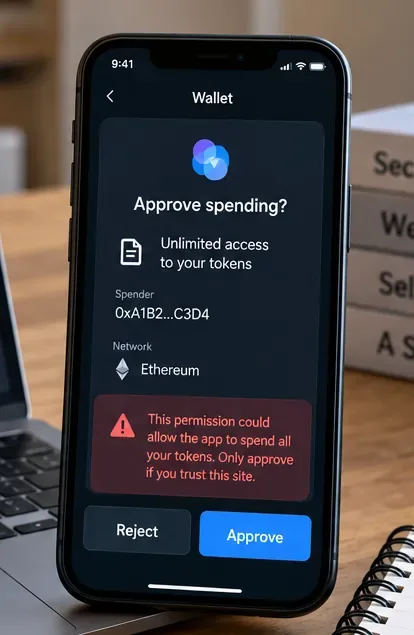
Use a higher safety bar than you would for a research or content agent. A wallet-enabled agent can turn a model error, malicious prompt, compromised dependency, faulty smart contract, or bad strategy into irreversible financial loss. Prefer systems with explicit permission boundaries, transaction simulation or limits where available, auditable contracts, clear custody arrangements, and a way to revoke authority quickly. “Autonomous” is not a substitute for risk controls.
What metrics matter more than an AI-agent token price?
Token price is easy to measure but often tells you little about whether agents are useful. A stronger watchlist tracks completed paid tasks, unique active wallets or customers, repeat usage, agent-to-agent transactions, realized service revenue, failure rates, developer activity, and the diversity of useful services. Even these metrics need context: one automated agent can generate thousands of low-value transactions, so transaction count should never be equated automatically with adoption.
Also examine where decentralization stops. Is the agent registry on-chain but inference dependent on one API? Can a platform operator delist an agent? Who controls the wallet keys? Is agent code reproducible? Are reputation scores derived from verifiable task outcomes? Can users inspect payment contracts? These questions are more informative than whether a project uses the words “autonomous” or “decentralized.”
The biggest trade-offs in decentralized AI agents
Autonomy versus safety: giving an agent more authority makes it more useful but increases the damage a bad decision can cause. On-chain transparency versus cost and privacy: blockchain settlement creates durable records, but not every decision or private input belongs on a public ledger. Open participation versus quality control: permissionless markets expand experimentation while making scams and low-quality services easier to list. Composability versus dependency risk: agents become more capable when they hire other agents, but each additional service, oracle, bridge, model, and smart contract expands the failure surface.
There is also a decentralization-performance trade-off. Modern AI inference benefits from specialized hardware, optimized serving stacks, and high-bandwidth infrastructure. For many agent systems, putting reasoning itself on-chain is neither economical nor necessary. A pragmatic architecture may decentralize ownership, payments, identity, verification, and incentives while leaving heavy computation off-chain.
What to watch through the rest of 2026
The most important development is whether agent networks graduate from speculative narratives to measurable economies. Virtuals is worth watching for whether ACP jobs and agent revenue deepen beyond a small set of services. Olas offers observable agent-to-agent transaction activity and a marketplace whose task payments can be tracked. Fetch.ai should be judged on whether its large discovery layer produces recurring real-world agent usage. Bittensor should be evaluated subnet by subnet: the relevant question is whether specialized markets consistently produce outputs buyers actually value.
Interoperability may become the larger story. An agent should not necessarily need to obtain every capability from its home ecosystem. In a mature market, a consumer-facing agent could discover a specialist elsewhere, buy intelligence or data, settle a payment, verify the response, and continue its task. The winners may therefore be protocols that make agents more interoperable, rather than platforms that keep every component inside one vertically integrated stack.
Bottom line
There is no single “top decentralized AI agent” for every use case because the sector is splitting into distinct layers. Virtuals is compelling for agent commerce and tokenized economic actors. Olas stands out for autonomous services and visible agent-to-agent marketplace activity. Fetch.ai is strong for multi-agent development, discovery, and user-facing coordination. Bittensor is the infrastructure-oriented choice to study if you care about decentralized markets for machine intelligence rather than individual agent applications.
For investors, builders, and users alike, the sensible filter is the same: look for agents doing verifiable work for real counterparties, with understandable permissions and economics. Treat tokens as one component of the system—not proof that the underlying agent is autonomous, decentralized, useful, or safe. In the AI-crypto convergence, the projects worth watching are the ones that can turn machine decisions into repeatable, accountable economic activity without asking users to ignore where trust still exists.