Home
» News
»
How to Avoid Revenge Trading After a Major Market Flush
How to Avoid Revenge Trading After a Major Market Flush
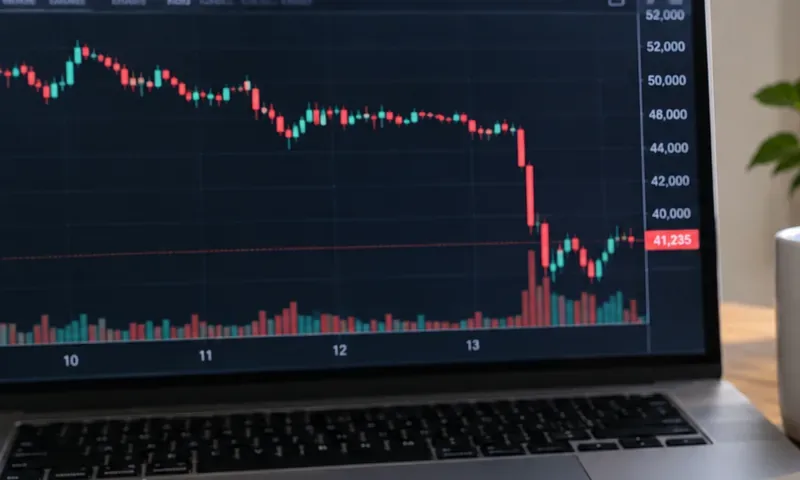
A major market flush can make the next trade feel urgent. The screen is moving fast, the loss is fresh, and the temptation to “make it back” can become stronger than the original trading plan. That is the point at which revenge trading becomes dangerous: not because one specific trade is guaranteed to fail, but because the decision process can shift from evidence and predefined risk to anger, fear, embarrassment, or a need to recover quickly.
There is no universal regulatory definition of “revenge trading,” and there is no official rule saying every trader must wait a fixed number of hours after a loss. What is well supported is the broader behavioral problem. FINRA warns investors to avoid impulsive decisions during volatile markets, while research on the disposition effect shows that losses can change risk-taking behavior and encourage traders to treat the purchase price or recent loss as an emotionally important reference point. The practical response is to build rules that make the next decision independent of the amount you just lost.
A violent selloff can create the feeling that an immediate response is necessary, even when the better decision is to reassess the setup first.
What should you do before placing any new trade?
The first question is not “Where is the rebound?” It is “Am I following my strategy, or am I trying to repair my P&L?” If the honest answer is the second one, do not place the trade yet.
FINRA’s guidance for turbulent markets emphasizes returning to goals and avoiding impulsive decisions when volatility rises. The CFTC similarly warns that speculative short-term trading becomes especially hazardous when it is combined with leverage or unfamiliar markets. Those warnings matter after a flush because volatility, leverage, and emotional pressure often rise at the same time.
Action: introduce a mandatory pause after a predefined loss event. The trigger should be objective—for example, a daily loss limit, a stopped-out position that exceeded normal slippage, or a sequence of losses—not simply “when I feel upset.” The duration can be 30 minutes, the remainder of the session, or until the next trading day, depending on your strategy. The key is that you decide the rule before the loss occurs.
A mechanical pause separates the previous loss from the next decision and gives the trader time to return to a predefined process.
How do you know whether the next trade is revenge trading?
A trade is more likely to be revenge-driven when its purpose is to erase the previous loss rather than exploit a setup that independently meets your system. Common warning signs include increasing position size without a strategy-based reason, lowering entry standards, switching markets because another asset is moving faster, removing or widening a stop, taking multiple rapid trades after a loss, or calculating how much profit is required to get “back to even.”
Behavioral research helps explain why these patterns can appear. Studies of the disposition effect have repeatedly found that people treat gains and losses differently and may become more willing to accept risk when they are already in a loss domain. A 1998 experimental study in the Journal of Economic Behavior & Organization found that participants tended to sell winners while retaining losing positions, consistent with loss-sensitive decision making. More recent individual-trader research has also linked stronger disposition effects with worse profitability for affected traders.
This evidence does not prove that every losing trader will revenge trade. It also does not mean every fast re-entry is irrational. A systematic strategy may legitimately generate another setup seconds or minutes later. The relevant test is whether the new trade would still qualify if the previous trade had never happened.
Action: before re-entering, write one sentence answering: “Why would I take this trade if my P&L for the day were exactly zero?” If you cannot answer in strategy terms—signal, invalidation level, expected reward-to-risk, liquidity, and size—skip it.
Should you reduce size after a major loss?
Often, yes—but not because smaller size magically improves a bad setup. Reduced size is useful when the market regime has become unusually volatile, when your execution quality has deteriorated, or when you want to verify that you can follow the plan again before returning to normal exposure.
Leverage deserves special attention. The CFTC notes that leveraged futures positions magnify both gains and losses, and adverse moves can force traders to add margin or close positions. After a flush, that means an emotionally motivated increase in leverage can compound both behavioral and market risk.
Action: define a post-loss size rule in advance. One example is to trade at 25% to 50% of normal size until one fully compliant trade has been completed, then reassess. The exact percentage is not a universal standard; it should be chosen from your own historical volatility, drawdown tolerance, and strategy testing.
What must be true before you re-enter?
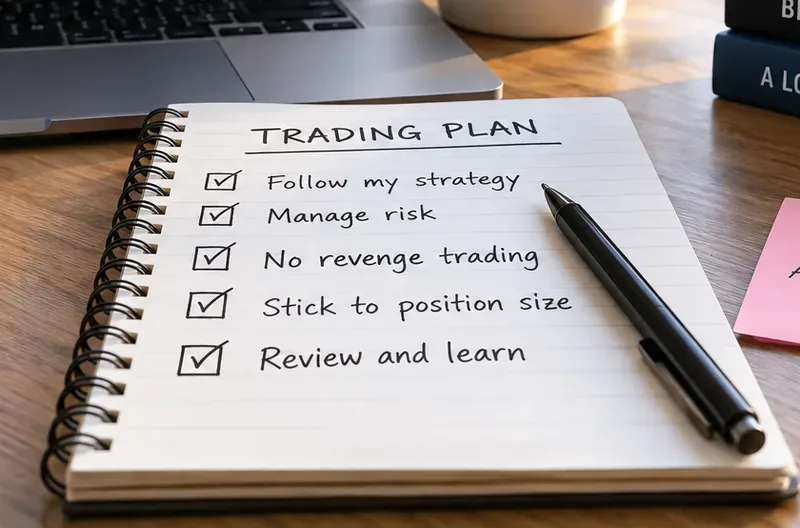
A good re-entry checklist is short enough to use under pressure and strict enough to block improvisation. It should focus on observable conditions rather than emotions alone.
The setup is one that already exists in your written strategy.
The entry, invalidation point, and stop are defined before the order is placed.
Position size is calculated from the current stop distance and your risk cap, not from the amount you want to recover.
The market is liquid enough for the order type and size you intend to use.
You are not widening risk because volatility feels temporary.
The trade still makes sense if you ignore the previous loss completely.
A written checklist turns the decision to re-enter into a process test rather than an attempt to recover a recent loss.
Action: if any checklist item fails, do not negotiate with the checklist. Either wait for a valid setup or stop trading for the session.
Is “making the money back today” a valid objective?
No. The market does not know your entry price, your daily loss, or the amount required to restore your account to yesterday’s balance. Once the loss becomes the target, position size and trade frequency can start serving the recovery goal rather than the trading edge.
This is also where overtrading becomes expensive. FINRA notes that active market timing and frequent trading can introduce additional costs and can lead investors to miss important market days. Costs differ by product and broker, but the general point is durable: more trades create more opportunities for spreads, commissions, slippage, and poor execution to matter.
Action: replace the recovery target with a process target. Examples include “take no more than two A-grade setups,” “risk no more than X dollars for the rest of the session,” or “stop immediately after one rule violation.” A process target is under your control. A recovery target is not.
Should you use a daily loss limit?
For discretionary and short-term traders, a daily loss limit can be one of the most effective barriers against revenge trading because it converts an emotional decision into a predetermined stop condition. It is not a guarantee against loss, and there is no single percentage that is appropriate for every trader.
The limit should be based on the normal statistical behavior of your strategy. If a routine losing streak regularly reaches three losses, a limit that forces you to stop after one ordinary loss may be too restrictive. Conversely, a limit so large that it is rarely reached may do nothing to prevent emotional escalation.
Action: test the proposed limit against your trade history. Compare how often it would have stopped normal recovery days versus how much it would have reduced your worst loss clusters. If you do not have enough historical data, use a conservative temporary limit and collect more evidence before increasing it.
What should you review after the session?
Do not grade the day only by money. A losing day can be a good trading day if every trade followed the system; a profitable day can be a bad trading day if the profit came from breaking size limits and getting lucky.
Review three categories separately:
Market outcome: What did price actually do, and was the flush within the range of scenarios your strategy is designed to handle?
Execution quality: Did you follow entry, stop, size, and exit rules? Was slippage unusual?
Behavioral quality: Did your trade frequency, market selection, leverage, or risk tolerance change after the loss?
If you identify a rule violation, do not respond by creating ten new rules. Choose the smallest process change that would have prevented the error. That may be a broker-side daily loss lock, a smaller maximum order size, removing one-click trading, or requiring a written setup note before every post-loss entry.
The goal after a difficult session is not immediate recovery; it is restoring disciplined decision-making before the next opportunity.
What if the market rebounds immediately after you stop?
Missing the rebound can feel painful, but that does not make the pause a mistake. A risk-control rule should be judged over many comparable events, not by the single outcome that occurred after you followed it. If your tested strategy genuinely requires participating in fast rebounds, design a specific re-entry rule for that pattern instead of abandoning the cooldown whenever price moves without you.
Action: log every “missed” rebound for a meaningful sample. Record whether your setup actually triggered, what risk would have been required, and what the result would have been. Then update the rule from evidence rather than frustration.
A practical post-flush reset protocol
Stop placing orders when your predefined loss or behavioral trigger is hit.
Record the loss, setup, execution, and any rule violations without trying to explain them away.
Step away from live prices for the length of your planned cooldown.
Recalculate current volatility, stop distance, and acceptable position size.
Allow a new trade only if it independently passes the normal setup checklist.
Use reduced size when your plan calls for it, and restore normal size only by rule.
End the session immediately if you violate the post-loss protocol.
The bottom line
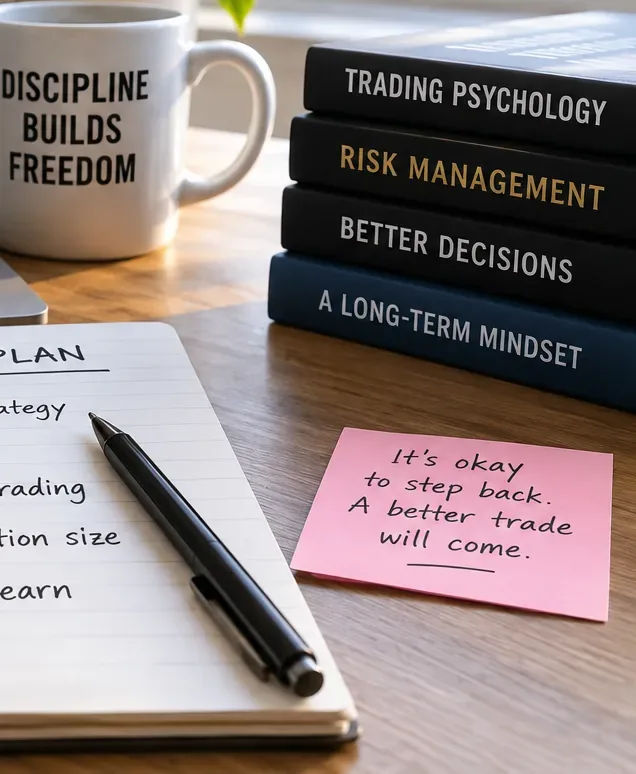
The best defense against revenge trading is not stronger willpower in the middle of a market flush. It is a set of decisions made before the flush: when to stop, how long to pause, how to size the next trade, what conditions qualify for re-entry, and what ends the session completely.
That approach is consistent with regulator guidance to avoid impulsive decisions in volatile markets and with behavioral-finance evidence showing that losses can distort subsequent risk choices. The goal is not to eliminate emotion. It is to prevent emotion from rewriting the risk rules after the market has already hurt you.
This article is educational and does not provide individualized financial or investment advice. Trading involves the risk of loss, and leveraged products can lose more than the amount initially committed depending on the product and account structure.