Home
» News
»
SocialFi in 2026: Friend.tech Alternatives and Decentralized Social Networks
SocialFi in 2026: Friend.tech Alternatives and Decentralized Social Networks
Research checked: September 15, 2026. SocialFi is no longer defined by one viral app or one mechanic. Friend.tech made the idea of putting a market around social access impossible to ignore, but the more durable 2026 trend is broader: social identity, content, communities, payments, and creator monetization are being rebuilt as portable protocol components rather than features locked inside a single platform.
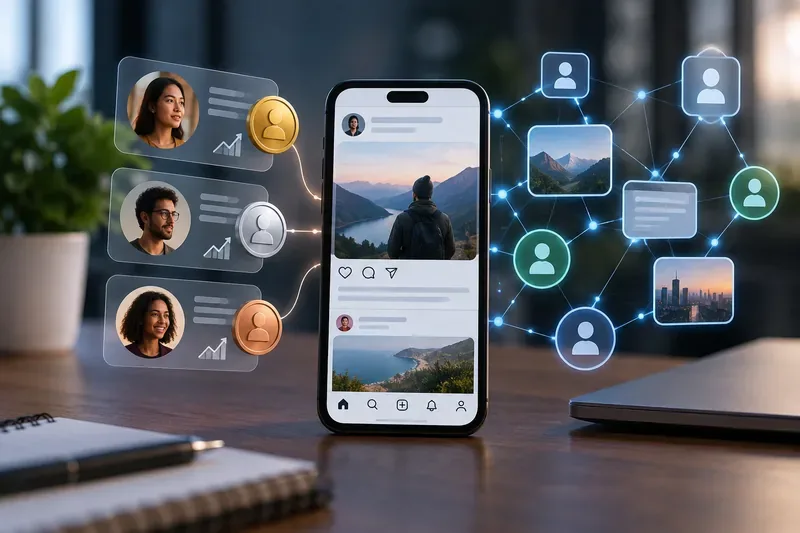
A social feed connected to creator tokens and portable profile nodes, illustrating how SocialFi blends audience relationships, open networks, and onchain markets.
SocialFi in 2026: the short version
If you are looking for a direct Friend.tech replacement, start by asking what you actually liked about Friend.tech: tradable creator exposure, gated community access, creator monetization, or the ability to carry a social identity across apps. Those goals now lead to different products and protocols.
What you want
Strong options to examine
Why they fit
Tradable creator or content economics
Zora, Base App, DeSo
Markets and creator earnings are built directly into social activity.
Composable social apps and embedded actions
Farcaster
A permissionless social protocol with Mini Apps and protocol data available to developers.
Onchain social graph primitives
Lens
Feeds, graphs, groups, namespaces, and account-level primitives can be assembled into different apps.
Portable identity without making trading the center
Bluesky / AT Protocol
Identity, repositories, feeds, and hosting are designed around portability and interoperability.
Relay-based, key-owned social publishing
Nostr
Users publish signed events with cryptographic keys and can connect through different relays and clients.
The practical takeaway is that there is no single “best Friend.tech alternative.” The market has split into financialized social apps, composable social protocols, and decentralized social networks that may have little or no native speculation.
What Friend.tech changed, and what came after it
Friend.tech’s original appeal was easy to understand: social relationships became economic objects. A creator could have a market around access, and a user could treat social participation partly like a position. The legacy Friend.tech site is still reachable, but I could not verify a current official product roadmap or a comparable stream of up-to-date first-party support documentation. For a 2026 decision, it is safer to treat Friend.tech as the reference model rather than assume the original app is the category’s active center.
The category has since broadened in three important ways. First, monetization has moved from “buy access to a person” toward creator coins, tokenized posts, tips, referral rewards, and embedded trading. Second, protocol designers are separating identity and social data from a single front end. Third, social applications increasingly behave like distribution layers for other software: wallets, games, markets, payments, and small applications can appear inside a social feed.
Best Friend.tech alternatives by use case
For creator coins and social markets: Zora
Zora is one of the clearest examples of SocialFi becoming a social network where market mechanics are native rather than bolted on. Its official support documentation describes creator coins as profile-level coins, with a fixed supply of one billion units, 50% made available to the open market and 50% reserved for the creator with linear vesting over five years. Zora also states that creators can earn from trading activity around their creator coin and posts. See Zora’s official Creator Coins documentation and official rewards documentation.
This is a closer spiritual successor to Friend.tech’s financialization than a conventional decentralized social network. The tradeoff is equally important: once a social object becomes tradable, the user experience inherits market volatility, liquidity risk, speculation, and incentive gaming. Zora’s own support materials also warn that activating a creator coin is irreversible, so users should understand the mechanism before treating it as a casual profile setting.
For an “everything app” version of SocialFi: Base App
Base has pushed the idea further by combining social feeds, trading, payments, chat, and mini apps. Base’s official announcement says its social feed uses open protocols including Farcaster and Zora, and describes posts that can be tokenized and traded, creator earnings from trading activity, social discovery of assets, and mini apps embedded in the feed. The broader product direction is documented in Base’s official product announcement and its Base App launch update.
For users who liked Friend.tech because finance and social activity were fused into one interface, this model is especially relevant. It is less about a single creator-access market and more about making social context a discovery layer for onchain actions.
For composable social apps: Farcaster
Farcaster is better understood as a social protocol and developer ecosystem than as one Friend.tech-style app. The official Farcaster documentation emphasizes permissionless app building, Sign In with Farcaster, network data access, and Mini Apps that can run inside a feed. That architecture matters because developers can build many social experiences on top of a shared identity and data layer instead of rebuilding a closed social graph for every new app.
Choose Farcaster when composability matters more than a built-in creator coin. It is particularly attractive for communities that want social distribution plus lightweight applications, commerce, games, or other interactive experiences embedded in social context.
For onchain social primitives: Lens
Lens V3 takes a modular approach. Its official open-source repository describes core primitives including feeds, graphs, groups, and namespaces, with extensible rules and actions. It also states that every EVM account can act as a profile, rather than relying on the older model in which a profile itself was an NFT. Lens Chain is live as an Elastic Network chain, and ZKsync’s official environment documentation lists Lens Chain among mainnets. See the Lens V3 repository and ZKsync’s chain listing.
Lens is a strong fit when you want a programmable social graph rather than a ready-made speculative mechanic. The important distinction is architectural: you can build financial features on top of social primitives, but financialization does not have to define every interaction.
For portable identity and mainstream decentralized social: Bluesky and AT Protocol
Bluesky is not a Friend.tech clone and does not center trading. Its relevance is that it shows another direction for decentralized social: make identity, data hosting, feeds, and moderation more portable and interoperable. AT Protocol’s official identity guide states that identities should be portable across services so users can change providers without losing identity, social graph, or content. Its repository specification describes signed public data repositories hosted by Personal Data Servers, while its feed architecture allows independent feed generators. See the AT Protocol identity guide, repository specification, and custom feeds documentation.
This approach is useful if your priority is avoiding platform lock-in rather than maximizing token-native monetization. Bluesky reported more than 40 million users in 2026 first-party updates, but adoption numbers can change quickly, so product fit should be judged by the communities and features you need now rather than by a static headline count.
For key-owned, relay-based social networking: Nostr
Nostr uses a different architecture again. The base protocol defines signed events associated with public keys, while clients and relays can implement optional capabilities through NIPs. The official NIP repository currently includes specifications for follows, text notes, relay metadata, encrypted payloads, wallet connections, Lightning “zaps,” groups, long-form content, and more. See the official Nostr NIPs repository.
Nostr is compelling for users who value key-based identity and a multi-client, multi-relay ecosystem. The tradeoff is usability: key management, relay selection, feature differences between clients, and privacy assumptions can be more technical than a mainstream social app. The Nostr documentation itself notes limitations around encrypted messaging metadata and key compromise, so “decentralized” should not be confused with “automatically private.”
For native creator coins at the blockchain layer: DeSo
DeSo has long treated creator coins as a blockchain-native social primitive. Its official creator coin documentation describes profiles with their own coins and frames them as a mechanism for social tokens, tipping, and creator monetization across applications built on the network.
This makes DeSo relevant to users who want financial primitives deeply integrated with social identity. As with any social token model, however, a creator coin should not be casually interpreted as equity, a guaranteed revenue claim, or a safe investment. Read the network’s current product and legal documentation before transacting.
The 2026 SocialFi trends that matter most
1. Content itself is becoming a market surface
Friend.tech put a market around access to people. Newer systems increasingly put markets around profiles, posts, communities, or other content objects. Zora explicitly turns profiles and posts into tradable coins, while Base integrates tokenized content and trading into a social feed. The opportunity is more direct creator monetization; the downside is that engagement can become distorted by short-term trading incentives.
2. Social identity is becoming portable infrastructure
Farcaster, Lens, AT Protocol, and Nostr differ technically, but they share a rejection of the idea that every new social app should own a completely isolated identity graph. That creates room for specialized clients: one app can optimize discovery, another communities, another finance, and another moderation without forcing the user to rebuild everything from zero.
3. Mini apps turn the feed into a distribution channel
Farcaster Mini Apps and the Base App’s embedded app model point toward feeds that launch actions rather than merely display posts. A social post can lead directly into a game, market, payment, mint, or other interactive experience. This is important for SocialFi because financial behavior no longer needs to be a separate destination reached after leaving the social network.
4. “Decentralized social” and “SocialFi” are overlapping, not identical
Bluesky is a useful reminder that decentralization can focus on identity portability, hosting, feeds, and moderation without turning every relationship into a token. Conversely, a product can be highly financialized while still relying on substantial centralized infrastructure. When evaluating a platform, separate the questions: Who controls identity? Who stores or indexes data? Can another client read it? Can you migrate? Which actions are onchain? Who can change the rules?
Practical checklist before choosing a SocialFi network
Define the goal. Do you want monetization, token speculation, community access, portable identity, censorship resistance, or developer distribution?
Check what is actually portable. A wallet address alone does not guarantee that your follows, posts, moderation preferences, media, or reputation move with you.
Understand the economic object. Is the token tied to a profile, a post, access, governance, rewards, or something else? Do not infer rights that the documentation does not grant.
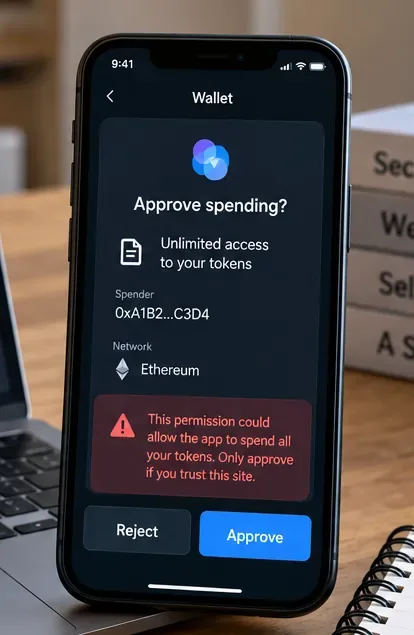
Review irreversible actions. Creator coin activation, token creation, wallet signatures, and smart-contract transactions may not be reversible.
Inspect fees and liquidity. Trading fees, network fees, spreads, thin markets, and bridge costs can matter more than headline rewards.
Separate protocol risk from app risk. A protocol may be open while a particular front end, indexer, relay, or hosted service remains a single point of failure.
Check moderation and privacy. Decentralization changes who can moderate and store data; it does not eliminate harassment, metadata leakage, or legal obligations.
Use official documentation. SocialFi mechanics change quickly. Verify fee structures, supported networks, smart contracts, and account behavior from first-party sources before funding a wallet.
Which Friend.tech alternative makes the most sense?
For the closest 2026 match to the idea of making creators and content directly tradable, start with Zora and the broader Base social stack. For developers who want a reusable social distribution layer, Farcaster is the more natural starting point. For builders who want programmable onchain social primitives, Lens deserves a close look. If your priority is portable identity and an open social web without making speculation the core experience, Bluesky and AT Protocol are more appropriate. If you want a key-owned, relay-based network with Bitcoin-adjacent payment conventions, examine Nostr. If creator coins themselves are the core requirement, DeSo remains relevant.
The bigger trend is more important than any one brand: SocialFi is shifting from a single “buy a key to enter a room” mechanic toward an ecosystem in which social identity, content, payments, markets, and applications can be recombined. That makes the category more useful, but also harder to evaluate. The best choice is the system whose ownership, portability, economics, and failure modes match the social experience you actually want to build or join.