Home
» News
»
Tokenized Real Estate: How to Invest in Property On-Chain
Tokenized Real Estate: How to Invest in Property On-Chain
Tokenized real estate can make property exposure easier to divide, transfer, and settle, but the quality of an investment still depends on the same fundamentals that matter off-chain: what you legally own, the economics of the property, the competence of the operator, the fees, and your ability to exit. The blockchain is the recordkeeping and transfer layer; it does not automatically give you a deed, guarantee rent, or create a liquid market.
As of September 2026, the U.S. Securities and Exchange Commission explicitly describes a tokenized security as a security represented by a crypto asset, with ownership records maintained in whole or in part on crypto networks. The SEC also stresses that token structures vary and that the rights of token holders can differ materially. That is the right starting point for evaluating tokenized real estate: first identify the legal claim, then evaluate the property, then evaluate the on-chain mechanics. See the SEC's January 28, 2026 statement on tokenized securities and its digital-securities explainer.
What a good tokenized real estate investment process should achieve
By the time you commit capital, you should be able to answer five questions without relying on marketing language: What legal interest does the token represent? What property or entity produces the cash flow? What can reduce or suspend distributions? How can you sell or redeem? What happens if the platform, issuer, property manager, custodian, or blockchain infrastructure fails?
Quality gate
What a satisfactory answer looks like
Reason to stop or change approach
Legal rights
Offering documents clearly state the issuer, the token holder's rights, transfer restrictions, and the entity that owns the real estate.
You are told that the token “is the property” but cannot find documents connecting the token to the property-owning entity.
Property economics
You can review purchase price, debt, rent assumptions, expenses, reserves, management costs, and a realistic net-cash-flow calculation.
The pitch focuses on gross yield or appreciation without enough data to reproduce the return assumptions.
Compliance
The offering identifies the applicable securities pathway, investor eligibility rules, and any required intermediary or transfer controls.
The seller treats tokenization as a way to avoid securities requirements without a clear legal basis.
Exit
Resale, redemption, lockups, eligible buyers, fees, and market availability are written down.
“24/7 liquidity” is promised without evidence of actual buyers, redemption terms, or a functioning compliant market.
Operations and custody
You know who controls keys, smart contracts, bank accounts, rent collection, property management, and recovery procedures.
A single point of failure can freeze both the token and the underlying cash flow, with no documented recovery path.
A four-stage process for investing in property on-chain
Stage 1: Identify exactly what the token represents
Start with the legal wrapper, not the token symbol. A tokenized real estate offering may represent a security issued by an entity that owns a property, a contractual economic interest, a fund interest, or another structure. The token itself is not proof that you own a direct interest in the land title. The SEC's 2026 guidance is useful because it separates the technology from the legal rights: tokenized securities remain securities, and different tokenization models can give holders different rights.
Read the offering memorandum, operating agreement or equivalent governing document, subscription agreement, transfer terms, and any disclosure describing the property-owning special-purpose vehicle. Confirm the issuer's legal name and the chain of ownership from your token to the real estate. If you cannot trace that chain in plain English, do not compensate for the uncertainty by making a smaller speculative purchase. Change approach and look for an offering with a structure you can verify.
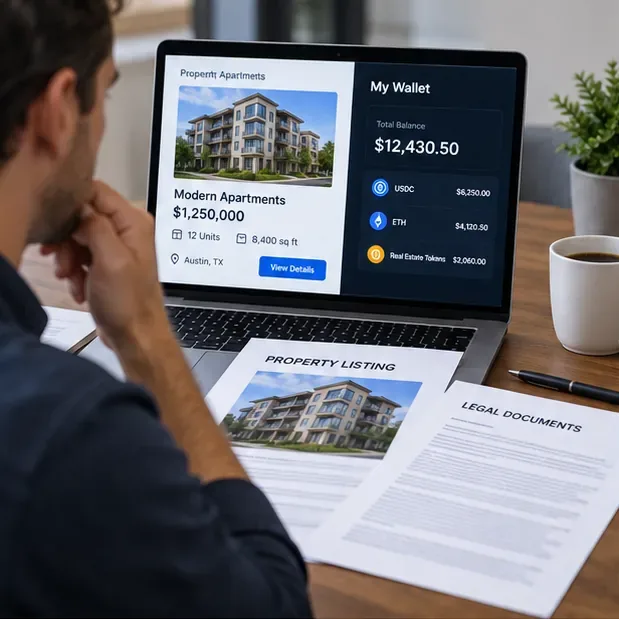
Start with the legal and economic link between the token and the property, not with the token price alone.
For U.S. offerings, also identify the securities-law pathway. Some private or crowdfunding offerings rely on exemptions rather than a full public registration. Regulation Crowdfunding, for example, requires covered transactions to occur through an SEC-registered intermediary, either a broker-dealer or funding portal, and securities bought in a crowdfunding transaction generally face a one-year resale restriction, subject to exceptions. The SEC's current overview is available on its Regulation Crowdfunding page.
If a broker, funding portal, or investment professional is involved, verify registration rather than relying on a badge on the seller's site. Investor.gov recommends checking registration and background information before purchasing securities; its Ask and Check resource links to official databases, including FINRA's BrokerCheck where appropriate.
Stage 2: Underwrite the property as if the blockchain did not exist
Once the ownership structure is understandable, ignore the token for a moment and analyze the real estate. The asset still faces vacancy, repairs, insurance costs, taxes, tenant risk, financing risk, local supply and demand, and property-management execution. Tokenization can improve recordkeeping and settlement, but it cannot make weak property economics strong.
Build a simple net-income view. Start with expected rental income, then subtract realistic vacancy, property-management fees, repairs and maintenance, insurance, property taxes, association costs where applicable, debt service if the property is leveraged, platform or administration fees, and reserves. Compare the resulting distributable cash flow with the price you are paying for your economic interest.
Do not rely on one projected annual percentage. Test at least three conditions: base case, weaker occupancy or lower rent, and an expense shock. If a modest increase in insurance, repairs, or vacancy eliminates the projected distribution, the investment is fragile even if the token technology works perfectly.
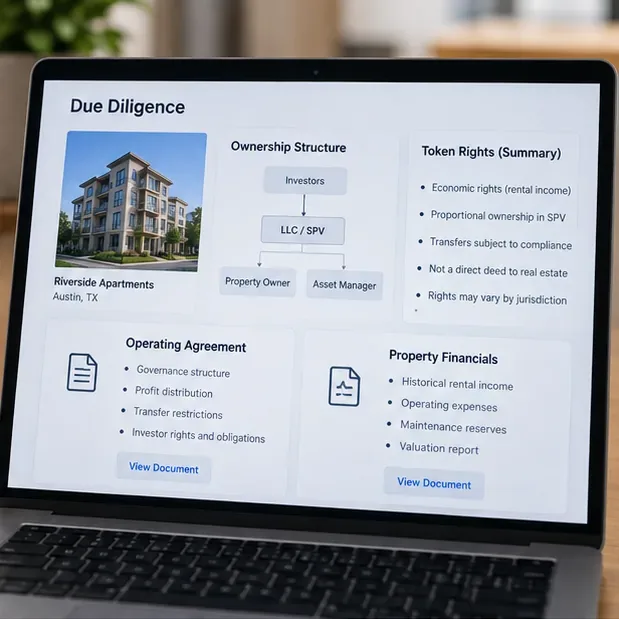
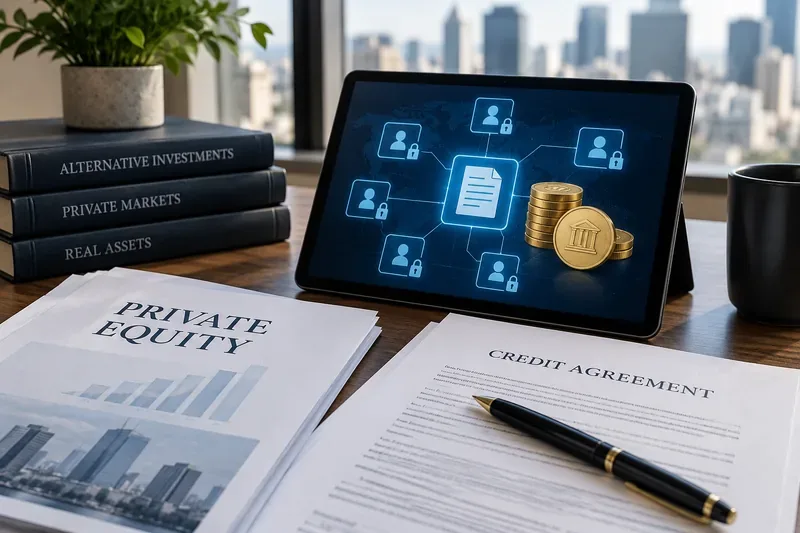
A stronger review connects token rights, the property-owning entity, governance terms, and property financials in one due-diligence chain.
Useful evidence includes property-level financial statements, rent rolls where appropriate, appraisal or valuation methodology, debt terms, insurance details, reserve policies, historical occupancy, management agreements, and conflict-of-interest disclosures. The right level of detail depends on the offering, but the core test is consistent: can you reproduce the important assumptions and identify who benefits from each fee?
Stage 3: Evaluate the on-chain purchase and custody path
Only after the legal claim and property economics pass review should you evaluate the on-chain mechanics. Determine whether you will use self-custody, an embedded wallet, or a qualified or platform-arranged custodian. Find out which blockchain the token uses, how transfers are restricted, whether wallet addresses must be allowlisted, what happens if you lose access credentials, and whether the issuer can replace or reissue tokens when ownership records and compliance rules require it.
Identity verification and transfer controls are not necessarily defects. A token representing a regulated security may have restrictions that a freely transferable cryptocurrency does not. The important point is transparency: you should know before buying which transfers are allowed and which party can pause, approve, reverse, or reissue a token under the governing documents.
If payment uses a stablecoin or another digital asset, calculate the entire transaction cost, including exchange spread, network fees, withdrawal charges, and any platform fee. Do not move a large amount to an unfamiliar address simply because a user interface displays a property name. Verify the destination and the transaction details using the platform's documented process, and consider a small test transaction where the process permits it.
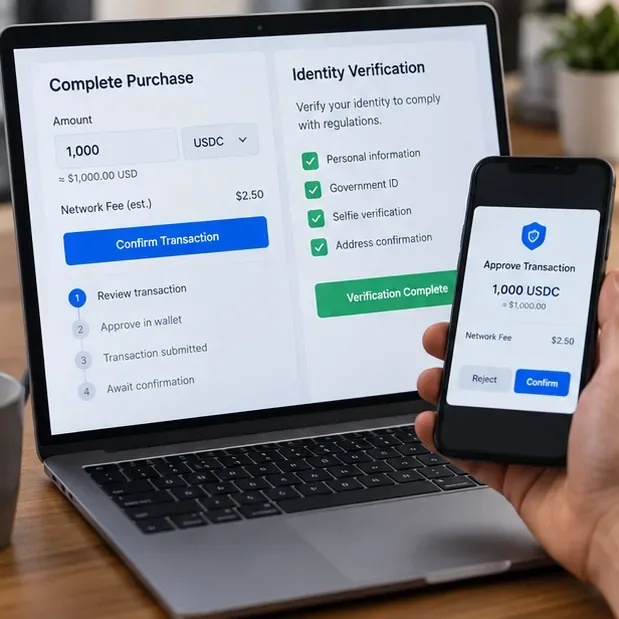
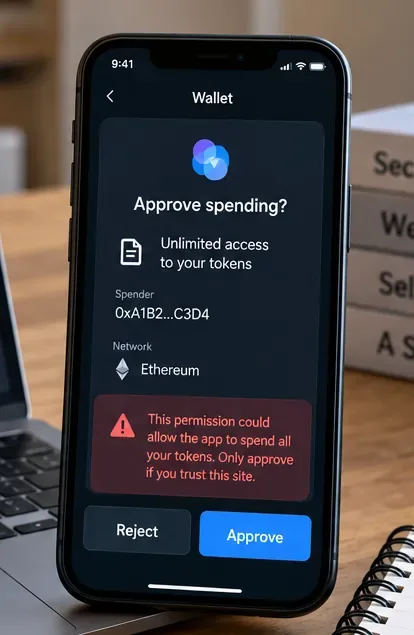
Treat wallet approval, identity checks, network fees, and transaction confirmation as part of the investment workflow, not as an afterthought.
Smart contracts add another layer of risk. An audit can reduce uncertainty about known code defects, but it does not prove the economic asset exists, guarantee the issuer will perform, or eliminate administrative keys and governance risk. Review who can upgrade contracts, freeze transfers, mint or burn tokens, change allowlists, or move underlying assets. If those powers are concentrated, understand why and what controls surround them.
Stage 4: Plan distributions, taxes, and the exit before you buy
Tokenized real estate is often marketed around fractional access and easier transfers, but an investor's result depends heavily on what happens after purchase. Confirm how rent distributions are calculated, what currency they are paid in, whether distributions accumulate on-platform or arrive in a wallet, what fees apply, and how property-level reserves are funded.
Then investigate the exit mechanism. A secondary-market feature is not the same as guaranteed liquidity. Ask how many eligible buyers can participate, whether there is a mandatory holding period, whether the issuer offers redemption, how prices are formed, whether there are trading windows, and what happens if there are no bids. If you may need the cash on short notice, tokenized private real estate may be a poor fit even when transfers are technically fast.
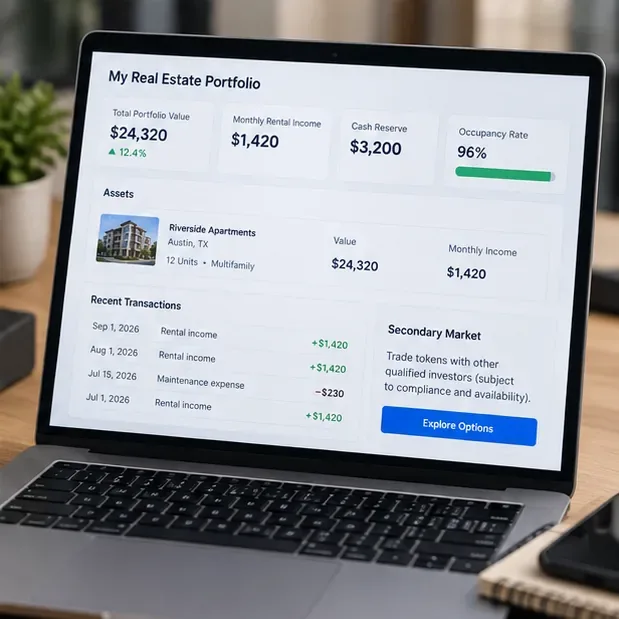
Monitor property cash flow and exit conditions separately from token price; portfolio dashboards are useful only when the underlying data and transfer rules are verifiable.
For U.S. federal tax purposes, the IRS states that digital assets are treated as property and that income from digital-asset transactions is taxable. The exact tax treatment of a tokenized real estate investment can depend on the legal structure, the character of distributions, and how the token is held or disposed of. The IRS's current Digital Assets page and digital-asset transaction FAQs explain the federal framework. State, local, entity-level, and cross-border tax issues can add complexity, so a tax professional may be appropriate before investing meaningful amounts.
How to judge whether the process is working
A good process does not mean every investment performs well. It means you can explain the investment without hand-waving and you have enough evidence to understand the main risks. Before buying, you should be able to write a one-page summary containing the issuer, property owner, security or contractual right, acquisition price, debt, expected net cash flow, major fees, key operator, transfer restrictions, custody model, and exit route.
After buying, monitor property-level indicators rather than watching only the token price. Useful signals include occupancy, rent collections, operating expenses, reserve balance, debt-service coverage where relevant, material repairs, insurance changes, management turnover, distributions versus projections, and changes to transfer or redemption conditions.
Change your approach when the evidence quality declines. Examples include delayed financial reporting, unexplained changes in valuation, distributions funded from sources that are not clear, repeated inability to sell despite liquidity claims, contract upgrades with weak disclosure, changes in property debt, or a widening gap between on-chain token activity and the underlying property's reported performance.
Common misconceptions to avoid
“If ownership is on-chain, title verification is automatic.” Not necessarily. Blockchain can record token ownership, but the legally relevant property title and the entity that owns it remain subject to the applicable real estate and corporate law. Your action: verify the documents connecting the token to the property-owning entity.
“Fractional ownership means instant liquidity.” Fractionalization can reduce the size of each position, but liquidity still needs willing and eligible buyers, a legal transfer path, and functioning market infrastructure. Your action: examine actual resale or redemption terms before investing.
“A smart contract audit proves the investment is safe.” An audit addresses a defined codebase at a point in time. It cannot validate property valuation, tenants, management quality, legal enforceability, or future governance decisions. Your action: separate smart-contract diligence from legal and property diligence.
“The token price is the property value.” A token may trade above or below a reasonable estimate of its underlying economic interest, especially in a thin market. Your action: maintain your own property-level valuation framework and treat secondary-market price as one input, not the entire thesis.
When tokenized real estate may not be the right tool
This approach is less suitable when you need immediate liquidity, do not want to manage wallet or custody risk, cannot evaluate private-offering documents, or are uncomfortable with real estate that may require a multi-year holding period. A traditional publicly traded REIT or another regulated real estate vehicle may be operationally simpler, although it has a different risk and ownership profile.
It is also reasonable to walk away from a specific tokenized offering even if you like the asset class. The best signal of investment quality is not how advanced the blockchain is; it is whether the legal rights, property economics, operations, and exit mechanics remain understandable under scrutiny.
Bottom line
Investing in tokenized real estate should be approached as real estate underwriting plus securities due diligence plus blockchain operations. The strongest opportunities are not the ones with the most ambitious “on-chain” language. They are the ones where you can independently verify what you own, understand how the property produces cash, identify every important fee and control point, and accept the liquidity and technology constraints before committing capital.
This article is educational and not individualized investment, legal, or tax advice. Rules and platform structures can change, and the treatment of a specific token depends on its facts, documents, and jurisdiction.