Home
» Knowledge
»
Forex Session Overlap in Local Time: The 2026 DST Shift
Forex Session Overlap in Local Time: The 2026 DST Shift
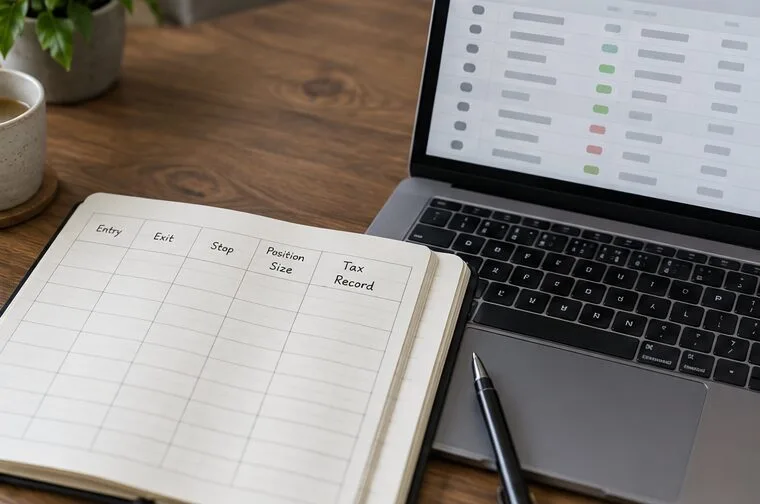
An Atlantic-centered map and desk clock illustrate why London and New York forex hours need to be checked against each region’s local clock.
For several weekdays in late October 2026, the usual London–New York forex overlap is one hour longer under a common local-session convention. Britain moves back to Greenwich Mean Time (GMT) on October 25, while the United States stays on Eastern Daylight Time (EDT) until November 1. That leaves London and New York five hours apart instead of the usual four. If you plan around a session window, update your calendar for the week of October 26; do not assume your chart platform’s clock uses your local time.
The exact clock-change dates are verified. The “London session” and “New York session” hours used in many trading calendars are conventions, not universal opening bells. This distinction matters: a daylight-saving calculation can be exact even when a session label is only an approximation.
Start with the verified 2026 clock changes
The U.S. National Institute of Standards and Technology lists daylight saving time for 2026 as March 8 through November 1. The U.K. government lists March 29 as the spring clock change and October 25 as the autumn change. In spring, U.S. clocks move ahead before U.K. clocks do; in autumn, U.K. clocks move back before U.S. clocks do. On ordinary weekdays in those gaps, New York is on EDT (UTC−4) while London is on GMT (UTC+0).
These dates are confirmed by the NIST daylight saving time rules (page updated February 9, 2026) and the U.K. government’s clock-change schedule. For the autumn mismatch, compare regular weekdays October 26–30, 2026 with weekdays beginning November 2, when both cities have returned to standard time.
What “overlap” means—and what it does not
Forex is an over-the-counter (OTC) market: trading is distributed across dealers, platforms, and financial centers rather than occurring on one central exchange with a single global opening bell. The Bank for International Settlements describes wholesale FX activity as taking place across multiple venues, with no single trading venue or single price, and describes trading as moving through centers including London and New York. So “session overlap” is a useful time-zone label for hours when the business day in two centers coincides; it is not an exchange-published schedule that guarantees every broker is open.
A frequently used convention defines both the London and New York sessions as 8:00 a.m. to 5:00 p.m. in each city’s local time. The table below applies that assumption only to show the math. Brokers may define their dealing hours differently, and a broker’s daily maintenance break, holiday schedule, or product terms can affect whether a particular pair is available.
Clock situation
London time during overlap
New York time during overlap
UTC overlap
Both on standard time
1:00–5:00 p.m. GMT
8:00 a.m.–12:00 p.m. EST
13:00–17:00
Both on daylight time
12:00–4:00 p.m. BST
8:00 a.m.–12:00 p.m. EDT
12:00–16:00
U.S. on daylight time; U.K. on standard time
12:00–5:00 p.m. GMT
8:00 a.m.–1:00 p.m. EDT
12:00–17:00
In 2026, the five-hour row applies on weekdays after the U.S. spring change and before the U.K. spring change, and again after the U.K. autumn change and before the U.S. autumn change. For a clean weekday comparison, that means March 9–27 and October 26–30. The overlap returns to four hours after both regions are on the same seasonal clock. Times are derived from the stated 8-to-5 convention and the official UTC offsets; they are not a claim about any individual broker’s published hours.
How to convert the overlap to your local time
Choose the date, not just the month. DST transition dates differ across countries, so “October hours” is not precise enough. Check whether each location is on standard time or daylight time for the date you need.
Write down each UTC offset. For the late-October 2026 example, London is GMT (UTC+0) and New York is EDT (UTC−4). On weekdays after November 1, London is GMT and New York is EST (UTC−5).
Convert the assumed session windows to UTC. London’s 8 a.m.–5 p.m. window is 08:00–17:00 UTC on GMT. New York’s 8 a.m.–5 p.m. window is 12:00–21:00 UTC on EDT, or 13:00–22:00 UTC on EST.
Take the intersection, then convert to your own zone. The shared UTC window is 12:00–17:00 during the mismatch and 13:00–17:00 when both are on standard time. Convert that result using your local city or region setting, then verify it against the broker’s instrument schedule.
Using a city-based time zone in your calendar is safer than manually adding a fixed number of hours, because the offset can change while you are traveling or when one jurisdiction changes its rules. If you keep a recurring reminder, set it to a time zone such as London or New York rather than saving a fixed UTC time without a date check.
Common assumptions worth checking
“The overlap is always four hours.”
Not in every week of the year. Under the stated session convention, the offset difference is four hours when both cities are on the same seasonal clock, but five hours during the 2026 U.S.-daylight/U.K.-standard mismatch. Action: check both clock-change calendars whenever you schedule around March or late October; do not copy last week’s local-time conversion automatically.
“A longer overlap guarantees better liquidity or bigger moves.”
The clock arithmetic confirms only that the assumed local windows intersect for longer. It does not establish trading volume, tight spreads, volatility, or a favorable setup on a specific day. Market conditions can vary by currency pair, news, holiday, venue, and broker. The BIS’s description of multiple venues also helps explain why a single session label cannot represent every participant’s conditions. Action: check the live spread and your broker’s trading conditions for the pair you intend to trade; treat overlap as a scheduling clue, not a signal.
“All platforms display session hours in the same time zone.”
Display settings vary. A chart may show UTC, server time, exchange time, or your device’s local time, while a broker’s product schedule may use another reference. The article cannot verify a particular account’s settings or future holiday schedule. Action: locate the platform’s time-zone setting and the broker’s official market-hours page, then compare a known event or clock change before relying on alerts.
What is known, what depends on your setup
Verified: U.S. and U.K. clock-change dates for 2026, and the UTC arithmetic once a session window is specified. Convention-dependent: the local opening and closing times assigned to “London” and “New York.” Not established by the calendar alone: whether your broker is accepting orders, what spreads will be, or how active a currency pair will be during a particular overlap.
For a repeatable routine, save the relevant official clock-change dates, define the session window you actually follow, convert it through UTC into your local zone, and verify your broker’s current schedule before placing or managing trades. That process addresses the real DST problem—your meeting or alert shifting by an hour—without treating an informal forex session label as a guarantee about market conditions.