The Ultimate Guide to Trading Meme Coins Safely and Profitably

Learn how to trade meme coins with a risk budget, token due diligence, wallet security, careful execution, exit rules, and tax records.
A crypto airdrop is a distribution of tokens to qualifying wallet addresses, usually based on on-chain activity. The important word is qualifying: an airdrop is not automatically free money, and using a protocol does not guarantee that the team will launch a token. The Arbitrum DAO glossary defines an airdrop as a mechanism that distributes tokens to qualifying addresses, usually based on blockchain activity.
If your goal is to qualify for large future airdrops, the most defensible strategy is to use legitimate protocols because they are useful, keep verifiable records, and follow each project's official rules. Do not treat rumors, points dashboards, social-media tasks, or airdrop trackers as proof of eligibility. As of September 16, 2026, no official source can identify which future airdrop will be the “biggest”; that answer depends on a project’s token decision, snapshot, allocation, geography, anti-Sybil policy, and market conditions.

In a typical airdrop, a project distributes a token to addresses that match rules established by the project, foundation, DAO, or token issuer. The rules may reward early users, liquidity providers, governance participants, developers, community contributors, or users who performed activity across several dates or applications.
An airdrop can be claim-based, where an eligible user interacts with an official contract, or it can be distributed automatically to qualifying addresses. A token may also be sent to a wallet without being legitimate. The arrival of an unfamiliar token is not evidence that you won an official reward.
Useful action: Before interacting with any token or claim link, find the project’s official documentation, contract address, snapshot information, and claim deadline from a source controlled by the project or its recognized foundation.
Past distributions show why there is no universal formula for qualifying. They are useful evidence about how different projects have designed eligibility, but they do not predict the next airdrop.
| Historical example | Verified rule or allocation | What it teaches |
|---|---|---|
| Uniswap UNI | Its official launch post made 150 million UNI immediately claimable by historical liquidity providers, users, and SOCKS holders or redeemers. A qualifying user address could claim 400 UNI. | Early genuine use and liquidity history can matter more than last-minute activity. |
| Optimism OP Airdrop #1 | The official criteria covered early OP Mainnet users, repeat users, DAO voters, multisig signers, Gitcoin donors, and users priced out of Ethereum. Multiple matching categories could add together. | Governance and public-good participation may count alongside ordinary transactions. |
| Arbitrum ARB | The official distribution specifications allocated 1.162 billion ARB to users of the Arbitrum platform. The criteria used activity points, timing, and anti-Sybil adjustments; the published maximum entitlement was 10,250 ARB. | Timing, breadth, repetition, and anti-abuse rules can affect both eligibility and size. |
These numbers describe completed historical programs, not current opportunities. The Arbitrum documentation says its original claim ended on September 24, 2023, and the Optimism page says Airdrop #1 was fully distributed in September 2023. That is a useful correction to a common search-engine problem: an old eligibility checker or recycled social post can remain visible long after the official claim window closes.
Useful action: Treat every historical example as a design lesson only. For a live opportunity, confirm that the official page identifies a current snapshot, a token or distribution decision, a claim window, and a canonical contract.
What is verified: Airdrops are distributions to qualifying addresses, and past projects have used on-chain activity as one part of their criteria. What depends on circumstances: a project may never create a token, may distribute rewards in another form, may exclude certain addresses, or may set a snapshot before you participate. What is unknown: a future project’s token launch, allocation, and eligibility until its official team publishes them.
Useful action: Use a protocol only when its product, cost, and risk make sense without a future token. Keep a record of the networks, dates, contracts, and transaction hashes you use, but do not spend money solely to chase an unannounced reward.
What is verified: Arbitrum used point thresholds, timing, and anti-Sybil rules, while Optimism used distinct categories and repeat activity across weeks. What depends on circumstances: a future program may reward volume, unique contracts, liquidity duration, governance, cross-chain use, or simply one qualifying interaction. What is unknown: whether extra transactions will increase a future allocation or merely add fees and smart-contract exposure.
Useful action: Prefer meaningful, diversified use—such as completing a real swap, using a useful application, or contributing to governance—over repetitive low-value transactions. Set a fee budget and stop if the expected cost is no longer reasonable.
What is verified: Some projects publish points, quests, or activity scores. What depends on circumstances: points may later influence a distribution, be converted under a formula, or be used only for product incentives. What is unknown: the token conversion rate, cutoff date, geographic restrictions, and whether points will ever convert into tokens unless official terms say so.
Useful action: Save a copy of the project’s current terms and read whether the points program promises anything. Do not connect a wallet or deposit funds just because an unofficial leaderboard displays a large projected dollar value.
What is verified: MetaMask warns that fake airdrops can direct users to malicious websites or transactions, and Arbitrum’s official airdrop documentation explicitly warns users not to share a seed phrase. A token name and logo can be copied by anyone on a permissionless blockchain.
Useful action: Never enter a Secret Recovery Phrase or private key into a website, never approve a transaction you do not understand, and do not follow unsolicited direct messages. Verify the domain, contract, and announcement through official channels. If you already approved a suspicious contract, stop using the affected wallet for valuable assets and review approvals using a reputable security tool.
What is verified: Token quantity, token price, liquidity, unlock schedules, governance rights, and claim costs are separate variables. Historical allocation tables show token amounts, not a guaranteed dollar outcome. A large allocation may be illiquid, volatile, restricted, or worth less after the market opens.
Useful action: Evaluate the token’s purpose, circulating supply, unlock schedule, liquidity, and transaction costs before assigning it a value. Keep tax records and do not borrow money to fund speculative eligibility activity.
| Your situation | More suitable approach | Main trade-off |
|---|---|---|
| You are new to crypto | Study official documentation and use only established applications with small amounts | Lower exposure, but fewer speculative opportunities |
| You already use DeFi | Document normal activity and add governance or liquidity only when it serves your strategy | Potential eligibility versus smart-contract, liquidity, and fee risk |
| You are optimizing for a possible large allocation | Look for sustained, genuine participation across a project’s actual ecosystem | More time and capital can be committed without any guarantee of a token |
| You care mainly about safety | Ignore unsolicited claim links and wait for a fully documented official announcement | You may miss a short claim window, but you reduce phishing risk |
For U.S. readers, the IRS says that receiving cryptocurrency from an airdrop following a hard fork can create ordinary income when the taxpayer receives the asset and has the ability to control it. The IRS also says digital-asset transactions may need to be reported and that taxpayers should keep records of receipt, fair market value, sale, exchange, and basis. That guidance does not answer every token-distribution scenario, and tax treatment can depend on how the reward was received and your jurisdiction.
Useful action: Record the date and time, token quantity, wallet or exchange, transaction hash, fair market value, fees, and later disposals. Ask a qualified tax professional about your facts instead of assuming that “free” means tax-free.
The biggest crypto airdrops are usually identified only after a project publishes official tokenomics and eligibility rules. Historical programs show recurring patterns—early use, sustained activity, liquidity, governance, contributions, and anti-Sybil screening—but no pattern guarantees a future reward. The safest qualifying strategy is to participate in useful, legitimate protocols, keep verifiable records, protect the wallet, and treat unannounced airdrops and points conversions as unknown.
If an opportunity requires your recovery phrase, pressures you to act immediately, asks you to send funds to “unlock” a reward, or exists only in an unsolicited message, stop. The possible upside of a speculative token is not a rational trade for losing control of the wallet.
Learn how to trade meme coins with a risk budget, token due diligence, wallet security, careful execution, exit rules, and tax records.
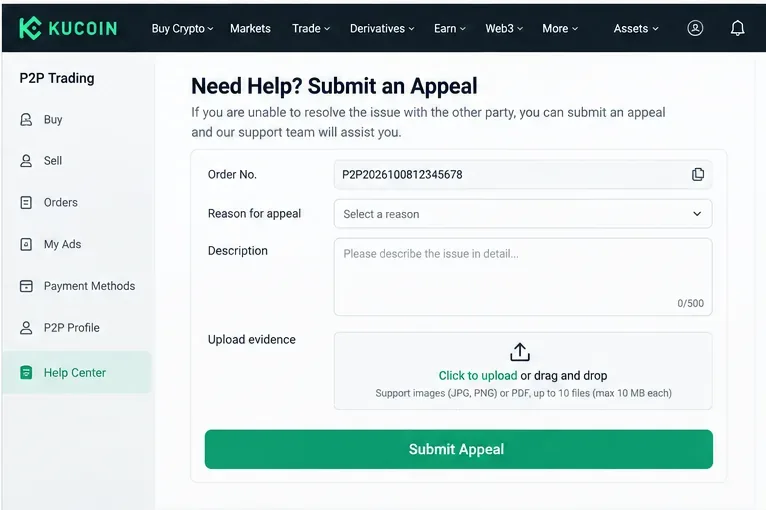
Learn how to use KuCoin P2P to buy and sell crypto, verify payments, choose offers, avoid common scams, and handle disputes safely.
Learn what crypto airdrops are, how eligibility rules work, which myths to avoid, and how to pursue major opportunities without risking your wallet.
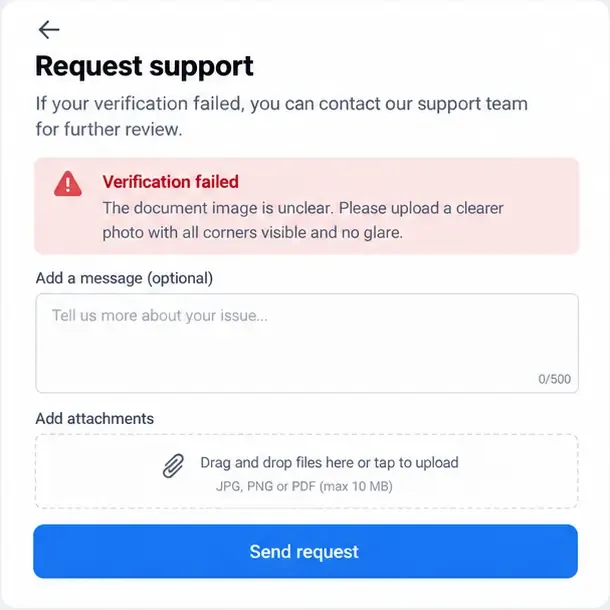
Learn how to fix KYC verification failures on Binance, Bybit, and OKX by correcting document, selfie, data mismatch, and account issues.
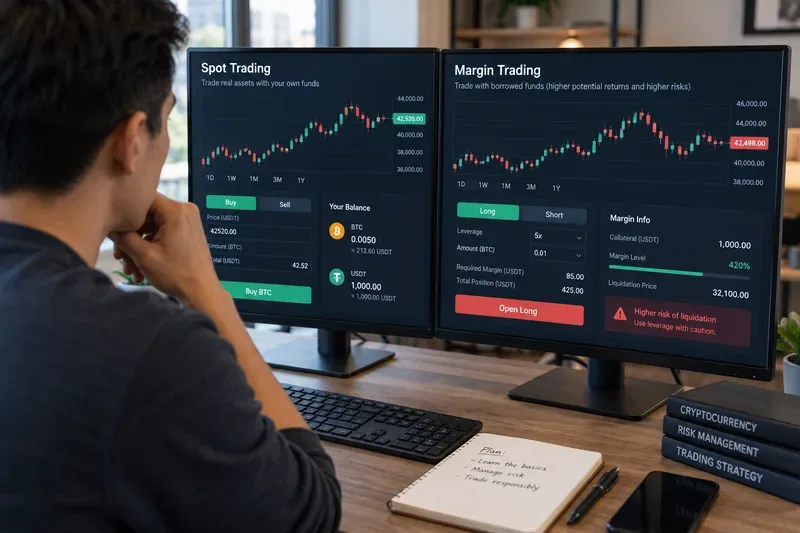
Learn how spot trading and margin trading differ in crypto, including ownership, leverage, liquidation risk, costs, order types, and beginner risk checks.
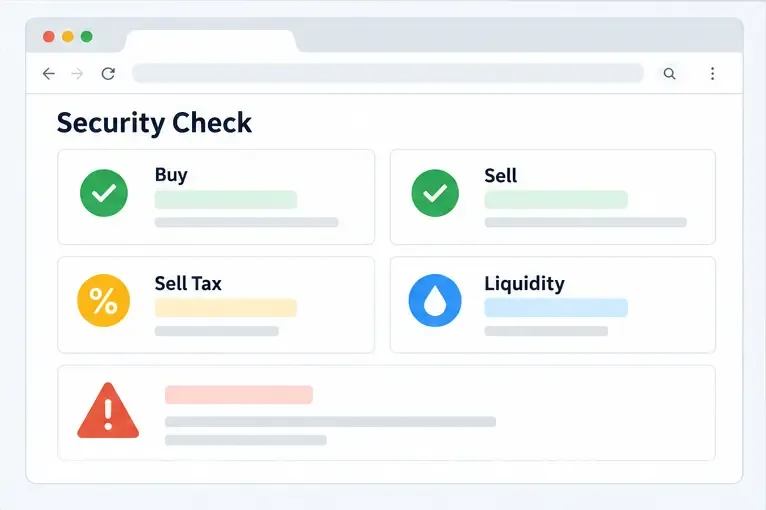
Learn how honeypot crypto scams block token sales, how to check sell simulations, taxes, liquidity, and contract controls before risking funds.
Learn how pump-and-dump schemes work, the warning signs to watch for, and practical steps to protect your capital from manipulated stocks and crypto assets.
Learn how to recover a locked crypto exchange account safely, prepare verification documents, complete security checks, avoid scams, and handle review delays.
Learn how Binance Dual Investment works, including Buy Low, Sell High, settlement, APR, liquidity limits, market risk, and Auto-Compound.
Learn why Binance withdrawals may be suspended, how to identify account or network restrictions, and the safest steps to restore access or retry.