Finding a low-cap crypto gem before it pumps sounds like a simple search: sort tokens by market capitalization, buy the one with the most exciting chart, and wait. In practice, that approach mixes useful early discovery with the exact conditions that make small tokens easy to manipulate. A price can rise because of real adoption, a scheduled catalyst, thin liquidity, or coordinated promotion—and those causes have very different risk profiles.
A better process is to treat a “gem” as a research candidate, not a prediction. First define what you can lose, then filter for market structure, verify the project’s claims, inspect token supply and contract permissions, and only afterward consider an entry. This guide was researched and checked on September 15, 2026. Market data, token unlocks, project plans, exchange support, and regulations can change quickly, so every candidate needs a fresh review.
What “low-cap” really tells you
Crypto market capitalization is generally calculated as current token price multiplied by circulating supply. CoinGecko’s market-cap guide explains that market cap is a size and valuation measure, not the amount of money invested and not a direct measure of project quality. Fully diluted valuation, or FDV, applies the current price to the total or maximum supply and can reveal future dilution.
There is no universal cutoff that makes a token “low-cap.” A project with a $900 million market cap may be small relative to major networks but too large for a trader seeking an early-stage microcap. Conversely, a $5 million token can be so illiquid that a small sell order moves the price dramatically. Use market cap as a first sorting field, not as proof of upside.
| Screening choice | What it helps you find | Tradeoff |
|---|---|---|
| Lower market-cap range | Earlier projects and more room for re-rating | More volatility, weaker liquidity, and less reliable information |
| Higher market-cap range | More established networks and deeper markets | Usually less potential for a rapid multiple expansion |
| Low market cap with low FDV gap | Less immediate dilution pressure | Does not prove demand, security, or product quality |
| Low market cap with very high FDV | Potentially early distribution stage | Future unlocks can create persistent sell pressure |
Step 1: Set a research mandate before opening a screener
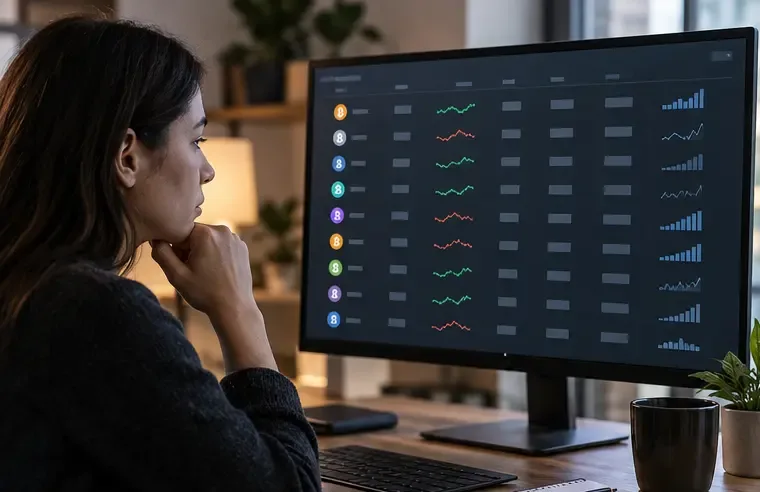
Write down your time horizon, maximum loss, preferred sector, and liquidity requirement. A short-term trader may care most about spreads, order-book depth, and a clear exit route. A long-term researcher may accept lower liquidity in exchange for time to assess developers, users, and product delivery. Neither approach is automatically safer; they fail in different ways.
Do not use rent, emergency savings, borrowed funds, or money needed for taxes. Decide in advance whether a position is a high-risk speculation or part of a broader portfolio. The goal is to prevent a rising price from silently changing your risk limit.
Step 2: Build a candidate list with market cap, FDV, and supply data

Use a reputable market-data service to create a broad list, then record the data’s timestamp. Check circulating supply, total supply, maximum supply, market cap, FDV, 24-hour volume, and the markets where the token trades. CoinGecko’s methodology notes that circulating-supply information is sourced from token teams and reviewed, and that locked-token assumptions affect the calculation. That is a reminder to inspect the underlying source instead of copying a single number.
Calculate the market-cap-to-FDV relationship yourself. For example, if the circulating market cap is $20 million and the FDV is $200 million, the remaining supply is a major research issue. It does not guarantee a price decline, but you need to know when tokens unlock, who receives them, and whether demand could plausibly absorb them.
Step 3: Test liquidity instead of trusting volume
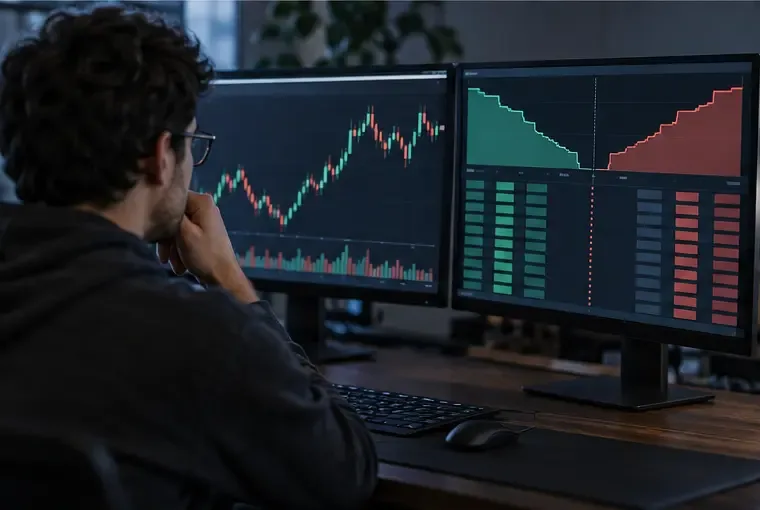
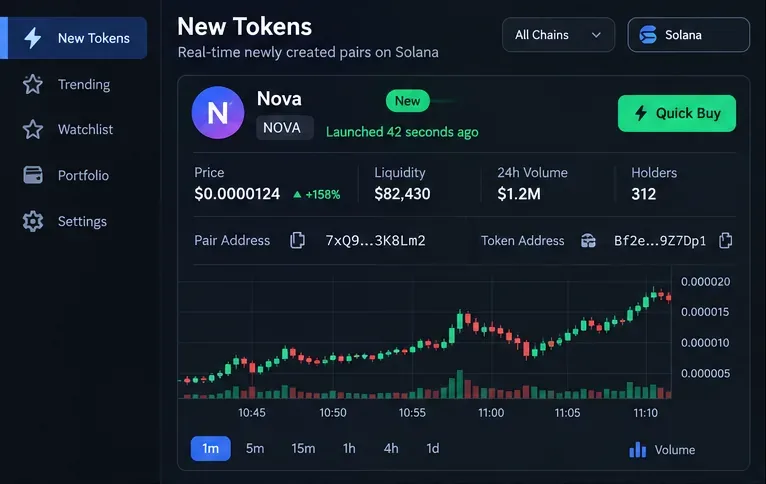
Trading volume is not the same as liquidity. Volume can be inflated by repeated transactions, incentives, or activity on venues where you cannot easily exit. Look at bid-ask spread, liquidity in the specific pool or market, price impact for your intended order size, and whether volume is distributed across several venues.
Use a small hypothetical order to estimate slippage. If a $500 order would move the price several percent, the token may be unsuitable for a larger portfolio even if the chart looks active. Compare entry and exit conditions; a pool that appears easy to buy may be much harder to sell when liquidity is removed. Avoid assuming that a market-cap ranking gives you a tradable price.
Step 4: Read tokenomics and the unlock schedule

Tokenomics describes how tokens are created, distributed, used, and released. Read the allocation for founders, investors, the team, treasury, ecosystem incentives, liquidity, and public sale. Then find vesting dates, cliffs, emissions, staking rewards, burns, and governance changes. A low current float can make a token look scarce while large future unlocks remain ahead.
Holder concentration is equally important. Review the largest wallets on the relevant block explorer and distinguish exchange, bridge, liquidity-pool, burn, treasury, and individual addresses where possible. A few large holders do not automatically mean fraud, but they create supply and governance risk. Ask whether those wallets can sell, vote, mint, pause, blacklist, or change fees.
Step 5: Verify the product, users, and development record

Move from the token to the product. What problem does the project solve? Who uses it today? What action requires the token, and what would still work without it? A roadmap is a plan, not evidence of adoption. Look for a working application, public documentation, release notes, developer activity, integrations, and user behavior that can be independently checked.
Separate vanity metrics from useful ones. Social followers, impressions, and partnership logos are easy to accumulate. More informative questions include whether users return, whether transactions are organic, whether fees or revenue exist, and whether a third party can reproduce the product’s core function. If the project is too new to have meaningful usage data, label it as an early experiment rather than filling the gap with optimism.
Step 6: Inspect the contract and security controls

Find the official contract address and confirm the network before interacting. If source code is verified, read the owner and administrator functions, mint and burn controls, blacklist or pause features, fee changes, upgradeability, and proxy implementation. OpenZeppelin’s access-control documentation illustrates why privileged roles matter in smart-contract systems.
An audit can identify issues within its stated scope and version; it is not an insurance policy and does not validate the team’s business claims. Check the auditor, date, commit or contract version, unresolved findings, and whether the deployed address matches the reviewed code. If you cannot understand the contract, reduce the position size or wait for clearer evidence instead of outsourcing the entire decision to an audit badge.
Step 7: Separate real catalysts from hype

A catalyst is an event that could change attention, usage, liquidity, or expected cash flows. Examples may include a product release, a mainnet transition, a meaningful integration, a governance decision, or a distribution change. The word “could” matters. A listed exchange, partnership announcement, or conference appearance may create attention without creating sustainable demand.
For each catalyst, write three items: the official source, the expected measurable effect, and the condition that would invalidate your thesis. Use the project’s own documentation, repository, governance forum, or partner announcement rather than a reposted social-media graphic. If the only evidence is an influencer prediction, the catalyst is unverified.
Step 8: Make an entry, exit, and invalidation plan

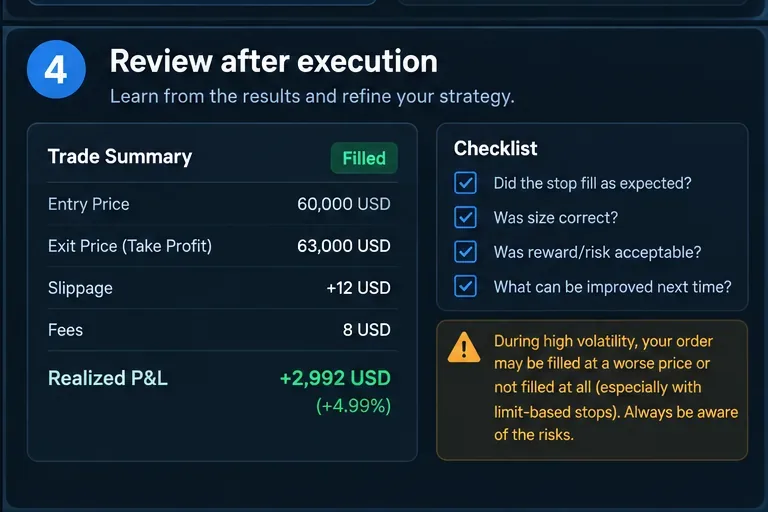
Decide whether you need a limit order, staged entries, or no trade until liquidity improves. Define the maximum dollar loss before buying, not after the price moves against you. A stop order may not execute at the intended price in a thin market, and a hard stop can be triggered by normal volatility. Use position sizing and a thesis-based invalidation level together.
Record the contract address, chain, venue, entry rationale, expected catalyst, unlock dates, liquidity observations, and exit conditions. Review the thesis on a schedule. If the team misses delivery, supply changes unexpectedly, privileged permissions expand, or liquidity leaves, the correct action may be to reduce exposure even if social sentiment remains positive.
Which screening style fits your needs?
| Investor profile | Prefer | Accept | Avoid |
|---|---|---|---|
| Beginner with limited research time | Higher liquidity, transparent supply, verified code, and a simple product | Smaller upside potential | Anonymous teams, complex bridges, and influencer-only theses |
| Long-term fundamental researcher | Working product, active development, credible users, and manageable dilution | Lower short-term volume | Roadmaps with no deliverables or measurable adoption |
| Short-term trader | Deep enough liquidity, clear market structure, and a defined catalyst | Fast invalidation and frequent monitoring | Markets where a small order causes large slippage |
| Technical analyst | Verified contracts, on-chain holder data, and code-level understanding | More time and operational complexity | Signing transactions from unverified links or unaudited deployments |
Red flags that should stop the process
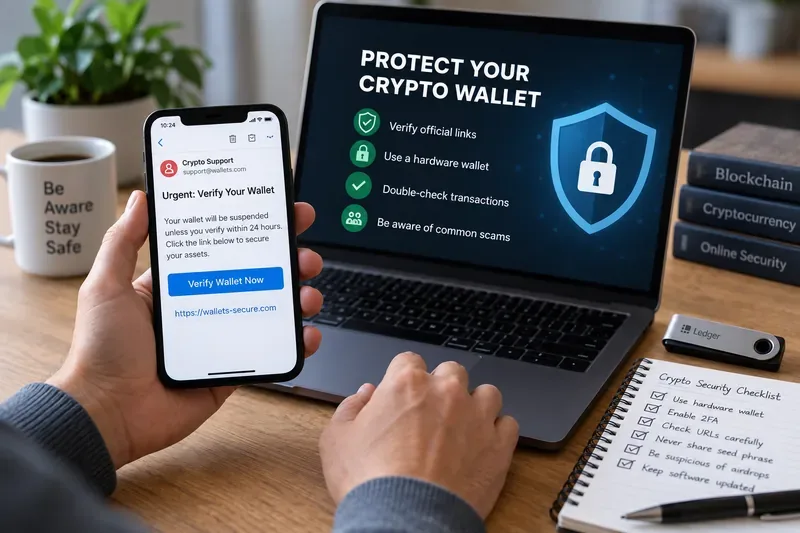
- Promises of guaranteed returns, secret insider information, or a specific date when the token “must” pump.
- Pressure to buy immediately, pay in crypto, or send funds to a private wallet.
- Requests for your seed phrase, private key, remote screen access, or an extra payment to unlock a withdrawal.
- Large claims about partnerships that cannot be confirmed on the partner’s official website or documentation.
- Unclear circulating supply, missing unlock information, sudden token emissions, or wallets controlled by a small group.
- Unverified contract code, unexplained upgrade authority, mutable fees, blacklist functions, or suspicious transfer restrictions.
- High reported volume paired with thin liquidity, wide spreads, or inconsistent prices between venues.
The SEC’s Investor.gov warning on crypto asset scams describes pump-and-dump tactics in which promoters create buying pressure, sell into the hype, and leave later buyers with the losses. Read the official crypto-scam alert before treating social media, AI-themed claims, or a celebrity endorsement as research.
How to check your conclusion before buying
Use this final checklist and do not proceed until every answer is specific:
- Can I explain the project’s product and token utility in two plain sentences?
- Do I know the timestamp and source of the market-cap, supply, FDV, volume, and liquidity data?
- What percentage of supply is circulating, and when are the next meaningful unlocks?
- Who controls the largest wallets and the contract’s privileged functions?
- Can I buy and sell my intended amount without unacceptable slippage?
- What measurable event could support the thesis, and what would disprove it?
- Where will the money come from if the token loses most of its value?
- Can I verify the contract address and sign a transaction without using an unofficial link?
If the answer to the last two questions is uncomfortable, the candidate is not ready for your money. If the answers are clear, the token is still not guaranteed to rise; you have only improved the quality of the decision. Low-cap crypto research is a process for controlling uncertainty, not a method for seeing the future.
Sources and scope note
This article uses sources checked on September 15, 2026: CoinGecko’s market-cap explanation, CoinGecko’s methodology, OpenZeppelin’s access-control documentation, and the SEC Office of Investor Education and Advocacy alert on crypto scams. This is educational material, not investment, legal, or tax advice. Market data and project claims should be rechecked before any transaction.